
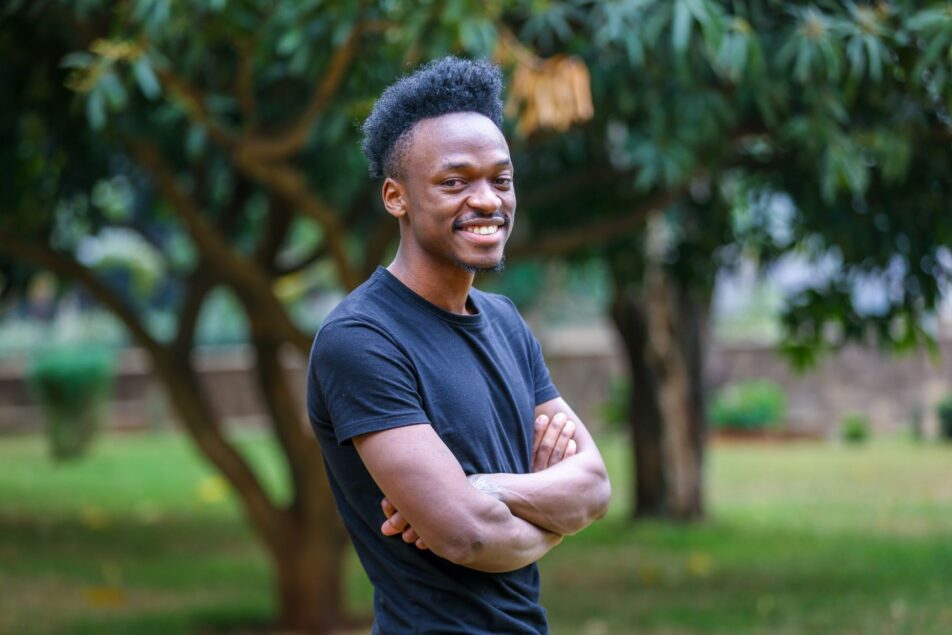
Meet Elly Savatia, a young Kenyan entrepreneur changing the game for inclusive communication. He is the founder of Signvrse, the creator of Terp 360, a cutting-edge AI-powered app that translates speech and text into sign language using lifelike 3D avatars. His work is already gaining serious recognition across Africa and beyond.
Savatia won the Royal Academy of Engineering’s 2025 Africa Prize for Engineering Innovation, cementing his status as one of the continent’s most promising tech leaders. At just 24, his innovation addresses a real need: enabling better access and communication for deaf and hard-of-hearing communities. In many African countries, sign language resources remain limited, and traditional interpretation services are scarce.
Join our WhatsApp Group
Terp 360 takes a modern approach. It uses artificial intelligence and computer vision to interpret spoken language in real time. The app’s 3D avatars then perform sign language, allowing users to follow along visually. This technology is not only powerful—it’s scalable. It could be adopted by institutions such as schools, government agencies, media outlets, and NGOs to make digital content more accessible.
For Savatia, entrepreneurship is deeply personal. He has spoken about growing up with limited sign language access and realizing that technology could bridge that gap. His company, Signvrse, aims to make communication universally accessible, regardless of hearing ability.
Also Read ~ Microsoft’s Project Gecko Sets a Bright New Path for AI in Kenya
Beyond sign translation, Signvrse has broader ambition. Savatia plans to extend the platform’s language base and expand its avatar capabilities. He wants Terp 360 to work in multiple African languages, broadening its accessibility. This means not just translating English but indigenous languages like Swahili, Zulu, Yoruba, and many more.
Investors are starting to pay attention. The combination of accessibility tech and AI-driven inclusiveness is attractive—and impactful. For funders, Savatia’s work checks both profit and purpose: the app addresses a real societal challenge while having potential for broad adoption.
This kind of innovation is precisely what Africa’s startup landscape needs: founders focusing on local problems, not just global trends. By making sign language more accessible, Elly Savatia is improving how people communicate but also how they belong. His work is a reminder that technology can—and should—serve every member of society, not just those already included.
Leave a Reply