

Small business ideas
The African economic landscape is a unique paradox of challenges and immense possibilities. While entrepreneurs often face hurdles like currency fluctuations, infrastructure gaps, and shifting regulatory environments, these very “pain points” create fertile ground for high-growth ventures. For those with a bit of capital to invest, the goal is no longer just survival; it is about building a scalable Small to Medium Enterprise (SME) that offers essential services.
Success in these markets requires moving away from “side hustles” and toward structured systems. If you are looking to transition from a casual trader to a formal business owner, focusing on small business ideas that prioritize essential goods, convenience, and value addition is the most reliable path to wealth.
In this guide, we dive deep into high-potential small business ideas that can be scaled into profitable SMEs across the continent.
Join our WhatsApp Group
1. Commercial Poultry and Livestock Production
Agriculture remains the backbone of most African economies, but the real money is moving from subsistence farming to commercialized livestock. Poultry is one of the most resilient small business ideas because the demand for protein specifically eggs and chicken is price-inelastic; people need to eat even when the economy is tight.
To run this as a medium-scale enterprise, you should look beyond a backyard coop. A professional setup involving 1,000 to 5,000 birds requires capital for automated feeding systems, high-quality vaccines, and climate-controlled housing.
- The Scalability Factor: Don’t just sell live birds at the market. Invest in a small slaughtering and packaging facility. Branding your chicken and supplying local supermarkets or fast-food chains increases your margins significantly.
- Risk Management: Focus on “contract farming” where you partner with large-scale off-takers to ensure your entire stock is sold before it even reaches maturity.
2. Agri-Input and Professional Farming Services
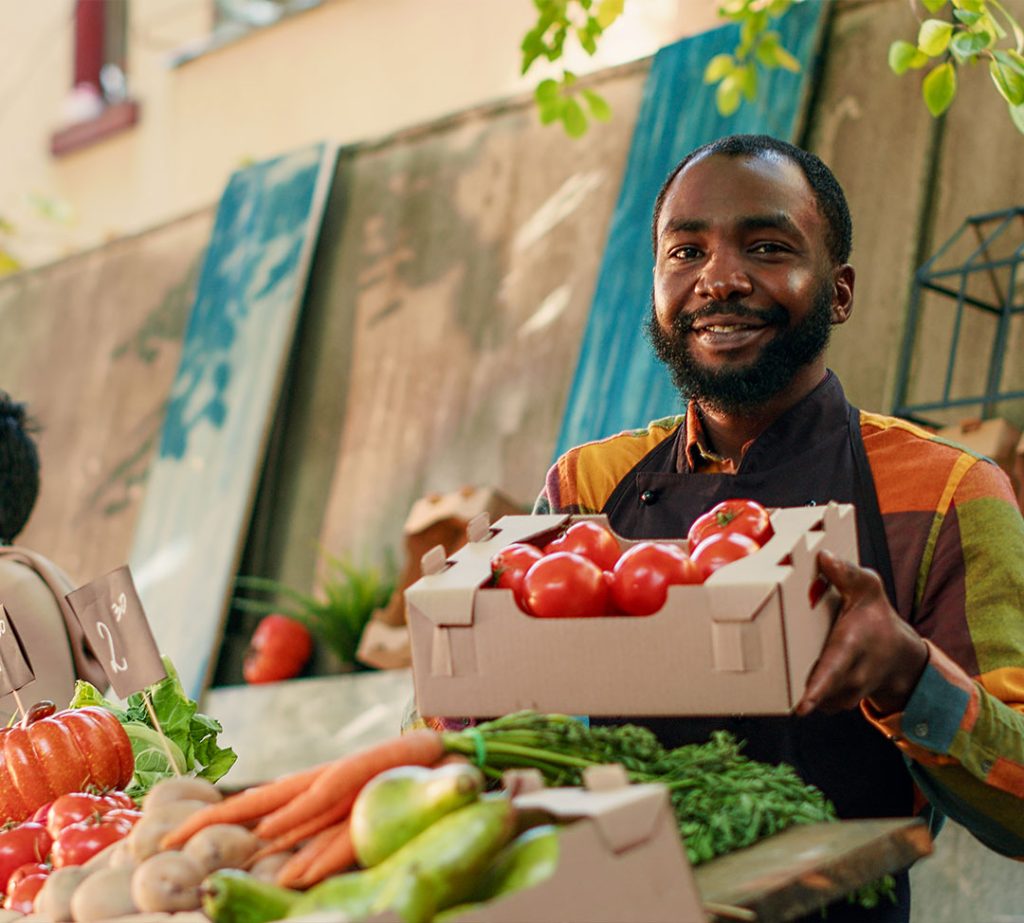
As more people venture into farming, the demand for high-quality inputs grows. One of the most underserviced small business ideas is the establishment of a “One-Stop-Shop” for farmers.
Rather than just selling seeds, a sophisticated SME in this space provides soil testing services, mechanized tilling (tractor leasing), and professional spraying services. By offering input credit where farmers pay for seeds and fertilizers after harvest you build a loyal customer base that secures your revenue for years to come.
3. Small-Scale Food Processing and Value Addition
Raw agricultural produce is cheap; processed food is expensive. That price gap is where savvy entrepreneurs thrive. Turning raw maize into fortified flour, peanuts into branded peanut butter, or cassava into high-quality starch are excellent small business ideas for those with capital for machinery.
The key to succeeding here is packaging and compliance. Ensuring your products meet national bureau of standards (KEBS, NAFDAC, etc.) allows you to move your products from local kiosks to high-end retail shelves. Small-scale oil pressing (sunflower or groundnut oil) is another high-demand area as import costs for cooking oil continue to rise.
Also Read: Hidden Revenue Streams: Why Growing Businesses don’t Not Always Seem Profitable
4. Regional Aggregation and Cold Chain Logistics
One of the biggest problems in Africa is post-harvest loss. Tons of fruits and vegetables rot because farmers cannot get them to the city fast enough. This creates a gap for one of the most lucrative small business ideas: Regional Aggregation.
By investing in a 5-tonne refrigerated truck and a small cold-storage warehouse at a transit point, you can buy produce at farm-gate prices and sell it to urban wholesalers, hotels, and exporters at a premium. You are solving a logistics problem, which makes your business indispensable to the food supply chain.
5. Construction Materials and Hardware Supply
Africa is urbanizing faster than any other continent. Everywhere you look, people are building homes, shops, and infrastructure. This makes a well-stocked hardware store one of the most stable small business ideas for long-term growth.
To move from a small shop to an SME, you should focus on becoming a direct distributor for cement manufacturers, steel mills, and paint companies. Offering “bulk delivery” services to construction sites gives you a competitive edge over smaller retailers. As you grow, you can expand into manufacturing your own concrete blocks or paving stones, which adds a high-margin manufacturing component to your retail business.
6. Waste Management and Recycling Ventures
Urbanization brings a massive waste problem. Governments are increasingly looking for private partners to handle plastic and paper waste. This is one of the most underrated small business ideas with high environmental and social impact (ESG) potential, which often attracts external funding.
A medium-scale recycling SME involves setting up collection points and investing in a plastic crusher or a paper baler. Selling crushed plastic pellets to manufacturers is a “green” business with a consistent B2B (business-to-business) revenue model.
Also Read: How to make your business fundable in 2026: a practical guide for African founders
7. Transport and Last-Mile Delivery
The rise of e-commerce and intra-city trade has made transport a powerhouse. However, the real opportunity isn’t in long-haul trucking (which has high overheads) but in 2-tonne to 10-tonne “last-mile” delivery.
Small lorries or vans that move goods from wholesale hubs to residential retailers stay busy every day. Integrating technology, such as a simple app or WhatsApp-based booking system, adds the layer of professionalism needed to scale. Reliability is the currency of this business; if you are the person who always delivers on time, you will never lack clients.
8. Retail Healthcare and Community Pharmacies
Healthcare is a fundamental need. In many African neighborhoods, the local pharmacy is the first point of medical contact. Setting up a licensed, professional pharmacy is one of those small business ideas that offers both high social value and steady cash flow.
To scale this, consider a “hub and spoke” model where you have one main wholesale pharmacy supplying smaller retail outlets in different suburbs. Incorporating basic diagnostic services (like blood pressure and glucose checks) increases foot traffic and builds community trust.
9. Private Education and Skills Training Centers
The “youth bulge” in Africa means there is a perpetual shortage of quality education. If you have capital, starting a specialized nursery school or a technical vocational center (teaching coding, plumbing, or solar installation) is a visionary move.
Education-based small business ideas are excellent because they are “subscription-based”—parents pay every term or month. By focusing on high-quality facilities and a modern curriculum, you can charge a premium in a market where public alternatives are often overwhelmed.
10. Clean Energy Solutions (Solar Installation)
With consistent power outages and rising electricity tariffs across the continent, solar energy is no longer a luxury; it is a necessity. Starting a solar distribution and installation company is one of the fastest-growing small business ideas in the current decade.
Focus on “Solar-as-a-Service” for SMEs. Many barbershops, small cold rooms, and offices need a reliable 5kW or 10kW system to stay in business. Offering a payment plan (Pay-As-You-Go) for these systems makes your service accessible to a wider market while ensuring you have a recurring income stream.
Also Read: Get more from marketing in Zimbabwe: practical steps for small businesses
Moving from Idea to Execution: The SME Roadmap
Identifying small business ideas is only the first step. To build a sustainable company in Africa, you must apply a disciplined framework for execution.
1. Validate the Demand
Before sinking your capital into a warehouse or equipment, talk to your potential customers. If you are starting a poultry business, talk to five local hotel chefs first. Ask them what they hate about their current suppliers. If you can solve their problem (e.g., inconsistent sizing or late deliveries), you have a guaranteed market.
2. Formalize and Regulate
Many small business ideas stay small because they remain in the “informal” sector. Registering your business, obtaining tax identification numbers, and getting the necessary permits might seem tedious, but it is the only way to access bank loans, government contracts, and large-scale B2B partnerships.
3. Financial Discipline
Cash flow is the lifeblood of any SME. Use a simple digital accounting tool to track every cent. In African economies, it is vital to keep a portion of your reserves in a stable currency or in fast-moving inventory to hedge against inflation. Avoid the trap of “eating your seed” (spending profits on personal luxury) during the first three years of growth.
4. Leverage Digital Marketing
Gone are the days when you needed a massive billboard. Today, the most successful small business ideas are promoted through Facebook, WhatsApp Business, and Instagram. Targeted ads allow you to reach people in specific neighborhoods, making your marketing budget incredibly efficient.
5. Build a Reliable Team
As you transition from a “one-man show” to an SME, your staff will make or break you. Invest in training and offer performance-based incentives. A loyal driver or a dedicated farm manager is worth more than the best equipment.
Also Read: How the Rising Cost of a Basic Food Basket Will Shape the Festive Season for Families Across Southern Africa
Conclusion: The Path to Financial Stability
The African market rewards those who provide solutions to everyday problems. Whether you are moving produce from the farm to the city or providing solar power to a neighborhood, these small business ideas represent the future of the continent’s economy.
Success doesn’t come from finding a “magic” industry, but from taking traditional small business ideas and executing them with a higher level of professionalism, better technology, and stronger customer service. By starting with a bit of capital and a lot of discipline, you can build a venture that not only provides a steady income for your family but also creates jobs and contributes to the development of your community.
The time to start is now. Validate your choice, secure your supply chain, and begin building your African SME today. For more insights on thriving in the African market, keep following The Business Pulse Africa, where we turn entrepreneurial potential into reality.
Leave a Reply