
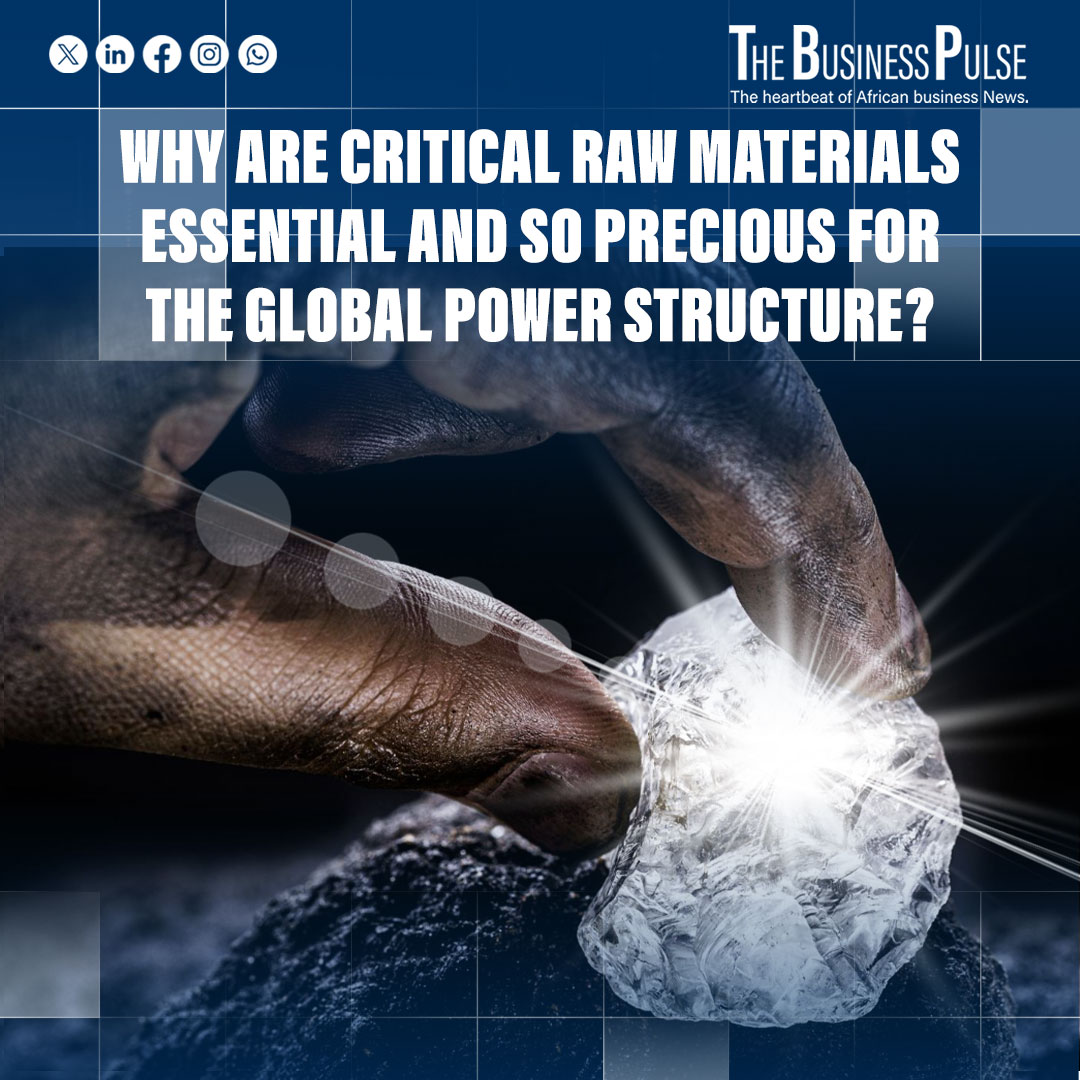
The Business of the Earth: Why Minerals Drive Power, Not Just Luxury
Walk past a high-end jewelry store and you will see gold, diamonds, and platinum presented as symbols of romance and status. To the casual observer, these are precious because they are beautiful and rare. However, in the high-stakes world of global trade and industrial strategy, beauty is an irrelevant byproduct. In the actual economy, a mineral is not precious because it shines; it is precious because it is a non-substitutable cog in the machinery of civilization.
As we move through 2026, the global scramble for critical raw materials has moved from the backrooms of mining conferences to the center of national security briefings. The value of these minerals sits in their physical properties, such as their ability to conduct electricity without corroding, to withstand extreme heat, or to act as a catalyst for chemical reactions. If these minerals vanished tomorrow, the jewelry industry would collapse and we would lose our fashion. But if their industrial supply chains collapsed, our power grids would fail, our communication networks would go dark, and our transport systems would grind to a halt.
Join our WhatsApp Group
The Physics of Scarcity: What Defines Value?
To understand the business beneath the business, one must look at the periodic table before the price ticker. A mineral becomes precious or critical when it satisfies four distinct economic and physical criteria. First, it must have a unique physical utility where it performs a task that no other element can do as efficiently. Second, it must have an inelastic supply, meaning it is either geologically rare or controlled by a geopolitical monopoly. Third, the refining complexity must be high, as the cost and technology required to turn raw ore into a usable industrial component are often prohibitively expensive. Finally, there must be a systemic dependence where the modern economy has already been hard-wired to depend on it.
In 2026, governments have formalized this list under the banner of critical raw materials, a term that now dictates trade treaties and military alliances. While the 20th century was defined by access to liquid hydrocarbons like oil, the 21st century is defined by the solid elements that make the digital and green transitions possible.
A Brief History of Mineral Power
The relationship between minerals and power is as old as the state itself. Historically, the transition from the Stone Age to the Bronze Age was not just a technological leap but a geopolitical one. Bronze required copper and tin. Because these two minerals were rarely found in the same place, the first great international trade routes were established specifically to bring them together. Empires that controlled the copper mines of Cyprus or the tin mines of Cornwall became the superpowers of their day.
During the Roman Empire, the conquest of Spain was driven largely by the desire for its gold and silver mines. These minerals were not just for decoration; they were the physical manifestation of the Roman army’s pay. Without a steady supply of silver to mint the denarius, the legions would not march, and the borders would collapse. In this sense, the “preciousness” of silver was a direct function of its ability to project military force.
In the modern era, the shift has moved from coinage to components. In the 19th and 20th centuries, the industrial revolution was built on coal and iron. Today, the digital revolution is built on a much more complex array of elements. We have moved from using a handful of metals to using almost every element on the periodic table. This evolution has made the management of critical raw materials the primary concern for any nation hoping to maintain industrial relevance.
ALSO READ: Zimbabwe Launches Big River Cleanup to Repair Illegal Mining Damage
Gold: The Financial Insurance of the World
Gold is the ultimate example of a mineral whose value is misunderstood by the public. While jewelry accounts for a significant portion of annual demand, it is the least strategically important use. The real business of gold is trust and inertia. From a physics perspective, gold is a noble metal. It does not oxidize, it does not rust, and it does not react with oxygen. This means a gold coin pulled from a 2,000-year-old shipwreck looks exactly as it did the day it was minted.
In the world of finance, this makes it a perfect neutral reserve asset. As of early 2026, with gold prices hovering near record highs, central banks from Beijing to Warsaw are accumulating gold at record rates. They are not doing this to make jewelry; they are doing it as insurance against the debasement of digital currencies and the volatility of the bond market. Gold is the only financial asset that is not someone else’s liability.
Beyond the vault, gold’s noble nature makes it essential for the electronics that power our lives. In your smartphone, gold is used for the tiny connectors on circuit boards. Silver is a better conductor, but silver tarnishes. In a device with millions of microscopic connections, a single speck of rust can kill the machine. Gold’s reliability ensures that satellites, medical devices, and high-end servers function for decades without maintenance. This industrial floor, paired with its role as a monetary anchor, is why gold remains at the top of the list of critical raw materials for any stable economy.
The Copper Pulse: The Circulatory System of Civilization
If gold is the insurance policy, copper is the blood. Copper is the most important precious mineral that people rarely call precious. Its value is driven by one simple fact: it is the most efficient and cost-effective conductor of electricity on Earth. Every transition the world is currently making, from the expansion of AI data centers to the electrification of everything, requires massive amounts of copper.
By late 2025, copper hit record highs, signaling a massive supply-demand gap. An electric vehicle (EV) requires roughly 80kg of copper, which is nearly four times the amount found in a traditional internal combustion engine. The business logic of copper is the logic of infrastructure. You cannot have a green transition or an AI revolution without it. This makes copper deposits more strategically valuable than almost any diamond mine. Control over copper mines in Chile, Peru, and the Democratic Republic of Congo is now a primary focus for global powers looking to secure their critical raw materials for the next thirty years. Because the world is building more electrical systems than ever before, our infrastructure depends on how we manage these critical raw materials during the transition.
ALSO READ: The Viral Exit Strategy: A Blueprint for Superstar Jani Brand Monetization
Platinum Group Metals: The Unseen Filters
Platinum, palladium, and rhodium are minerals most people have never seen, yet they enable modern urban life. Their primary value lies in catalysis. They can trigger chemical reactions without being destroyed in the process. For decades, their main job was in catalytic converters, stripping toxic pollutants from car exhaust. Today, their role is shifting toward the future of energy.
Platinum is a cornerstone of the hydrogen economy, acting as the catalyst in fuel cells that turn hydrogen into electricity and water. Because 80% of the world’s platinum comes from just two countries, South Africa and Russia, the supply is precariously concentrated. Small disruptions in a single South African mine can send global palladium prices into a tailspin. This concentration creates a high-risk, high-reward business environment where industrial consumers are constantly searching for substitutes. This persistent necessity is why they remain high priority critical raw materials for the automotive and energy sectors. Policy makers in developed economies have realized that nations must treat these as critical raw materials to ensure energy security.
Rare Earths: The Magnets of Geopolitics
Despite their name, rare earths like Neodymium and Dysprosium are not particularly rare in the Earth’s crust. They are precious because they are difficult to separate and refine. These minerals are essential for the production of high-strength permanent magnets. These magnets are the muscles inside every wind turbine, every EV motor, and every high-tech missile guidance system. If you want a motor to be small, light, and powerful, you need rare earth elements.
The current geopolitical tension arises because China controls roughly 85% of the global refining capacity for these minerals. Mining the ore is relatively easy, but building the chemical plants that can separate these elements with high purity is the real barrier to entry. This bottleneck has forced Western nations to scramble for their own domestic critical raw materials strategies, investing billions in friend-shoring projects to break the refining monopoly. The current monopoly over these critical raw materials creates a unique leverage point in global trade negotiations.
The Politics of the Value Chain: Africa’s Crossroads
Much of the world’s mineral wealth is located in Africa. The continent holds the vast majority of the world’s cobalt, platinum, and significant portions of its gold and copper. Yet, historically, African nations have occupied the lowest rung of the value ladder: extraction. The business model of the 20th century was simple: dig it up, ship it out, and buy back the finished product at a high markup.
In 2026, the power dynamics are shifting. Nations like the DRC and Zambia are increasingly demanding local value addition. They want the refineries and the component factories built on their soil. This is the new front line of global business. Those who control the refining and the manufacturing of critical raw materials hold the leverage. If a country only extracts, it is a servant to the market. If it refines and processes, it becomes a master of the market.
ALSO READ: Zimbabwe New ZiG Notes 2026
The Hidden Price Drivers
When an ordinary person looks at the price of gold or copper, they might think it is just about supply and demand. In reality, the price is influenced by futures markets, currency strength, and ESG compliance. In 2026, dirty minerals carrying high environmental or human costs are being phased out by institutional investors. This adds a new layer of complexity to the trade. A single election in a mineral-rich nation can change the global price of critical raw materials overnight.
Why This Matters to You
Understanding the business of minerals is about more than just knowing why your phone is expensive. It is about understanding the foundation of the 21st-century economy. We are moving from a world powered by fossil fuels, which are burned and gone, to a world powered by minerals, which are mined, used, and ideally recycled. This transition makes the security of critical raw materials the most important business story of our time. It explains why car companies are now buying stakes in lithium mines and why tech giants are signing 20-year contracts for recycled copper.
Conclusion: The New Map of Power
The story of precious minerals has moved past the era of mythology and into the era of necessity. We no longer fight wars over the glitter of gold; we compete over the conductivity of copper, the magnetism of neodymium, and the catalytic power of platinum. As we look toward the future, the winners in the global economy will be those who can secure, refine, and recycle these critical raw materials.
The business beneath the business is no longer hidden. It is the very floor upon which the modern world is built. Scarcity creates the price, but utility creates the value. Whether it is the gold in your smartphone or the copper in your home’s wiring, these minerals are the silent anchors of our standard of living. In an increasingly digital world, our most important assets remain remarkably physical. The availability of critical raw materials is the ultimate limiting factor for growth. The era of the critical raw materials race is just beginning, and for those who understand the logic of the earth, the opportunities are as vast as the reserves themselves.
Leave a Reply