
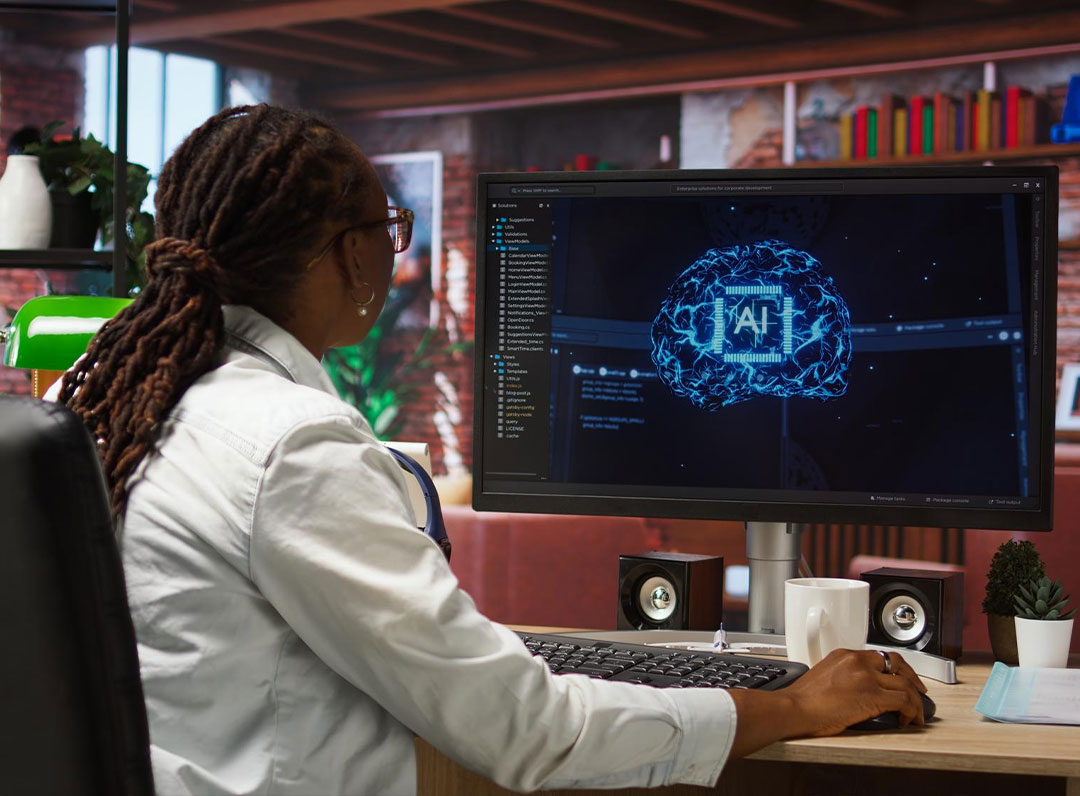
Preparing for AI: A Practical Guide to AI-ready careers
There’s a lot of anxiety about automation and artificial intelligence. That’s understandable every major technological shift rewrites parts of the labour market. The sensible response is not panic but preparation. This guide gives entering the tertiary education phase a concrete roadmap to build skills, choose programmes, and position themselves for long-term success in the age of AI. It focuses on practical steps that lead to AI-ready careers.
Why plan for AI now
AI is not a single technology but a set of capabilities machine learning, large language models, computer vision, planning systems that will augment and automate tasks across sectors. Some jobs will be reshaped, others automated, and many new roles will appear. Students who understand how work is changing and who cultivate complementary cognitive, technical and social skills will find more options and better income security. That’s why deliberate preparation for AI-ready careers matters.
Join our WhatsApp Group
The core capabilities employers will value
Focus on capabilities that are hard to automate, or that enhance AI systems:
- Analytical reasoning and data literacy. Ability to interpret data, design experiments, and draw evidence-based conclusions.
- Technical fluency. Not everyone needs to be a machine-learning engineer, but familiarity with coding (Python), data tools, and basic AI concepts is a major advantage.
- Domain expertise. Deep knowledge in a sector (health, agriculture, law, finance) combined with technical fluency creates rare hybrid profiles.
- Creative problem solving. Designing new services, processes, and products that use AI as a tool.
- Communication and ethical judgment. Explaining results to non-technical stakeholders and making principled choices about responsible AI use.
Build these capabilities deliberately if you want to pursue AI-ready careers.
What to study in high school and why
High school is where you create options. Aim for a balance of quantitative and communication subjects:
- Mathematics (algebra, statistics, calculus): Foundation for data science and engineering.
- Computer science: Basic programming, algorithms, and computational thinking.
- Science (biology, physics, chemistry): Builds analytical habits and opens domain-specific AI paths (e.g., bioinformatics).
- English and communication: Clear writing and oral presentation are essential for leadership roles.
- Social sciences and ethics: Understanding institutions, society and ethical tradeoffs of AI.
These subjects prepare you for college programmes that lead into AI-ready careers.
College and university programs to consider
At the tertiary level, pick programmes that combine depth, applied practice, and cross-disciplinary exposure:
- Computer Science / Software Engineering: Direct path to AI engineering and system development.
- Data Science / Statistics: Focused route into analytics, model building, and experiment design.
- Electrical Engineering / Robotics: Hardware-software integration and control systems for embodied AI.
- Cognitive Science / Human–Computer Interaction: Ideal for roles that shape human-AI collaboration.
- Public Policy / Law with tech electives: Prepare for governance, regulation and ethical oversight roles.
- Domain degrees (health, agriculture, finance) + data skills: Combines sector knowledge with technical tools for immediate impact.
Choosing a programme that mixes technical training with domain depth helps you access high-value, resilient AI-ready careers.
Hybrid skills are the multiplier
The highest-value roles rarely sit at the intersection of a single discipline. The multiplier is what you can do with a combination:
- Data scientist + epidemiology → public-health AI projects.
- Software engineer + UX design → usable AI products.
- Lawyer + AI ethics → policy and compliance leadership.
If you stack a technical base with a second competency, you make yourself indispensable in fields deploying AI the foundation for many AI-ready careers.
Fields with durable demand (and why)
Some sectors will continue to need human expertise because of complexity, human judgment, or regulation:
- Healthcare: clinical judgment, patient relationships, and regulated use of AI.
- Education: curriculum design, human mentorship, and personalized learning oversight.
- Energy & environment: systems integration, regulatory compliance, and adaptation planning.
- Finance & risk management: ethical oversight, strategic judgment, and scenario planning.
- Infrastructure & logistics: complex optimization plus field execution.
These sectors reward people who combine domain knowledge with AI tools a consistent pathway to AI-ready careers.
Practical steps to build your resume while in high school
Start early. Employers and universities look for evidence of practical ability.
- Learn to code. Start with Python; build small projects (data cleaning, simple ML models).
- Do data projects. Analyse public datasets present findings in reports or blogs.
- Join clubs and competitions. Robotics teams, math contests, or data hackathons.
- Take online courses and certificates. Use reputable platforms to learn specific tools.
- Work on domain projects. Volunteer with healthcare clinics, local farms, or community NGOs where data can help.
- Create a portfolio. Github, a short website, or a blog that shows finished work.
These actions make university applications and entry-level opportunities much more competitive for AI-ready careers.
Mindset and soft skills to cultivate
AI amplifies both technical and human skills. Invest time in:
- Lifelong learning. New models, tools, and norms arrive rapidly.
- Curiosity and experimentation. Prototype quickly, fail small, iterate.
- Ethical thinking and empathy. Understand impacts on people and communities.
- Collaboration. Multidisciplinary teams are the norm in AI projects.
Strong soft skills are what let technical talent translate into leadership necessary for top AI-ready careers.
ALSO READ: Building the Future: A Strategic Guide to AI-ready careers in the Age of Automation
Alternatives to technical paths
Not everyone will want a technical degree that’s okay. You can still build an AI-resilient career by combining non-technical strengths with domain knowledge:
- Communications + AI literacy: Explainers, technical journalists, and policy communicators.
- Design + computation: Service designers who orchestrate human-AI interactions.
- Business + analytics: Product managers who prioritize human value in AI products.
These roles are central to deployments of AI and form part of the broader set of AI-ready careers.
How to evaluate university choices
When choosing programmes, compare:
- Curriculum balance: Are there data/AI modules and domain electives?
- Research & industry links: Internship pipelines and partner companies.
- Lab and project-based work: Practical experience beats passive lecture time.
- Career services and alumni outcomes: Where do graduates end up?
Select institutions that give applied opportunities; that pathway consistently produces graduates for AI-ready careers.
Early career moves that accelerate growth
After graduation, make choices that compound learning:
- Internships with measurable impact. Seek roles that let you implement and evaluate models.
- Start in product roles or consulting. Exposure to multiple domains accelerates judgment.
- Pursue graduate study selectively. An MSc or professional degree can add leverage in specialized niches.
- Contribute to open source and standards work. Visibility in communities leads to opportunities.
These moves reduce risk and sharpen the profile for high-value AI-ready careers.
Entrepreneurship and freelance options
AI also creates entrepreneurial leverage. If you prefer building over joining, consider:
- Niche productised services that combine AI with domain expertise.
- Freelance data-science and analytics for SMEs.
- Startups that apply AI to persistent local problems.
Entrepreneurship is a path to independence and can yield strong financial returns when paired with discipline and customer focus another route into AI-ready careers.
Final checklist and next steps
- Build numeracy and coding habits now.
- Combine a technical base with one domain strength.
- Create a visible portfolio of projects.
- Prioritise internships and applied learning in college.
- Invest in communication, ethics, and teamwork skills.
Treat your education as a sequence of investments; each choice should move you toward demonstrable competence. With the right combination of technical knowledge, domain expertise, and human skills, you can access a wide range of AI-ready careers.
Closing perspective
AI will alter tasks, not human potential. Students who prepare strategically, diversify skills, and focus on real-world problem solving will not only survive but thrive. The careers of tomorrow will reward those who can pair machine capability with human judgment and creativity. Start now, stay curious, and build toward AI-ready careers that combine technical fluency, ethical clarity, and domain mastery.
Leave a Reply