
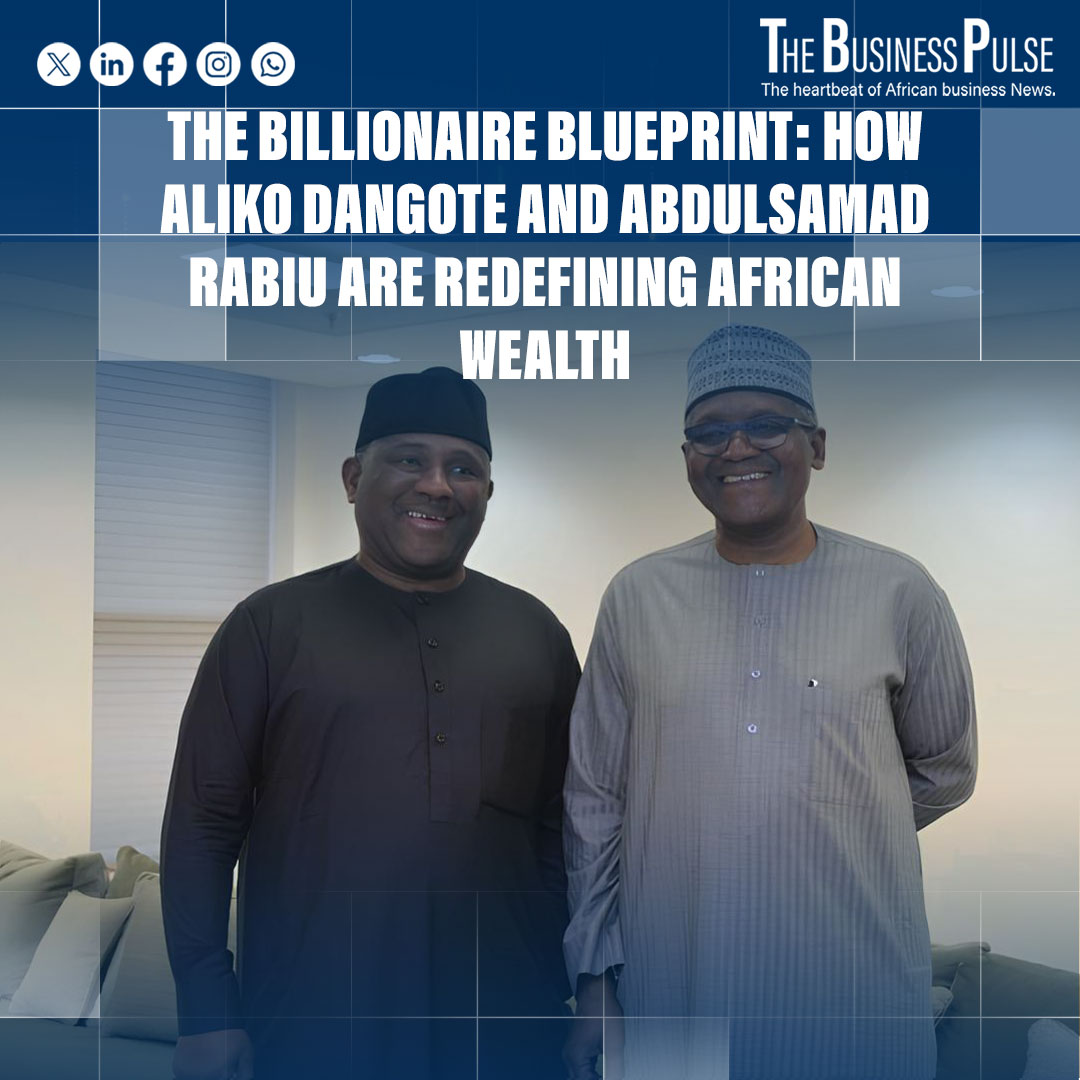
For decades, the peak of the Bloomberg Billionaires Index in Africa was dominated by a familiar narrative: wealth derived from legacy commodities or mineral extraction, often held by a narrow demographic. However, the 2026 rankings have signaled a seismic shift in the economic landscape of the continent. For the first time in years, two Black Africans (Aliko Dangote and Abdulsamad Rabiu) occupy spots within the top five wealthiest individuals on the continent. While Dangote has long been the standard bearer for African industrialization, it is the rapid ascent of the Abdulsamad Rabiu net worth to $10.4 billion that has caught the attention of global analysts.
This is not merely a story of two wealthy men; it is a case study in the Business Beneath the Business. It reveals how strategic expansion into essential sectors like food processing and infrastructure can create a resilient wealth engine even in volatile emerging markets. Understanding the Abdulsamad Rabiu net worth requires looking past the billions and into the structural transformations of the BUA Group.
Join our WhatsApp Group
The Foundation of a Conglomerate
The journey toward the current Abdulsamad Rabiu net worth began decades ago but accelerated through a philosophy of backward integration. Like his contemporary, Aliko Dangote, Rabiu realized that importing finished goods into Nigeria was a low margin, high risk game. The real wealth lay in controlling the entire value chain (from the raw materials to the processing plants and the logistics networks that deliver the final product).
The BUA Group, under the leadership of Rabiu, transitioned from a trading house into a massive industrial conglomerate. This pivot is the primary reason the Abdulsamad Rabiu net worth managed to climb during periods when other billionaires saw their fortunes shrink due to currency devaluations. By producing cement, sugar, and flour locally, Rabiu insulated his business from the Import Trap that plagues many African entrepreneurs.
BUA Foods: The 2025 Profit Engine
A major contributor to the surge in the Abdulsamad Rabiu net worth has been the stellar performance of BUA Foods. In 2025, the company recorded a significant profit increase that defied broader economic headwinds in Nigeria. This success was not accidental; it was the result of production enhancements and strategic partnerships that expanded the footprint of BUA into new regional markets.
When investors analyze the Abdulsamad Rabiu net worth, they look closely at the scalability of BUA Foods. In 2025, the company optimized its sugar refining and flour milling capacities, allowing it to capture a larger share of the Nigerian consumer market. As the population grows, the demand for basic food staples remains inelastic. By dominating this Essential Economy, the BUA Group ensured that the Abdulsamad Rabiu net worth remained on an upward trajectory while luxury focused businesses struggled.
Also Read: James Ndambo: A Trailblazer of African Success: Inspiring a New Generation of African Entrepreneurs
Infrastructure and Cement: The Building Blocks of Wealth
Beyond food, the Business Beneath the Business for Rabiu involves the literal building blocks of the continent: cement. Infrastructure development is the heartbeat of African growth, and BUA Cement has positioned itself as a lean, high tech competitor to Dangote Cement. The efficiency of the plants owned by Rabiu is a key metric that supports the Abdulsamad Rabiu net worth.
By utilizing modern, energy efficient technology, BUA Cement has maintained lower operating costs than many of its rivals. This operational efficiency translates directly into the bottom line, fueling the Abdulsamad Rabiu net worth and providing the capital necessary for further expansion. In 2025, BUA Cement launched new production lines that specifically targeted the infrastructure needs of Northern Nigeria and neighboring West African countries.
The Competition of Giants: Dangote and Rabiu
The presence of two Black Africans in the top five is significant because it fosters a healthy industrial rivalry. For years, Aliko Dangote held a near monopoly on high level industrialization in Nigeria. The rise of the Abdulsamad Rabiu net worth represents the end of that era and the beginning of a duopoly that could benefit the consumer.
Competition drives innovation. As Rabiu chases Dangote on the billionaire index, both men are forced to optimize their operations, lower prices, and expand into new sectors. This competition is a vital component of the Industrial Renaissance in West Africa. When we track the Abdulsamad Rabiu net worth, we are actually tracking the growth of the manufacturing capacity of Nigeria.
Strategic Expansions and Future Outlook
What does the future hold for the Abdulsamad Rabiu net worth? If 2025 was the year of consolidation and profit growth in food processing, 2026 is shaping up to be the year of regional expansion. Rabiu has already signaled intentions to list more of his subsidiaries and engage in cross border partnerships that will take the BUA brand into East and Southern Africa.
Analysts suggest that the Abdulsamad Rabiu net worth could see another significant jump as these new markets mature. The Business Beneath the Business here is simple: once you have perfected a production model in a difficult market like Nigeria, you can export that model to any other emerging economy. The blueprint created by Rabiu for cement and food is highly portable, making the future of the Abdulsamad Rabiu net worth look incredibly robust.
Why the Ordinary Person Should Care
To the person on the street, the Abdulsamad Rabiu net worth might seem like a distant, irrelevant number. However, the vital signs of a conglomerate owned by a billionaire are often the vital signs of the economy of the nation. When the Abdulsamad Rabiu net worth grows through industrial expansion, it means jobs are being created in cement factories, flour mills, and logistics hubs.
It also means that the country is becoming less dependent on foreign imports. Every ton of sugar or bag of cement produced by the BUA Group is a victory for the trade balance of Nigeria. The Abdulsamad Rabiu net worth is, in many ways, a proxy for the success of African Backward Integration.
Summary: A New Chapter for African Wealth
The rise of Abdulsamad Rabiu to the $10.4 billion mark is a milestone for African business. By joining Aliko Dangote at the top of the Bloomberg Billionaires Index, Rabiu has proven that massive wealth can be built through the production of essential goods and infrastructure.
The Abdulsamad Rabiu net worth is not built on speculative Fast Money or volatile stock market bubbles. It is built on the hard reality of factories, refineries, and supply chains. As we look ahead, the continued growth of the Abdulsamad Rabiu net worth will likely depend on his ability to navigate the complexities of regional trade and maintain the technological edge that has made BUA Group a household name.
The industrial future of Africa is no longer a solo performance by one man. With the Abdulsamad Rabiu net worth now rivaling the elite of the world, the continent has two powerful engines driving it toward a more self sufficient and prosperous tomorrow.

Head of Business Development, Alula Animation. With 10 years in advertising and sustained involvement in startups and entrepreneurship since graduating from business school and the School of Diplomacy and International Relations, Beloved researches and writes practical business analysis and verified job-market insights for The Business Pulse Africa.
Leave a Reply