
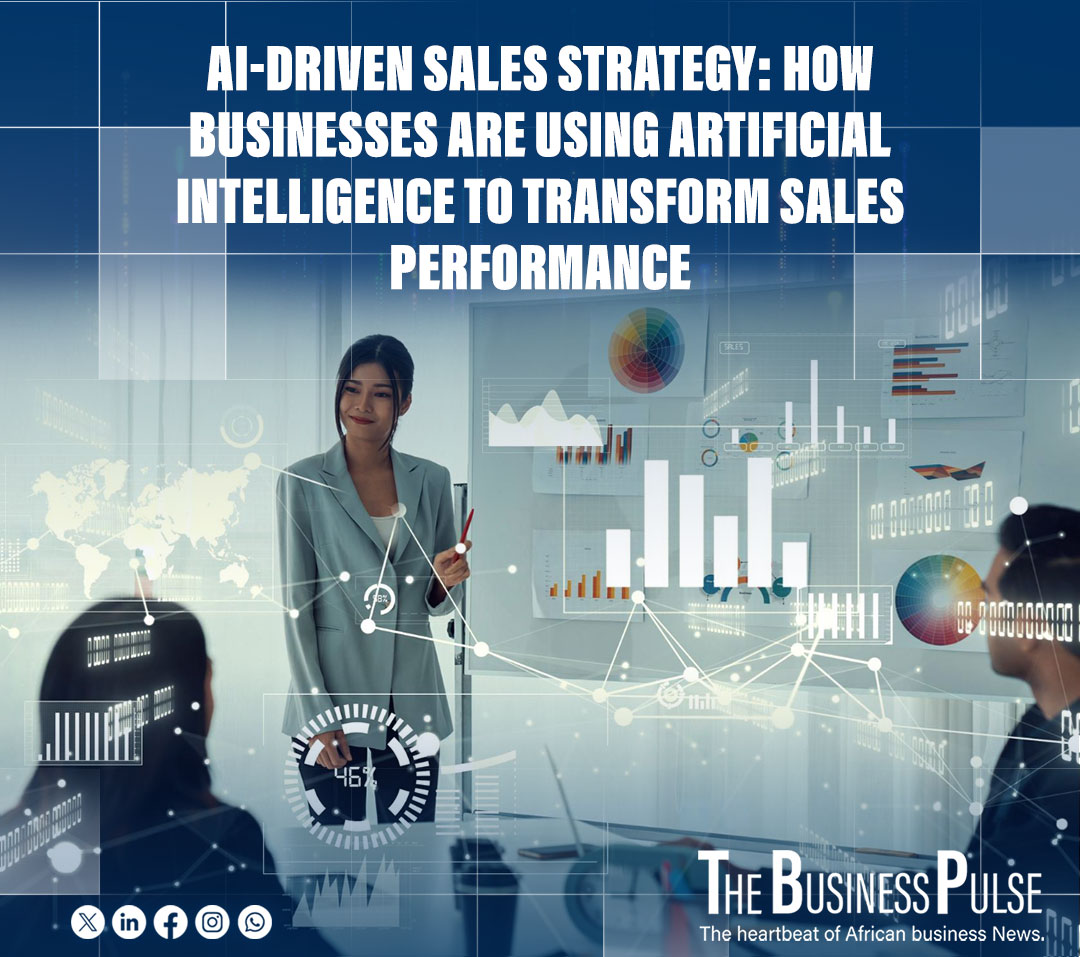
AI-driven sales strategy
Artificial intelligence is no longer a future concept in sales. It is already reshaping how companies find leads, engage customers, forecast revenue, and manage performance. An AI-driven sales strategy is not about replacing salespeople with machines. It is about using technology to remove friction from the sales process, improve decision-making, and allow human sellers to focus on what they do best: building trust and closing deals. This guide explains how sales departments can apply artificial intelligence in practical ways, why it works, and how to avoid the common mistakes that cause many digital transformations to fail.
Understanding the role of AI in modern sales
Sales has always been driven by data, even when that data lived in notebooks and memory. Today, artificial intelligence allows companies to process volumes of customer information that would be impossible for humans to analyze manually. Patterns in buying behavior, engagement timing, and deal risk can now be detected automatically. This is where artificial intelligence in sales becomes valuable. Instead of relying only on instinct or past habits, managers and representatives can use real-time insight to decide who to call, when to follow up, and how to tailor a message.
Join our WhatsApp Group
An effective AI-driven sales strategy works best when it supports existing business goals. It should be used to shorten the sales cycle, improve lead quality, and increase win rates. When implemented correctly, it also reduces administrative workload, allowing salespeople to spend more time selling and less time updating systems.
Why AI matters for sales efficiency
One of the biggest problems in traditional sales operations is wasted effort. Reps chase unqualified leads, duplicate work, or rely on outdated information. AI systems are designed to prioritize. By ranking leads based on likelihood to convert, they guide attention toward prospects that matter most. This directly supports AI in sales efficiency, as time and resources are allocated more intelligently.
Another advantage lies in speed. AI tools can respond instantly to inbound inquiries through chatbots or automated email replies. In many industries, response time strongly influences conversion rates. When customers receive fast and relevant answers, trust increases and competitors are kept out of the conversation.
Building the foundation: data and process
No AI system can outperform the quality of the data it is trained on. A company attempting to use artificial intelligence without a structured sales process will struggle. Before applying AI, organizations must define their sales stages, clarify ownership of accounts, and standardize data capture. Customer relationship management systems should hold consistent information such as contact details, deal size, industry, and interaction history.
This is where many AI projects fail. Businesses rush to adopt tools without fixing broken workflows. An AI-driven sales strategy depends on reliable inputs. If sales records are incomplete or inaccurate, predictions will be misleading. Therefore, data governance is not a technical issue alone. It is a management responsibility.
ALSO READ: SME Failure Prevention: A Practical Guide for African Small Businesses
AI across the sales lifecycle
Artificial intelligence can be applied at each stage of the sales funnel. During prospecting, AI tools can enrich lead profiles using firmographic and behavioral data. This helps sales teams understand who they are contacting and why that prospect may be interested.
During engagement, natural language generation tools can draft personalized emails and proposals. These systems analyze previous successful messages and adapt tone and structure accordingly. While human oversight remains essential, such tools reduce preparation time and improve consistency. This is a practical example of using AI to improve sales performance without sacrificing authenticity.
In the negotiation and closing stages, AI can assess deal risk. By comparing current opportunities to historical data, systems can highlight warning signs such as long response delays or price sensitivity. Managers can then intervene with targeted support.
Forecasting and decision-making
Sales forecasting has traditionally relied on judgment and historical averages. AI models introduce probability-based forecasting that adjusts dynamically as new information arrives. These systems detect trends that humans often miss, such as seasonal shifts or market reactions to price changes.
An AI-driven sales strategy improves not only accuracy but accountability. Managers gain a clearer view of which deals are realistic and which are likely to stall. This leads to better resource allocation and more credible revenue projections for finance and leadership teams.
Customer retention and growth
Retention is often more profitable than acquisition. Artificial intelligence can monitor usage patterns and support tickets to predict churn risk. When warning signs appear, sales or account teams can respond with targeted offers or support. AI can also recommend cross-selling opportunities based on similar customer profiles.
This approach reflects a shift from reactive to proactive selling. Instead of waiting for customers to complain or leave, organizations anticipate needs and act earlier. In this sense, artificial intelligence in sales becomes a tool for relationship management rather than just transaction management.
ALSO READ: Mastering Social Media Marketing for Business: The Strategic Deep-Dive to Building Unshakable Brand Authority and Driving Growth
Differences by business size
Small businesses usually adopt AI through ready-made tools integrated into their CRM or email platforms. Their priority is automation of follow-ups and lead response. For them, an AI-driven sales strategy is about survival and scale. Medium-sized firms tend to expand into predictive analytics and conversation intelligence. They often combine marketing and sales data to improve targeting.
Large enterprises, by contrast, may develop custom models using internal data lakes. Their focus extends to territory optimization, contract analytics, and enterprise forecasting. Despite these differences, the principle remains the same: align AI use with business objectives and maturity level.
Implementation roadmap
The introduction of AI should follow a phased approach. Early stages focus on identifying measurable goals such as reducing response time or increasing conversion rates. Pilot projects allow companies to test tools in one department or region. Results should be tracked against baseline performance.
Training is equally important. Sales teams must understand what AI does and what it does not do. They should see it as a support system rather than a threat. Transparency in how recommendations are generated builds trust and improves adoption.
Measuring impact
Metrics should reflect business value rather than technical activity. Key indicators include lead-to-opportunity conversion rates, deal velocity, forecast accuracy, and administrative time saved. These measurements reveal whether using AI to improve sales performance is truly delivering results or simply adding complexity.
Long-term evaluation should also consider customer satisfaction and retention. Efficiency gains lose meaning if relationships deteriorate due to over-automation or impersonal communication.
ALSO READ: The Viral Exit Strategy: A Blueprint for Superstar Jani Brand Monetization
Risk, ethics, and governance
The use of AI introduces new responsibilities. Customer data must be protected in line with privacy regulations. Systems should be monitored for bias, especially in lead scoring and pricing recommendations. Decisions should remain auditable, allowing managers to understand why certain actions were suggested.
An AI-driven sales strategy must therefore include governance structures. These define who owns the models, how often they are reviewed, and how errors are handled. Without this discipline, automation can amplify mistakes instead of correcting them.
Common mistakes to avoid
One common error is expecting instant results without organizational change. AI tools cannot compensate for unclear sales processes or weak leadership. Another mistake is automating customer interactions too aggressively, which can make communication feel robotic. Successful companies balance automation with human judgment.
There is also the danger of focusing only on short-term metrics such as email opens while ignoring long-term trust. AI should enhance the customer experience, not reduce it to algorithms alone.
The strategic value of AI in sales
Over time, organizations that adopt artificial intelligence systematically gain a competitive advantage. They learn faster from market signals, adapt messaging more quickly, and allocate resources more effectively. This creates a feedback loop in which data improves decisions and decisions generate better data.
An AI-driven sales strategy is therefore not just a technical upgrade. It is a shift in how selling is organized and evaluated. It encourages evidence-based management, continuous learning, and closer alignment between marketing, sales, and customer service.
Conclusion
Artificial intelligence is reshaping the sales function by turning information into actionable insight. When applied thoughtfully, it increases efficiency, improves forecasting, and strengthens customer relationships. The key is to integrate technology with sound processes, skilled people, and ethical oversight.
By focusing on clear goals, reliable data, and gradual implementation, companies can use AI in sales efficiency to drive sustainable growth. More importantly, they can ensure that artificial intelligence in sales remains a tool for empowerment rather than replacement. The future of selling belongs to organizations that combine human judgment with machine intelligence, using both to serve customers better and compete more effectively in an increasingly data-driven economy.

Head of Business Development, Alula Animation. With 10 years in advertising and sustained involvement in startups and entrepreneurship since graduating from business school and the School of Diplomacy and International Relations, Beloved researches and writes practical business analysis and verified job-market insights for The Business Pulse Africa.
Leave a Reply