

AI era challenges
The rise of generative models, automation and data-driven systems has created a new economic moment. The AI era challenges now reshape how work is done, how firms compete and how societies must protect the vulnerable. This is not a simple technology shift. It is a set of forces that can lift productivity and also concentrate risk. Policymakers, educators and business leaders must treat these realities as urgent.
Across industries the first effect is uneven productivity gains. Some firms adopt tools that automate routine tasks in accounting, customer support and parts of legal work. These early adopters see clear cost savings and faster decision cycles. Yet many small businesses cannot afford the same investments and face rising competitive pressure. The AI era challenges therefore create a two speed economy unless access is broadened.
Join our WhatsApp Group
Employment patterns change quickly under technological adoption. Jobs that involve predictable, repeatable tasks are most at risk. In countries with large workforces in clerical roles, call centres, basic data entry and low-value manufacturing, the displacement potential is high. At the same time new roles emerge in data operations, model monitoring and AI policy compliance. The net effect depends on how fast workers can be retrained. Addressing the AI era challenges means expanding reskilling at scale and matching training to near-term employer needs.
Education systems must shift from content recall to applied skills. Universities that teach static curricula will graduate people who struggle in AI-rich workplaces. Practical change is needed. Curricula should embed tool use across fields, not confine AI to technology degrees. Graduates should leave with project portfolios, experience in human oversight of models, and a habit of continuous learning. These changes reduce the friction caused by the AI era challenges and increase graduate employability.
Also Read: UCT PhD in Epidemiology Opens Life Changing Health Research Paths Scholarship
For micro, small and medium enterprises there is a real danger of exclusion. Large firms can pay for cloud services, data engineers and compliance checks. Smaller firms cannot. As a result platform effects can concentrate market share in the hands of a few. Supporting SMEs with subsidised access to compute, shared data platforms and mentorship will be decisive if countries want to avoid market concentration that fuels inequality in the AI era challenges.
Data governance is central to whether benefits stay local. AI needs high quality, representative data. When data is exported or controlled by foreign platforms, the value accrues offshore. Countries must insist on local data hosting for sensitive sectors, clear consent rules and strict privacy protections. Without these measures the AI era challenges will deepen extractive digital patterns rather than build local capabilities.
Health and education gain from well-designed AI, but risks are real. Diagnostic tools may improve triage in under-served clinics. Adaptive learning can help teachers scale personalised feedback. Yet errors in models, weak oversight and lack of accountability create harm. A misdiagnosis driven by an unverified model or a biased learning path can do real damage. Managing the AI era challenges requires strong regulatory oversight, clinician and teacher training, and transparent audit trails.
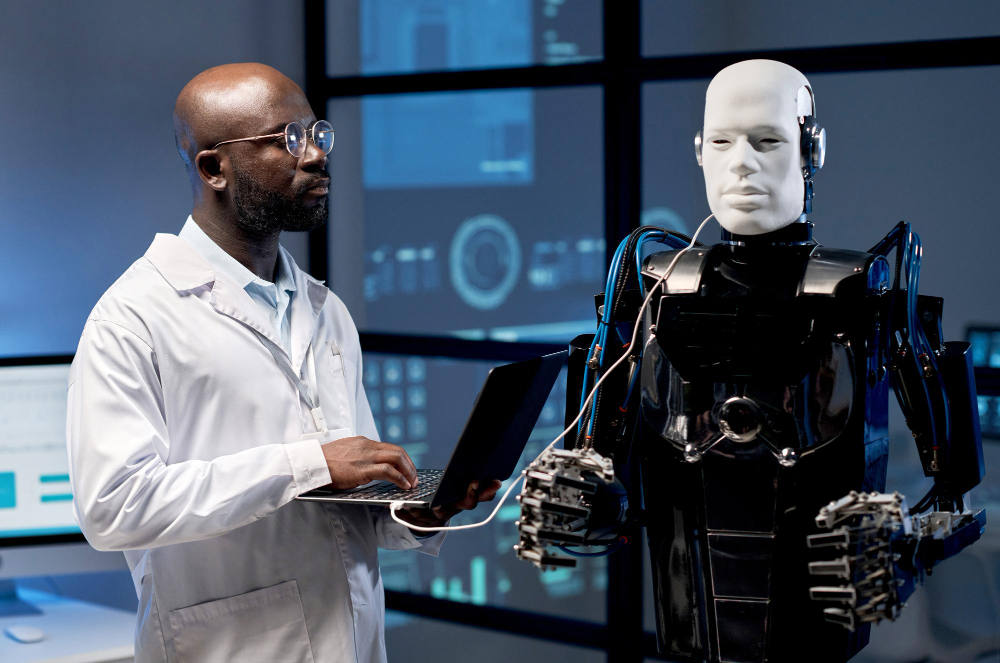
Public services can be more efficient if algorithms are used to allocate resources, detect fraud and forecast demand. However, opaque systems used for policing or surveillance can be abused. In weak institutional settings automated decisions may reinforce bias and erode trust. Civil society and independent audit bodies must have access to algorithmic records so the AI era challenges do not become tools for exclusion.
The labour market transition must be managed with social policy. Governments should fund targeted reskilling, portable micro-credentials and apprenticeship programmes that link learners to employers. Unemployment insurance and wage support during retraining reduce hardship and political backlash. These steps are essential to temper the social shocks caused by the AI era challenges.
Investors and firms themselves have responsibilities. Firms should adopt AI with clear accountability, keep human oversight in critical loops and share benefits across their workforce. Public procurement can set standards by demanding transparent, auditable systems and by favouring suppliers that commit to local hiring and training. These practical commitments lower system risk from the AI era challenges and build broader public confidence.
Also Read: Chinese Government Scholarship Creates Global Study Paths
Finally, international partners and multilateral institutions must support capacity building. Funding for national data centres, joint research, faculty exchange and regulatory training helps countries avoid a technological gap. Donors should prioritise projects that strengthen local ownership of AI assets and that address the imbalance in where value is captured. Doing so reduces the negative distributional effects of the AI era challenges.
The changes ahead are not inevitable in a single direction. Policy choices, business practices and educational reforms determine whether AI becomes a source of broad gain or a mechanism for deeper exclusion. Governments must act now to set rules, fund training and protect citizens. Universities must rebuild programmes to teach judgment, oversight and applied problem solving. Firms must adopt responsible deployment and invest in worker transitions. Civil society must demand transparency and redress.
If these stakeholders fail to act, the AI era challenges will deepen inequality, weaken labour markets and erode public trust in institutions. If they succeed, AI can raise productivity, expand services and create new opportunities. That outcome requires deliberate, coordinated effort rather than passive hope. The policy task is urgent, complex and unending, but it is also the most important lever to ensure African societies capture value and protect their citizens in this moment of rapid technological change.

Head of Business Development, Alula Animation. With 10 years in advertising and sustained involvement in startups and entrepreneurship since graduating from business school and the School of Diplomacy and International Relations, Beloved researches and writes practical business analysis and verified job-market insights for The Business Pulse Africa.
Leave a Reply