
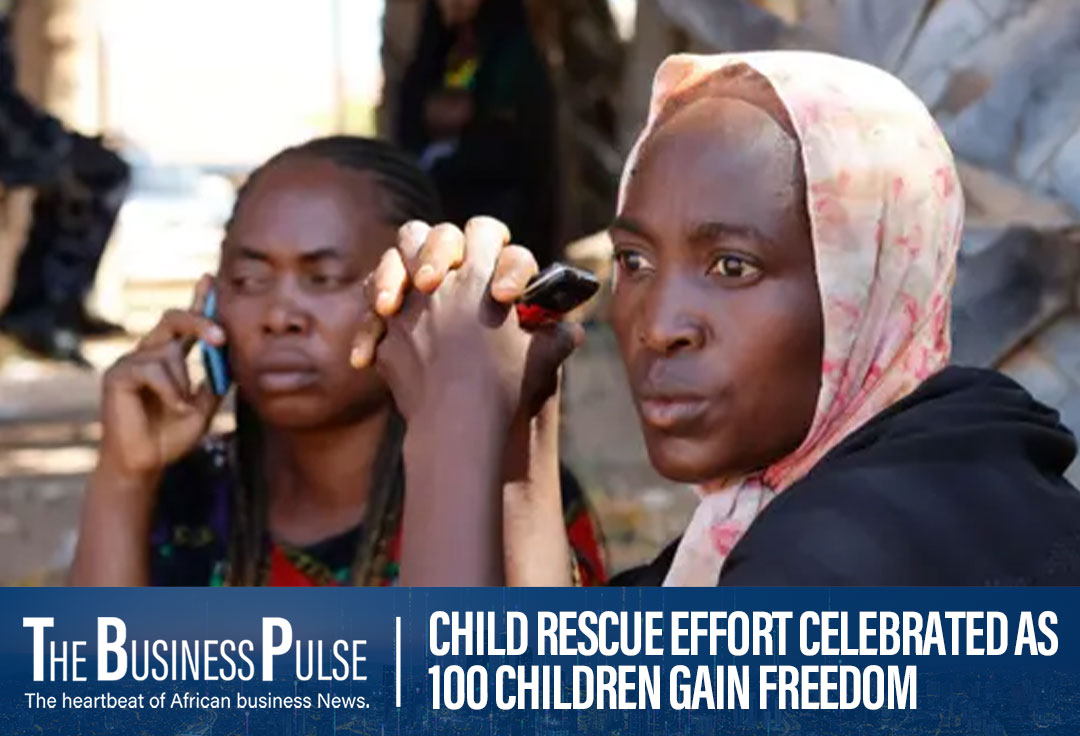
Child Rescue Effort
The Child Rescue Effort in Nigeria recorded a major victory with the release of about one hundred schoolchildren who were abducted from a Catholic school in Niger state. This development marks one of the most significant positive outcomes seen in the country’s broader security situation this year. The success of this Child Rescue Effort has brought relief to families, religious institutions, and community leaders who have been living under sustained pressure from repeated abductions.
Authorities confirmed the release through the Niger state police chief, Adamu Abdullahi Elleman, and Bishop Bulus Dauwa Yohanna, who oversees St Mary’s Catholic School in Papiri. They noted that the president’s national security adviser communicated the news directly to them. Although the children have not yet been reunited with their families, the confirmation represents a meaningful step forward in the ongoing Child Rescue Effort across central Nigeria.
More than 250 students and 12 staff had been taken during the attack, making it one of the largest school kidnappings in the recent wave of abductions. The release of nearly half of those kidnapped demonstrates the impact of coordinated government strategies and sustained pressure from security agencies working on the Child Rescue Effort. However, officials have not disclosed the methods used to secure their freedom, reflecting the sensitive nature of such operations.
Join our WhatsApp Group
Bishop Yohanna indicated that the authorities may need time to process the students, provide medical attention, and support their emotional recovery. He noted that the children’s exact location has not been disclosed, likely to protect ongoing aspects of the Child Rescue Effort and ensure their safety before formal reunification with families.
The governor of Nasarawa state, Abdullahi Sule, stated that the federal government played a central role in ensuring the success of this phase of the Child Rescue Effort. He stressed that many details must remain confidential for security purposes. His comments align with the government’s recent approach to handling mass abduction cases quietly and strategically, without revealing operational specifics.
Also Read: Drive Global Impact as UNOPS AI Research Specialist
Last week, National Security Adviser Nuhu Ribadu visited Papiri and met with a delegation led by Bishop Yohanna. During the meeting, he assured community leaders that the children would soon be rescued and reunited with their parents. His visit formed part of the broader Child Rescue Effort that has been underway in several affected states.
The attack on St Mary’s School followed several other mass abductions in the region. On 18 November, two people were killed and 38 worshipers were kidnapped from the Christ Apostolic Church in Kwara state. A day earlier, another group of gunmen abducted 25 Muslim students in Kebbi state after killing two individuals. All of the victims in the Kwara and Kebbi incidents have since been released through similar initiatives tied to the national Child Rescue Effort.
Despite the recent progress, the pattern of kidnappings remains troubling. Last week, at least 20 people were abducted in Kogi and Sokoto states. One attack occurred at a newly established church in Kogi, where a pastor, his wife, and several congregants were taken. In Sokoto, a bride and her bridesmaids were kidnapped during wedding preparations. These incidents underline the continued need for an expanded and well-resourced Child Rescue Effort and adult protection strategies.
Analysts remain divided on who is behind these crimes. Many believe they are carried out by criminal gangs seeking ransom payments. However, government officials insist that jihadist groups are also involved in some of the attacks. This lack of clarity makes coordinated responses essential and strengthens the argument for a broad national Child Rescue Effort that targets all forms of organised violence.
Also Read: Lead Change with UNOPS Youth Engagement Platform Today
Nigeria has made ransom payments illegal to disrupt the incentives that drive kidnappings. Despite this law, it is widely believed that some families still pay ransoms privately to secure the release of loved ones, a practice that complicates the national Child Rescue Effort. Policymakers continue to debate how best to deter kidnappers while ensuring the safe recovery of victims.
Nigeria’s security crisis recently attracted global attention when former US President Donald Trump issued a controversial statement accusing the government of allowing the killing of Christians. Nigerian officials and security analysts rejected this claim, stressing that victims come from all religious backgrounds. This position is consistent with data from northern and central Nigeria, where both Muslims and Christians have been targeted in equal measure. This fact further underscores the importance of a unified, countrywide Child Rescue Effort that protects citizens of all faiths.
The release of the Papiri children offers renewed hope that with the right strategy, coordination, and community engagement, future successes are possible. The emotional and psychological toll on families remains significant, but the outcome demonstrates the value of persistent pressure on criminal groups. Communities, security forces, and faith institutions now have a concrete example of what the Child Rescue Effort can achieve when executed with commitment and discretion.
While challenges remain, this latest rescue shows that progress is underway. Strengthening intelligence networks, improving rapid response units, supporting traumatised children, and preventing future attacks must remain priorities. The Child Rescue Effort has brought families closer to healing and has given the nation a moment of unity and relief in a period marked by fear and uncertainty.

Head of Business Development, Alula Animation. With 10 years in advertising and sustained involvement in startups and entrepreneurship since graduating from business school and the School of Diplomacy and International Relations, Beloved researches and writes practical business analysis and verified job-market insights for The Business Pulse Africa.
Leave a Reply