
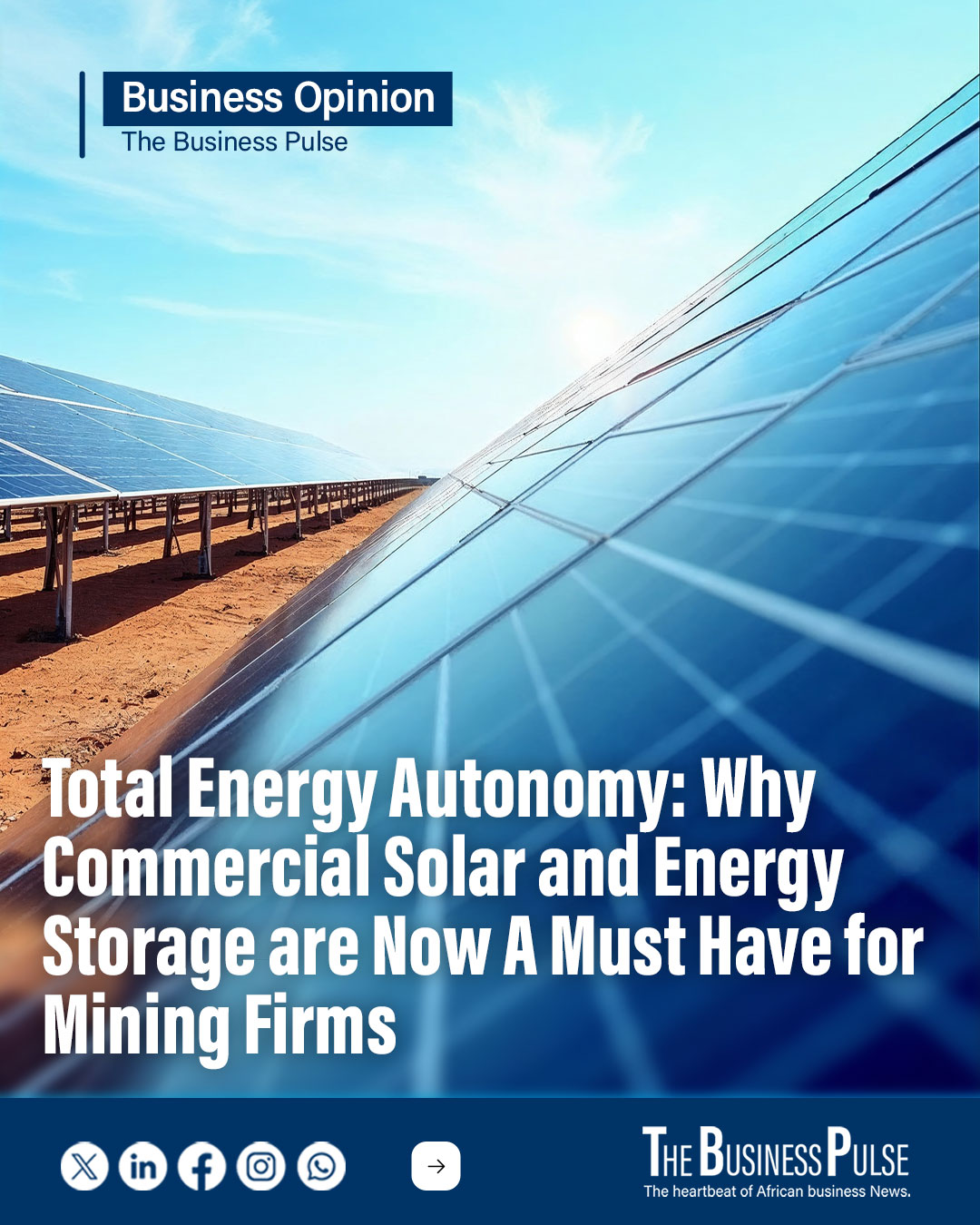
The Industrial Solar Guide for African Mining:
For African mining companies in 2026, energy is no longer just a utility it is the largest controllable expense and the biggest operational risk. Grid instability, rising diesel prices, and new carbon taxes have made traditional power setups unsustainable. This guide explains how to transition to Commercial Solar and Energy Storage to ensure your mine stays operational 24/7 while significantly reducing your overhead.
The Current Energy Crisis in African Mining
Most mines in Africa operate in remote areas where the national grid is either non-existent or highly unreliable. Historically, the solution was heavy reliance on diesel generators. However, by 2026, the “diesel-only” model is failing for three reasons:
- Price Volatility: International fuel prices are unpredictable, making long-term budgeting impossible.
- Logistics: Transporting thousands of liters of fuel to remote sites is expensive and prone to theft or delays.
- Environmental Regulations: Global buyers of minerals now demand “Green Gold.” If your Mining operation has a high carbon footprint, you may lose access to international markets.
Commercial Solar is the most practical way to address these issues. It is no longer an experimental technology; it is a proven industrial tool.
Join our WhatsApp Group
Why Commercial Solar is the Standard for 2026
Industrial-grade solar installations provide a fixed cost of energy for 20 to 25 years. Unlike the grid or diesel, where prices go up every year, the sun is free. Once the panels are installed, your price per kilowatt-hour (kWh) is locked in.
For a large-scale Mining operation, solar serves two purposes:
- Fuel Displacement: Using solar during the day to turn off or turn down diesel generators.
- Grid Supplement: Providing a steady power supply when the national grid suffers from load shedding or voltage drops.
The Critical Importance of Energy Storage
The biggest mistake a mining firm can make is installing solar panels without a plan for Energy Storage. Solar power is only generated during the day, but mines operate around the clock. Without batteries, solar can only provide about 20% to 30% of a mine’s total energy needs.
With modern Energy Storage systems (BESS), that percentage can jump to over 60%. These systems do more than just store power; they provide “spinning reserve” and “frequency regulation.” This means if the grid fails or a generator trips, the batteries kick in instantly (in milliseconds), preventing a total blackout that could trap workers underground or damage expensive machinery.
| Feature | Without Energy Storage | With Energy Storage (BESS) |
| Solar Utilization | Daytime only | 24/7 Availability |
| Generator Wear | High (constant cycling) | Low (generators stay off longer) |
| Power Quality | Prone to surges | Smooth, stabilized voltage |
| Emergency Backup | None (total shutdown) | Instant backup for critical loads |
Choosing the Right System: Key Technical Factors
When selecting a Commercial Solar provider, African mining firms must evaluate three specific technical areas:
1. Solar Panel Durability (Heat and Dust)
Africa’s mining environments are harsh. High heat can reduce panel efficiency, and dust (soiling) can block sunlight. In 2026, firms should prioritize “Bifacial” panels, which capture light on both sides, and “N-Type” cells, which perform better in high temperatures. You must also account for automated cleaning robots if your mine is in a high-dust or desert region.
2. Inverter Robustness
The inverter is the “brain” of the system. In a Mining environment, the power demand is “peaky” machines like crushers and hoists create massive, sudden draws of electricity. Your inverters must be industrial-grade and capable of handling these surges without shutting down.
3. Battery Chemistry for Energy Storage
In 2026, Lithium Iron Phosphate (LFP) has become the standard for Energy Storage in Africa. LFP batteries are safer than older lithium-ion models, they handle heat better, and they have a longer lifespan (up to 10,000 cycles).
Financing Models: Capex vs. PPA
How you pay for the system is just as important as the technology itself. There are two primary ways to fund a Commercial Solar project for your mine:
Model A: The Capex Purchase (Direct Ownership)
Your mining firm pays for the entire system upfront.
- Pros: You own the asset; no monthly payments to a third party; highest long-term savings.
- Cons: Requires millions of dollars in upfront cash; your firm is responsible for all maintenance and repairs.
Model B: The Power Purchase Agreement (PPA)
A solar company builds, owns, and maintains the system on your mine’s land. You simply buy the electricity from them at a pre-agreed rate that is lower than the grid or diesel.
- Pros: Zero upfront cost; the solar company takes all the technical risk; maintenance is handled by experts.
- Cons: You don’t own the equipment; you are tied to a 10-15 year contract.
Decision Tip: Most African Mining firms in 2026 are choosing the PPA model. It allows them to keep their capital for mining operations while still getting the benefits of cheaper, cleaner power.
Implementation Steps: From Site Audit to Commissioning
If you are ready to start the transition, follow these straightforward steps:
- Load Profile Analysis: Use data loggers to see exactly how much power your mine uses every minute of the day. You cannot size a solar plant based on a monthly bill alone.
- Land Allocation: A 1MW solar plant requires roughly 1 to 1.5 hectares of land. Ensure this land is stable and not planned for future excavation.
- Hybrid Integration: Ensure the solar controller can “talk” to your existing diesel generators. If the systems aren’t integrated, the generators might fight the solar power, leading to system failure.
- Local Skills Training: While the contractor builds the plant, ensure your local electrical team is trained on basic maintenance. You cannot wait for a technician to fly in from Europe or Asia if a minor fault occurs.
ALSO READ: MTN Full Control of IHS Towers in $2.2 Billion Deal Reshapes Telecom Infrastructure Landscape
The Common Pitfalls to Avoid
- Undersizing the Battery: Do not try to save money by getting a small Energy Storage unit. An undersized battery will degrade quickly because it is being over-discharged every night.
- Ignoring the “Final Mile” Logistics: Solar panels are fragile. If your mine is deep in the bush, ensure your contractor has experience moving glass panels over unpaved roads.
- Vague Maintenance Contracts: Solar panels are low maintenance, but not “no maintenance.” If they aren’t cleaned and the inverters aren’t checked, your power output will drop by 10% to 20% within the first year.
Conclusion: The Bottom Line for Mining Executives
In 2026, the question is no longer whether you should use solar; it is how fast you can deploy it. Commercial Solar combined with Energy Storage is the only way to shield your Mining operation from the rising costs of traditional energy.
By switching to a hybrid model, you lock in your energy costs, improve your operational uptime, and satisfy the global demand for sustainable minerals. The technology is ready, the financing models are flexible, and the sun is free.

Head of Business Development, Alula Animation. With 10 years in advertising and sustained involvement in startups and entrepreneurship since graduating from business school and the School of Diplomacy and International Relations, Beloved researches and writes practical business analysis and verified job-market insights for The Business Pulse Africa.
Leave a Reply