
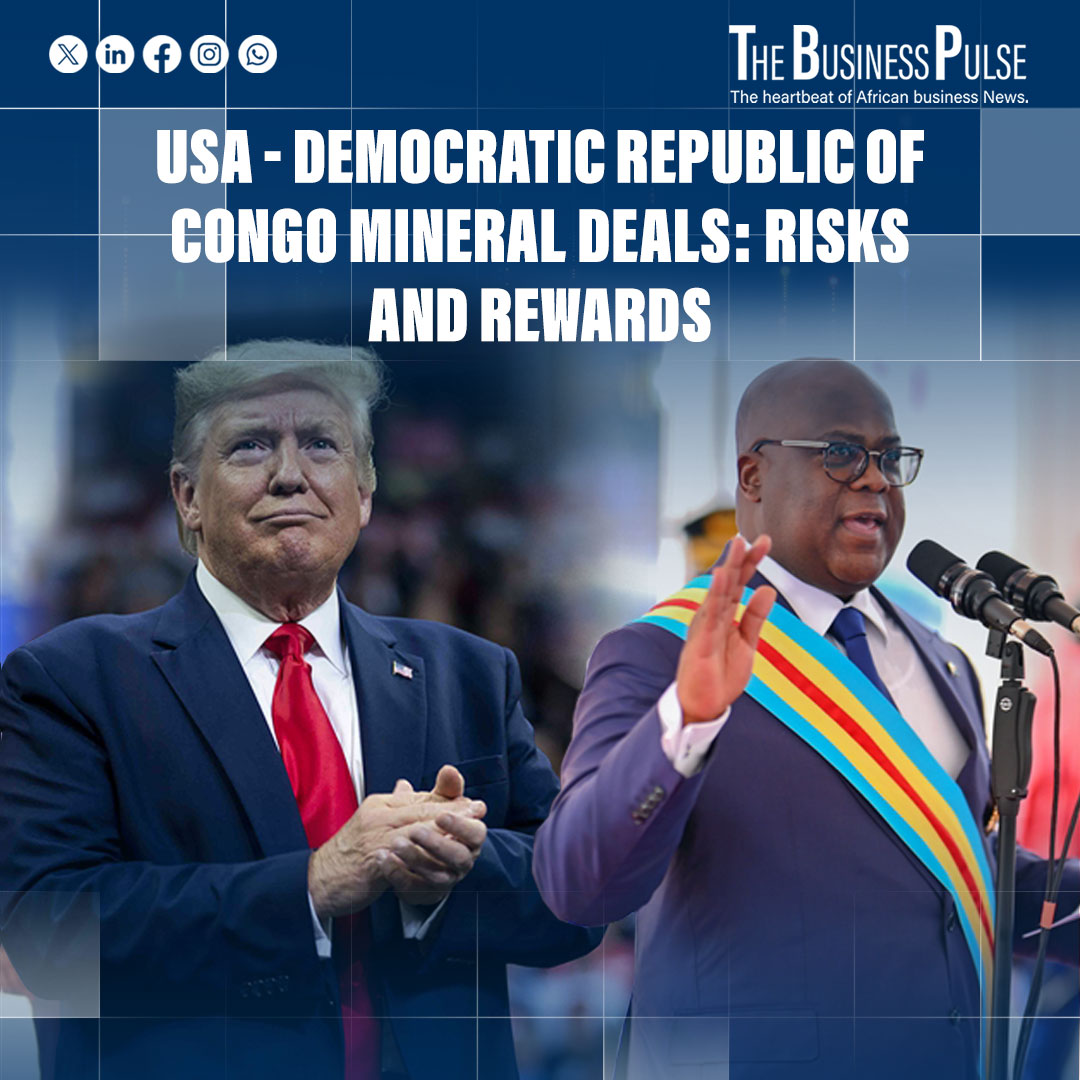
Democratic Republic of Congo Mineral Deals
On January 20, 2026, the Democratic Republic of Congo officially presented a comprehensive portfolio of strategic mineral assets to the United States government and private sector investors. This development marks a significant step in the implementation of the Washington Accords, a bilateral framework signed in December 2025. The transition from diplomatic agreement to actionable investment opportunities signals a fundamental shift in the central African mining landscape. By offering preferential access to manganese, copper, cobalt, and lithium deposits, the Kinshasa administration is actively reshaping global supply chains to favor Western partnerships.
Join our WhatsApp Group
The recent submission includes a detailed catalogue of both operational mines and unlicensed exploration zones. These assets are now part of a newly established Strategic Asset Reserve, a dynamic registry managed by a Joint Steering Committee composed of representatives from both nations. The primary objective of this reserve is to facilitate rapid entry for American firms into the Democratic Republic of Congo mining sector. This initiative is structured to bypass traditional bureaucratic delays while ensuring that all projects remain compliant with the domestic mining code and international transparency standards.
Manganese reserves occupy a prominent position in the new offer. Historically overshadowed by cobalt and copper, manganese has become a focal point due to its essential role in steel production and emerging battery chemistries. The Democratic Republic of Congo possesses substantial high grade manganese deposits that remain underutilized. Under the current pact, US investors are invited to develop these assets to ensure a stable supply of industrial minerals that are critical for infrastructure and defense applications. The inclusion of manganese reflects a broader strategy to diversify the Congolese export base and reduce the volatility associated with price fluctuations in the cobalt market.
ALSO READ: Why are critical raw materials essential and so precious for industrial survival?
The copper and cobalt sector remains the cornerstone of the Congo mineral assets strategy. As the world’s leading producer of cobalt, the nation holds a unique position in the global energy transition. However, the concentration of mining and processing capacity in the hands of third party international actors has historically limited Western access. The 2026 framework specifically targets this imbalance by identifying priority projects where US capital can be deployed to expand production. The state owned mining entity, Gecamines, is playing a central role in this transition. By acting as a facilitator, Gecamines is helping to restructure troubled assets, such as the Chemaf copper and cobalt projects, to make them viable for American acquisition or partnership.
Lithium has also emerged as a strategic priority within the catalogue shared with Washington. While the nation is already recognized for its vast hard rock lithium potential, particularly in the Manono region, commercial production has faced historical logistical and legal hurdles. The current agreement aims to resolve these issues by providing a clear regulatory pathway for US firms to engage in exploration and development. The growth of the lithium sector in the Democratic Republic of Congo is expected to provide a secondary pillar for the battery material supply chain, complementing the existing cobalt dominance and offering a more resilient resource mix for electric vehicle manufacturers.
The financial architecture supporting these investments is provided by the US International Development Finance Corporation. The DFC has committed over one billion dollars in financing to support critical minerals and infrastructure projects within the region. This capital is not only intended for mine development but also for the rehabilitation of essential logistics networks. A primary focus is the completion of the Dilolo to Sakania railway line, which connects the mining heartland to the Lobito Corridor. This rail link is essential for the efficient transport of DRC mineral exports to Atlantic ports, providing a faster and more secure route to Western markets than existing southern and eastern pathways.
ALSO READ: The Business Beneath the Business: Why Most Profitable Businesses Do Not Make Their Money Where Customers Think They Do

Logistical independence is a key component of the current strategy. By prioritizing the Lobito Corridor, the Democratic Republic of Congo is effectively decoupling its mineral supply chain from regional dependencies that have previously hindered export efficiency. The strategic importance of this corridor cannot be overstated, as it provides a direct maritime link to the United States and Europe. This infrastructure investment ensures that the value extracted from the Democratic Republic of Congo mining sector can reach global markets without the risk of transit delays or geopolitical interference in traditional overland routes.
The geopolitical implications of this partnership are extensive. For the past decade, Chinese entities have maintained a dominant presence in the Congolese mining industry, controlling or holding significant stakes in the majority of large scale operations. The January 2026 offer represents a deliberate attempt by the Kinshasa government to balance its international relationships. By creating a preferential framework for American investors, the nation is positioning itself as a neutral ground where global powers must compete for access based on technological contribution and infrastructure development. This competition is expected to drive higher standards of social and environmental governance within the sector.
Investor confidence is being bolstered by the administrative oversight of the Joint Steering Committee. This body is responsible for maintaining the updated register of the Strategic Asset Reserve and reviewing project proposals. To encourage participation, the government has announced that projects within this reserve will be exempt from additional fees or administrative requirements beyond those explicitly mandated by the 2018 Mining Code. This regulatory stability is intended to mitigate the risks typically associated with long term capital intensive projects in central Africa. Furthermore, the involvement of the US government provides a layer of political risk insurance that is vital for private sector engagement.
ALSO READ: Reserved business sectors law hits Zimbabwe’s local services sector
The impact on the domestic economy is projected to be substantial. The government expects that increased Western investment will lead to more significant technology transfers and the development of local processing facilities. Moving away from the direct export of raw ores toward the production of value added concentrates or refined metals is a core goal of the 2026 economic plan. By integrating Congolese workers into more technical roles within the supply chain, the nation aims to ensure that the mineral wealth leads to broad based economic growth and professional development for its citizens.
Sustainability and ethical sourcing remain critical pillars of the Democratic Republic of Congo mining sector reforms. The international community has historically scrutinized the industry for issues related to artisanal mining and labor conditions. The current partnership with the United States emphasizes the implementation of rigorous tracking and certification systems. By ensuring that all minerals originating from the Strategic Asset Reserve are ethically sourced and compliant with global environmental standards, the government aims to command a premium price in international markets and secure long term contracts with major industrial consumers.
The technical evaluation of the offered assets is currently underway by several US based consortia. These groups are analyzing geological data and conducting feasibility studies on the priority sites identified in the January 20 announcement. The initial list of assets is designed to be dynamic, allowing the Democratic Republic of Congo to add new deposits as exploration continues. This flexibility ensures that the Strategic Asset Reserve remains relevant as global demand for specific minerals evolves. The focus on tantalum and gold, in addition to battery metals, further broadens the scope of the partnership.
Sovereignty and national interest are central themes in the current negotiations. The Kinshasa administration has made it clear that while it seeks foreign investment, it intends to maintain a significant level of state participation in strategic projects. The Gecamines model, which involves a mix of equity stakes and production sharing agreements, is being used as a blueprint for the new ventures. This approach allows the state to benefit directly from the success of the mines while providing investors with the operational control necessary to manage complex extraction and processing facilities.
The long term outlook for the Democratic Republic of Congo as a global mineral hub depends on the successful execution of these initial projects. The January 2026 catalogue is the first major test of whether the nation can successfully attract and retain large scale American capital. If the current projects meet their production and infrastructure goals, it is likely that additional assets will be moved into the preferential framework. This would solidify the nation’s position as the primary supplier of critical minerals to the West, ensuring both economic stability for the region and resource security for the global energy transition.
The 2026 framework represents a sophisticated approach to resource diplomacy. By leveraging its vast natural wealth, the Democratic Republic of Congo is securing its place at the center of the 21st century economy. The offer to US investors is more than a commercial transaction; it is a strategic realignment that addresses the dual needs of domestic development and international supply chain resilience. As the Joint Steering Committee begins to review the first wave of proposals, the global mining community is observing what may be the most significant shift in African resource management in recent history.

Head of Business Development, Alula Animation. With 10 years in advertising and sustained involvement in startups and entrepreneurship since graduating from business school and the School of Diplomacy and International Relations, Beloved researches and writes practical business analysis and verified job-market insights for The Business Pulse Africa.
Leave a Reply