
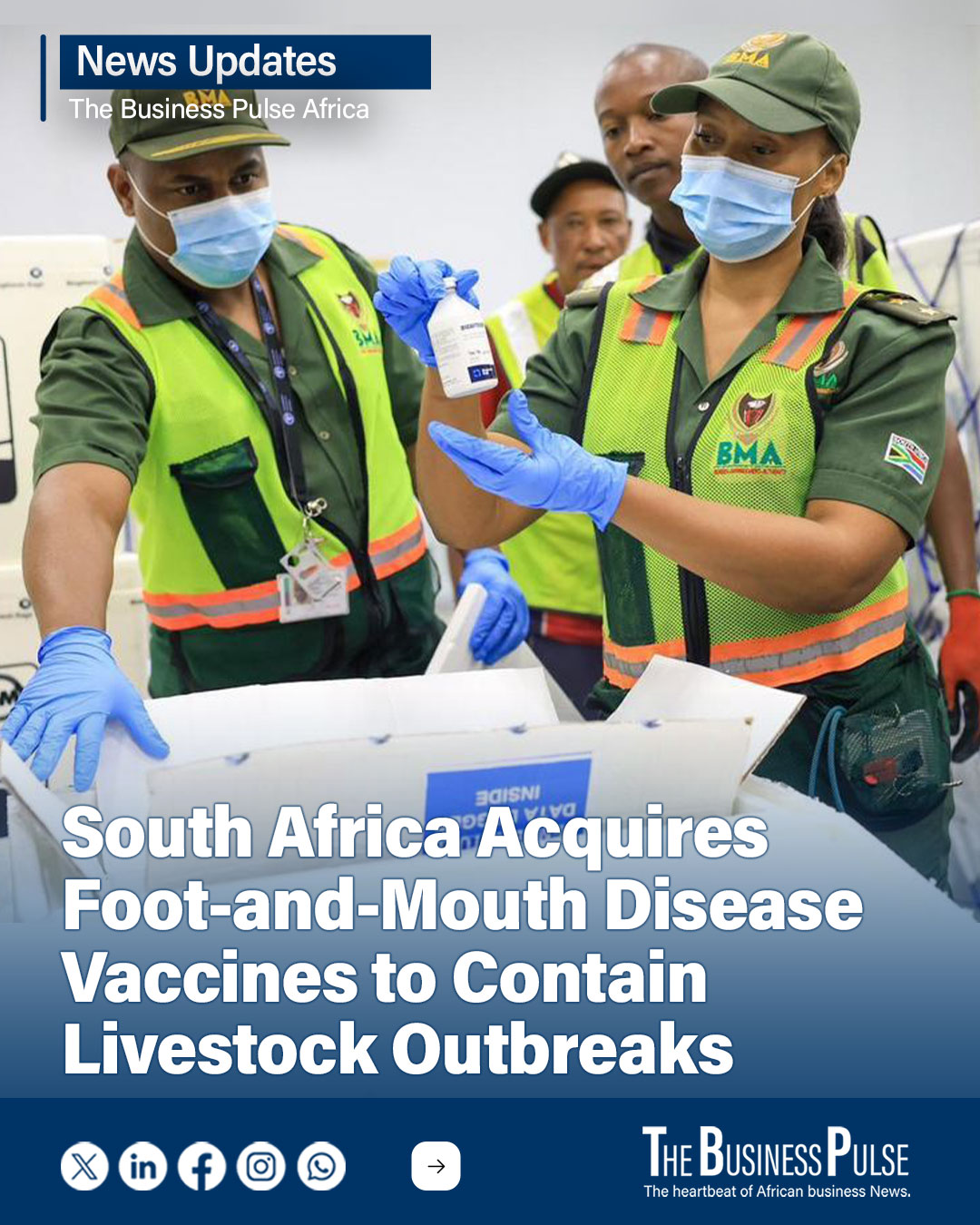
South Africa Expands Production and Distribution of Foot-and-Mouth Disease Vaccines
South Africa has intensified efforts to contain recurring outbreaks of foot-and-mouth disease through expanded production and deployment of foot-and-mouth disease vaccines, as authorities move to protect livestock, stabilize food supply chains, and limit further economic losses in the agricultural sector.
Government veterinary services confirmed that new batches of foot-and-mouth disease vaccines have entered the national distribution system following recent flare-ups of the highly contagious viral disease among cattle, pigs, sheep, and goats. The outbreaks have raised alarm within farming communities and among meat exporters who rely heavily on disease-free certification to access international markets.
Foot-and-mouth disease remains one of the most economically damaging livestock illnesses due to its rapid spread and the strict trade restrictions it triggers. While it poses little risk to humans, its impact on meat, dairy, and animal movement controls has severe financial consequences for commercial and small-scale farmers alike.
Join our WhatsApp Group
Increased Vaccine Production Capacity
Authorities reported that local manufacturing facilities have been ramped up to produce sufficient foot-and-mouth disease vaccines to meet national demand. This follows earlier supply constraints that forced regional prioritization of high-risk zones. Veterinary authorities said production schedules have been expanded to allow faster response times to emerging outbreaks.
The vaccines target multiple virus strains circulating in the region, with particular attention paid to variants previously identified during outbreaks in border provinces. Officials stated that improving strain-matching capacity is essential to prevent future transmission across livestock corridors and informal trade routes.
Cold-chain storage and transport systems have also been upgraded to ensure vaccine integrity from manufacturing sites to rural farming districts. Distribution centers have been established in outbreak-prone areas to shorten delivery times and allow for emergency immunization campaigns when needed.
Background to the Outbreaks
South Africa has faced repeated foot-and-mouth disease outbreaks over the past several years, disrupting both domestic meat supply and export activity. Previous cases resulted in large-scale quarantines, livestock movement bans, and temporary closure of some export markets.
The disease spreads rapidly through direct animal contact and contaminated equipment, clothing, or vehicles. Informal livestock trade and cross-border animal movement remain key transmission risks, particularly in rural areas where veterinary surveillance is limited.
Past outbreaks prompted authorities to strengthen animal health monitoring systems and increase funding for vaccine research. However, population growth, climate pressures, and regional livestock movement have continued to challenge containment efforts.
Economic and Trade Implications
The renewed focus on foot-and-mouth disease vaccines is directly linked to concerns over export losses and food security. Meat producers depend on disease-free certification to sell to high-value markets. Any prolonged outbreak risks long-term reputational damage and reduced competitiveness.
Smallholder farmers are particularly vulnerable, as livestock often represent both income and food security. Movement bans restrict their ability to sell animals at market, while infected herds may require costly culling to stop transmission.
Authorities said vaccine deployment is designed not only to suppress current outbreaks but also to protect breeding herds and dairy producers, who face severe losses when production drops due to illness or quarantine restrictions.
Government Response and Strategy
Veterinary services have implemented zonal vaccination strategies targeting infected and surrounding buffer areas. Surveillance teams have been dispatched to farms, abattoirs, and livestock markets to identify new cases early.
Public awareness campaigns have been launched to educate farmers on hygiene measures, biosecurity protocols, and the importance of timely vaccination. Farmers are being encouraged to report symptoms such as excessive drooling, blisters in the mouth and hooves, and lameness, which are characteristic signs of the disease.
The government also stated that border inspections have been reinforced to prevent infected animals from entering disease-free regions. Coordination with provincial authorities and agricultural unions has been strengthened to ensure compliance with movement restrictions during outbreaks.
What Happens Next
In the coming months, authorities plan to expand routine vaccination programs beyond outbreak zones and introduce preventative immunization in high-risk regions. Long-term plans include investment in research laboratories capable of rapidly identifying new virus strains and producing tailored foot-and-mouth disease vaccines without delay.
Officials have also indicated that policy reforms may follow, including tighter controls on informal livestock trading and improved livestock traceability systems. These measures are expected to improve early detection and limit the scale of future outbreaks.
Export partners are expected to monitor the situation closely. Successful containment using foot-and-mouth disease vaccines could accelerate the lifting of trade restrictions and restore confidence in the country’s animal health standards.
What It Means for Citizens and Farmers
For ordinary citizens, stabilizing livestock health means greater certainty around meat and dairy prices, which often rise during outbreaks due to reduced supply. Effective vaccine programs help prevent shortages and protect household food budgets.
For farmers, the expanded vaccine rollout offers protection against catastrophic herd losses and long-term market exclusion. It also reduces the need for emergency slaughter policies that can devastate livelihoods.
For the government, the initiative signals a broader commitment to safeguarding agricultural productivity, rural employment, and export earnings. It also reinforces the role of science-based disease management in national food security planning.
ALSO READ: Patrice Motsepe Retires as Executive Chairman of African Rainbow Minerals After Governance Reforms
As foot-and-mouth disease vaccines become more widely available and strategically deployed, authorities believe the country will be better positioned to prevent future outbreaks and reduce dependence on emergency measures. The success of this effort will largely determine how quickly livestock trade normalizes and how resilient the agricultural sector remains in the face of recurring animal health threats.

Head of Business Development, Alula Animation. With 10 years in advertising and sustained involvement in startups and entrepreneurship since graduating from business school and the School of Diplomacy and International Relations, Beloved researches and writes practical business analysis and verified job-market insights for The Business Pulse Africa.
Leave a Reply