
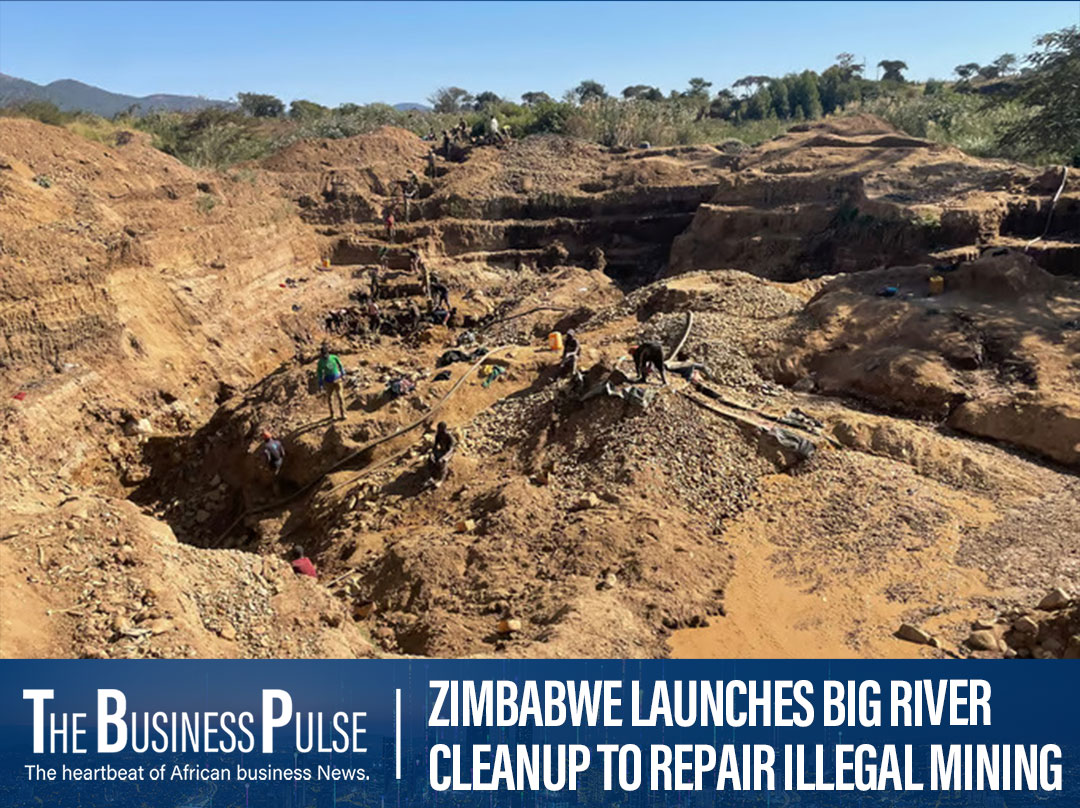
Illegal Mining Damage repair
Prevail International has launched a Presidential River Rehabilitation Programme aimed at restoring river systems that have been heavily damaged by years of illegal mining. The initiative also seeks to create jobs for local communities and relocate riverbed dwellers into safe housing. Led by Presidential Investment Advisor Dr Paul Tungwarara, the programme draws inspiration from successful river restoration projects implemented in parts of the Middle East. The goal is to bring degraded waterways back to life and reduce the social and environmental risks linked to unregulated extraction.
Across many parts of Zimbabwe, illegal river mining has caused severe ecological harm. Riverbeds have been stripped, water flow has been disrupted and ecosystems have been destabilised. Some of the mining activities have involved foreign contractors operating with minimal oversight. Environmental regulators have had to fine multiple operators for carrying out mining activities without proper impact assessments. These issues make rehabilitation a complex process that requires both physical restoration and stronger regulatory enforcement.
Join our WhatsApp Group
The dangers of illegal mining are well documented across the region. In South Africa, illegal mining at abandoned gold shafts has resulted in deadly accidents. Rescue operations have highlighted the extremely unsafe conditions in which miners operate. Without formal safety standards or equipment, many miners risk suffocation, collapse incidents and toxic exposure. Illegal mining networks also attract criminal syndicates that fuel violence in surrounding communities.
Mozambique has experienced similar problems. Artisanal mining in the country has led to polluted rivers, heavy siltation and deforestation. These environmental impacts threaten agricultural land and key water sources, including those that supply hydroelectric facilities. Authorities in central Mozambique have had to arrest individuals involved in unregulated extraction, reflecting the scale of environmental pressure placed on local rivers.
Also Read ~ How Khula! Is Turning Farming Challenges Into Tech Driven Opportunities
Zambia continues to face rising incidents of illegal mining, particularly in resource rich regions. The government has occasionally deployed security forces to shut down illegal mining hotspots. While these actions show the state’s determination to protect national mineral wealth, they also reveal the extent of the challenge. Many illegal operations are controlled by well organised groups that move quickly and exploit gaps in enforcement. Clearing these networks requires sustained regulatory action and coordinated intelligence sharing.
Governments across the region are responding in multiple ways. One approach is tightening enforcement. South African authorities, for instance, have used asset forfeiture measures to seize equipment involved in illegal mining operations. By removing machinery and blocking financial gains, regulators aim to disrupt the economic drivers of illegal extraction. This strategy also sends a strong message that unregulated mining carries real consequences.
Another approach is strengthening environmental compliance. Regulators in affected countries are increasingly issuing fines, stop orders and corrective action demands to any company operating without proper environmental impact studies. These measures push operators to respect environmental law and signal that rehabilitation will form a core part of future restoration efforts.
However, enforcement alone is not enough. Social protection and alternative livelihoods are essential to reduce the pressure that drives communities toward illegal mining. This is where the Prevail International programme provides an important example. By combining river restoration with job creation and planned relocation, the initiative offers long term alternatives to unsafe and environmentally damaging work. When communities have stable income and safe housing, illegal mining becomes a less attractive option.
Cross border cooperation is another crucial component. The environmental and social consequences of illegal mining extend beyond national borders, especially in shared river systems. Regional coordination on intelligence, environmental monitoring and law enforcement allows governments to build stronger responses. It also helps track supply chains and financial flows that support illegal mining operations.
Despite these positive developments, rehabilitation programmes must still overcome serious obstacles. Restoring river systems requires significant technical expertise, funding and community engagement. It also requires transparent procurement processes to prevent misuse of funds. Poor governance or weak oversight could undermine the credibility of these initiatives.
Community trust is equally important. River restoration efforts must involve local leaders and affected families, ensuring that decisions reflect community needs. If people are excluded from planning, programmes may struggle to reduce illegal mining. Long term success depends on local ownership and community participation.
Illegal mining has inflicted deep environmental and social wounds across Southern Africa. Yet initiatives like the Presidential River Rehabilitation Programme offer a hopeful path forward. With firm enforcement, strong technical standards and inclusive social support, river restoration can succeed. The region has an opportunity to show how coordinated action can transform damaged ecosystems into sustainable, productive and safe environments. If implemented effectively, the programme could help water systems recover, create safer livelihoods and deliver lasting benefits for communities.

Head of Business Development, Alula Animation. With 10 years in advertising and sustained involvement in startups and entrepreneurship since graduating from business school and the School of Diplomacy and International Relations, Beloved researches and writes practical business analysis and verified job-market insights for The Business Pulse Africa.
Leave a Reply