
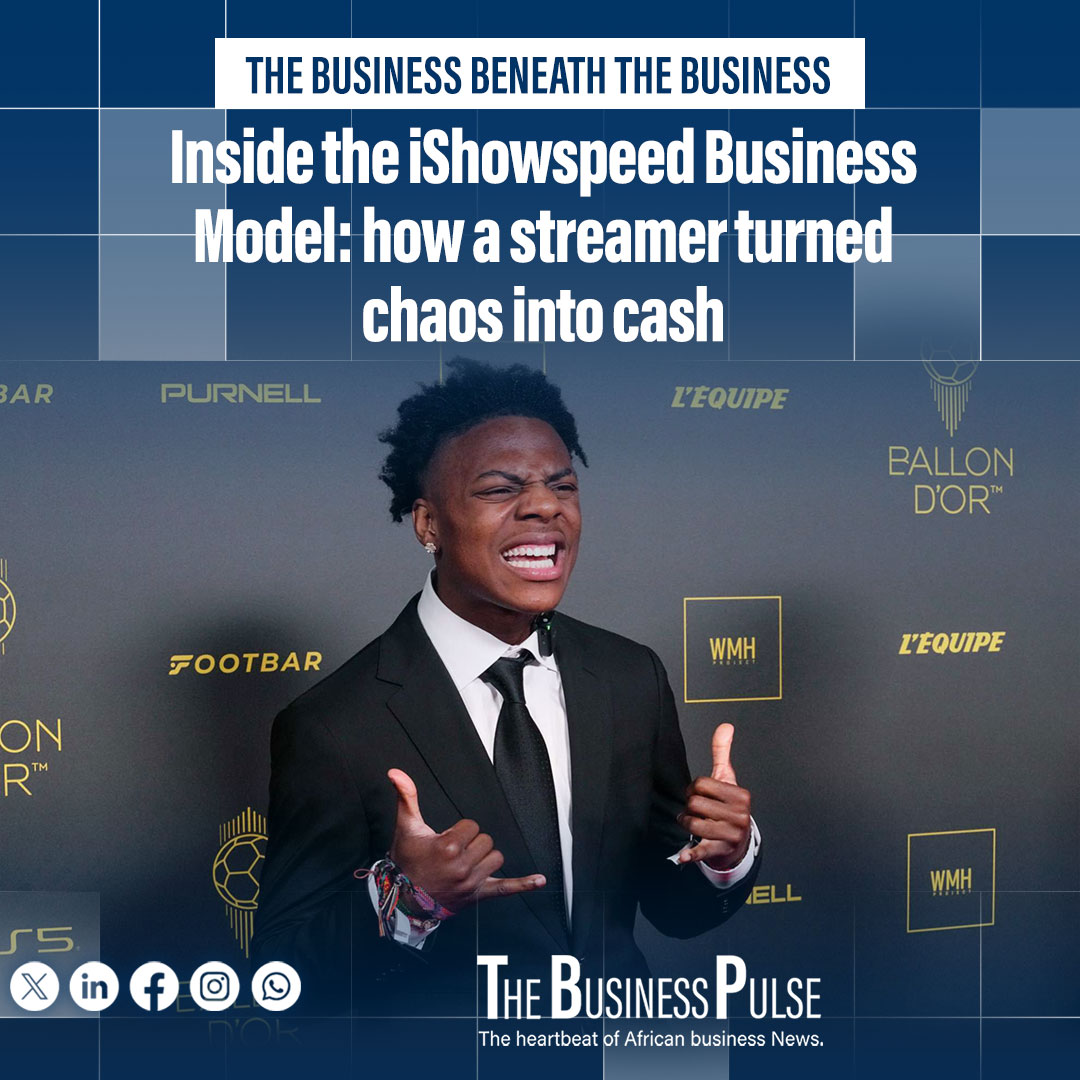
The iShowSpeed business model
Darren Watkins Jr., better known online as iShowSpeed, is not just a viral internet personality. He is the operator of a fast-growing digital entertainment business that converts attention into cash at global scale. While his content often appears spontaneous, loud, and unpredictable, the underlying structure of the iShowSpeed business model is deliberate, layered, and highly monetised.
From gaming livestreams to international tours, Speed has built a system that blends platform algorithms, fan psychology, live engagement, and brand economics. This article takes a deep look at how he became famous, how his operation works financially, how he funds constant travel, and why this model continues to attract sponsors and audiences worldwide.
Join our WhatsApp Group
Who Is iShowSpeed and What Does He Do?
iShowSpeed is a livestreamer, content creator, performer, and brand in one. He produces live and recorded video content primarily across YouTube, while his short-form clips dominate platforms like TikTok and Instagram.
His content is rooted in exaggerated reactions, unfiltered emotions, physical comedy, and direct audience interaction. Unlike polished creators who rely on scripting and post-production, Speed’s appeal lies in unpredictability. Viewers tune in because anything can happen.
This unpredictability is not a flaw in the iShowSpeed business model. It is the product.
Also Read: Hidden Revenue Streams: Why Growing Businesses Are Not Always Profitable
The Early Rise: From Gaming Streams to Viral Star
Speed began as a small gaming streamer, largely unnoticed. His breakthrough came when short clips of his emotional reactions were shared widely on social platforms. These clips spread because they were:
- Highly expressive
- Easy to understand without context
- Short and intense
- Optimised for mobile viewing
As these clips circulated, audiences followed the trail back to his livestreams. This created exponential growth. Each viral clip became an unpaid advertisement for the full channel.
At this stage, monetisation was minimal. The real value was audience accumulation.

The Attention Engine at the Core of the iShowSpeed Business Model
The iShowSpeed business model is driven by one core asset: attention. Everything else flows from it.
Unlike traditional businesses that sell a product first and market later, Speed captures attention first and monetises later. This reverses the normal order of operations and reduces customer acquisition costs to nearly zero.
Once attention is secured, monetisation options multiply.
Revenue Stream One: YouTube Advertising
YouTube ad revenue is the most visible income source. With millions of views per video and livestream, advertising provides a steady baseline income.
However, this is not the largest driver of wealth. Ad rates fluctuate based on geography, season, and advertiser demand. Speed treats ad revenue as foundational, not primary.
Revenue Stream Two: Subscriptions and Fan Payments
Live streams unlock direct monetisation:
- Paid channel memberships
- Super Chats
- Donations
These payments are emotional purchases. Fans pay to be noticed, acknowledged, or included in the moment. This makes them high-margin and scalable.
For creators like Speed, real-time interaction dramatically increases payment frequency. The iShowSpeed business model depends heavily on this emotional engagement loop.
Revenue Stream Three: Merchandise
Merchandise transforms fandom into ownership. Branded clothing allows fans to signal identity while generating revenue for the creator.
Merch drops are often limited, creating urgency. Scarcity increases demand and reduces unsold inventory risk. Once manufacturing and fulfilment systems are in place, merchandise becomes one of the most reliable income streams.
Importantly, merchandise also markets the brand offline.
Also Read: How to make your business fundable in 2026: a practical guide for African founders
Revenue Stream Four: Sponsorships and Brand Deals
Brands are attracted to Speed because of his reach among younger demographics. Sponsorships include:
- Sponsored livestream segments
- Brand placements
- Event partnerships
These deals often pay more than ad revenue for the same time period. Some sponsorships also include performance incentives tied to views or engagement.
In many cases, sponsorships directly subsidise travel and events.
Revenue Stream Five: Live Shows and Appearances
Live tours convert online popularity into physical revenue. Income comes from:
- Ticket sales
- VIP experiences
- On-site merchandise
These events also create new content. A single live show can produce dozens of clips for future monetisation. This means the event earns money twice: once at the venue and again online.
This dual-use structure is a defining feature of the iShowSpeed business model.
Why iShowSpeed Travels Constantly
Speed’s travel is strategic, not recreational. Each location offers:
- New audiences
- Cultural novelty
- Increased media coverage
- Higher donation activity
International content performs especially well on short-form platforms because it feels fresh and unpredictable. Viewers enjoy watching familiar personalities interact with unfamiliar environments.
Travel keeps content from becoming repetitive, which protects long-term audience retention.
How Travel Is Funded
Travel expenses are often offset or exceeded by revenue generated during trips:
- Ticketed events
- Local sponsorships
- Increased livestream donations
- Post-trip content monetisation
In some cases, partners contribute logistical support. At scale, travel becomes a profit centre rather than a cost.
Operational Costs Behind the Scenes
Despite appearances, Speed does not operate alone. The iShowSpeed business model includes:
- Managers
- Technical staff
- Security
- Editors
- Legal advisors
Travel introduces additional costs such as accommodation, transport, permits, and insurance. Merchandise requires manufacturing, storage, and shipping infrastructure.
The model works because revenue growth outpaces cost growth.
Scale and Financial Reality
While exact earnings are private, estimates place Speed’s annual income in the multi-million-dollar range. This is supported by:
- Audience size
- Tour frequency
- Brand interest
- Merchandise volume
More importantly, income is diversified. No single platform or sponsor controls the business.
Similar Creator Business Models
Kai Cenat
Relies on livestream energy, fan donations, and live events. Similar emotional engagement mechanics.
MrBeast
Uses large-scale reinvestment into content to fuel growth. Different style, same attention-first logic.
Touring Creators
Several mid-tier creators replicate elements of this model at smaller scale, focusing on live events and merchandise.
Risks Within the iShowSpeed Business Model
- Platform policy changes can disrupt revenue
- Public controversy can scare off sponsors
- Touring carries safety and logistical risks
- Audience fatigue requires constant innovation
- Legal exposure increases with global operations
Without professional oversight, these risks can damage the business quickly.
Lessons for Other Creators and Entrepreneurs
- Attention is the starting point, not the product
- Monetise directly before relying on platforms
- Build multiple income streams early
- Treat experiences as content engines
- Invest in teams as scale increases
The iShowSpeed business model shows that internet fame alone is not enough. Structure matters.
Conclusion: From Internet Noise to Scalable Enterprise
What appears chaotic on screen is carefully supported off screen. Speed has built a business that captures attention, converts it into diversified revenue, and reinvests it into growth.
The iShowSpeed business model proves that digital creators can operate like modern media companies. When attention is treated as an asset and monetised intelligently, it can fund global travel, sustained relevance, and long-term income.
Speed’s success is not just about personality. It is about execution.

Head of Business Development, Alula Animation. With 10 years in advertising and sustained involvement in startups and entrepreneurship since graduating from business school and the School of Diplomacy and International Relations, Beloved researches and writes practical business analysis and verified job-market insights for The Business Pulse Africa.
Leave a Reply