
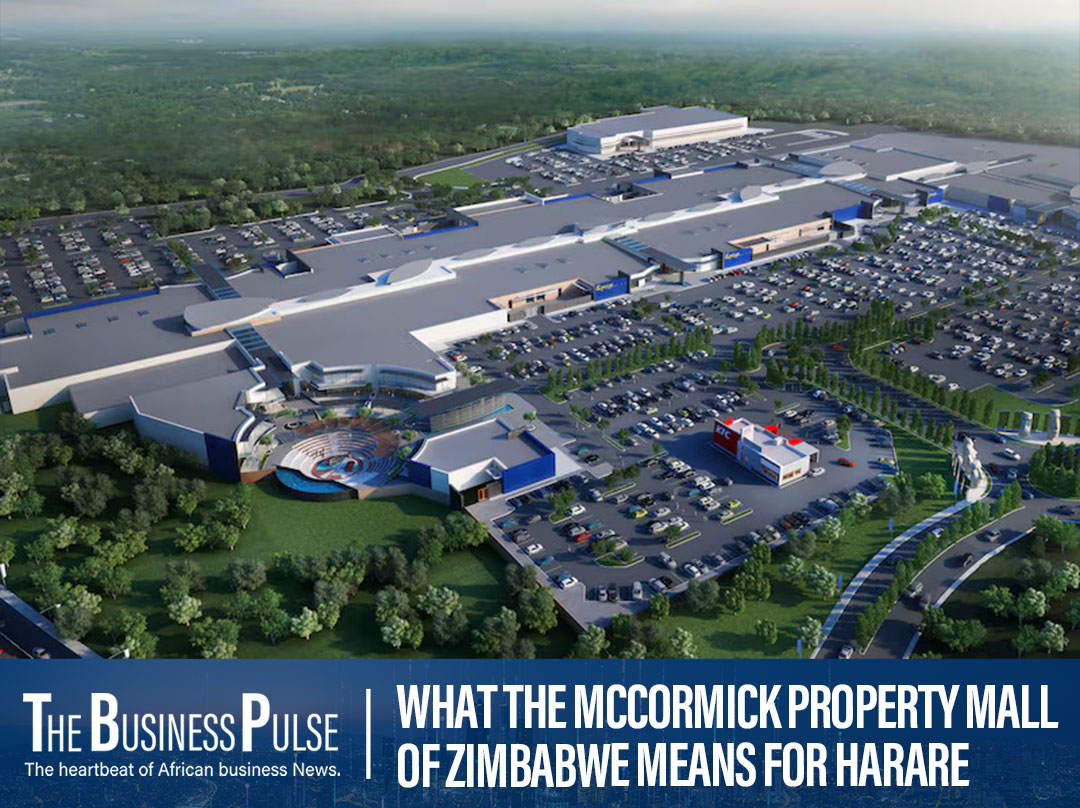
McCormick Property Mall of Zimbabwe
South African retail property developer McCormick Property is expanding its regional footprint with a US$100 million Mall of Zimbabwe project in Harare’s Borrowdale suburb. This development is one of the largest foreign direct real estate investments in Zimbabwe in recent years and signifies a major expansion of McCormick’s presence beyond South Africa’s borders.
The planned mall will deliver up to 90 000 square metres of gross lettable area and is expected to host more than 150 local and international brands. Construction is scheduled to start in 2026, with leasing activity already underway.
Join our WhatsApp Group
A Large Scale Retail Development in Zimbabwe
The McCormick Property Mall of Zimbabwe project will be the largest shopping centre built in the country in decades. Most current retail developments in Zimbabwe range from about 7 500 m² to 12 000 m², so a 90 000 m² retail complex significantly increases formal commercial space.
The developer says the new mall will offer a broad tenant mix that includes well known South African fast food and restaurant brands such as RocoMamas, Ocean Basket, Spur and Doppio Zero. It aims to provide a modern lifestyle experience that goes beyond traditional shopping centres by combining retail, dining and leisure.
McCormick Property brings experience from more than 100 000 m² of retail development in South Africa, working alongside institutional partners such as Exemplar REIT to develop township and regional retail spaces. Past projects include Phalaborwa, Mehlareng and Alexandra malls.
Also Read: Inside the iShowspeed Business Model: how a streamer turned chaos into cash
Economic Impact and Job Creation
The McCormick Property Mall of Zimbabwe is expected to create thousands of direct and indirect jobs during both construction and operations. Local partners estimate that the development will produce more than 3 000 employment opportunities.
The project is also expected to stimulate downstream industry activity, providing contracts and business opportunities for local suppliers, tradespeople and small enterprises that support mall operations. Retail centres of this scale typically generate demand for logistics, cleaning, security and facilities management services.
Retail property consultants highlight that the Mall of Zimbabwe could act as a catalyst for broader economic growth in the country. Analysts say formal retail infrastructure remains underdeveloped outside South Africa, and this project could spur similar investments in other regions of Zimbabwe.
A Benchmark in Zimbabwe’s Retail Landscape
The mall is expected to be the largest single phase shopping centre in Zimbabwe since the construction of Westgate Mall in Harare in the late 1990s. This offers a significant benchmark for modern retail development in the country.
The scale of the McCormick Property Mall of Zimbabwe reflects confidence among institutional investors that Zimbabwe’s consumer market can support modern retail infrastructure. The growing presence of South African chains and fast food outlets signals demand from a segment of the population that increasingly seeks urban retail experiences.
Institutional investors have been active in Zimbabwe’s property market, particularly in Victoria Falls and other tourism hubs. These investors see retail and hospitality as areas with growth potential despite broader economic challenges.
Also Read: Hidden Revenue Streams: Why Growing Businesses don’t Not Always Seem Profitable
Partnerships and Local Involvement
The Mall of Zimbabwe project is being developed by McCormick Property with WestProp Holdings as the lead local partner. WestProp acquired the land for the centre about 12 years ago, waiting for market conditions to justify a project of this scale.
Exemplar REIT will assist with leasing, drawing interest from both local retailers and international brands. Early applications for retail space in the mall are reported to be strong, indicating confidence in demand for premium retail locations.
Regional retail consultants have emphasised the importance of ensuring the mall offers more than a typical shopping centre. Developers say it should act as a community hub where people can shop, dine, socialise and spend leisure time.
Consumer Demand and Lifestyle Trends
McCormick Property Mall of Zimbabwe Signals Major Retail Shift. Retail property analysts note that demand for out of home experiences, such as dining and entertainment, has grown significantly. Modern consumers increasingly prioritise lifestyle destinations where they can combine shopping with leisure, and the McCormick Property Mall of Zimbabwe aims to meet that demand.
In urban centres like Harare, where high end retail options are limited, a project of this size could attract both middle income and higher income consumers. Analysts say this could reduce the need for domestic shoppers to travel to South Africa for brand shopping, retaining more consumer spending within the local economy.
Formal Retail in a Shifting Market
Zimbabwe’s formal retail sector has historically been constrained by limited modern infrastructure outside major town centres. Many consumers have relied on informal markets and smaller shops for daily needs. This new mall represents a shift toward the development of large scale formal retail environments.
If successful, the McCormick Property Mall of Zimbabwe could encourage other developers to consider broader retail opportunities in cities like Bulawayo, Mutare and Gweru. Some analysts argue that a successful rollout may lead to more anchor retail projects in these secondary markets.
Also See: How to make your business fundable in 2026: a practical guide for African founders
Potential Challenges
Despite strong leasing interest, there are potential hurdles. Zimbabwe’s economy has faced structural challenges, including exchange rate volatility, inflation and constraints in foreign currency liquidity. These conditions can affect retail demand and business planning in large developments.
Infrastructure constraints such as road access, utilities and wastewater systems may require upgrades to support large volumes of daily visitors. Developers and city authorities will need to coordinate on these logistics to ensure the mall operates efficiently and attracts sustained foot traffic.
Broader Economic Implications
The scale of the McCormick Property Mall of Zimbabwe, if completed on schedule, positions Zimbabwe’s retail sector for a new era of commercial growth. Large shopping centres not only create direct jobs but also influence sectors such as transport, logistics, advertising and entertainment.
By enabling the entry of international brands, the mall could help formalise supply chains, create standards for retail operations and encourage future investments in technology and customer service. The McCormick Property Mall of Zimbabwe Investment Move
Retail developments also offer ancillary benefits such as improved urban planning and increased tax revenues for local authorities. They can attract regional visitors, especially if leisure and experience components are integrated into the design.
A Vote of Confidence by Regional Investors
McCormick Property’s decision to invest in Zimbabwe reflects a broader trend of regional property developers looking beyond South Africa. There are similar projects underway in Mozambique, Eswatini and Angola, where retail and mixed use developments are seen as long term assets.
Institutional interest by companies such as Exemplar REIT suggests that some investors believe in Zimbabwe’s potential despite macroeconomic uncertainty. These partners bring expertise in leasing, tenant management and asset scaling, which are critical for the success of large retail centres.
Conclusion
The McCormick Property Mall of Zimbabwe is positioned to be a landmark development in Zimbabwe’s retail landscape. With significant lettable space and strong demand from local and international brands, the project could redefine modern shopping experiences in the country. If successfully delivered, the mall will create jobs, support local businesses and encourage further property investment. However, effective management of economic and infrastructure challenges will be essential to realise these benefits.

Head of Business Development, Alula Animation. With 10 years in advertising and sustained involvement in startups and entrepreneurship since graduating from business school and the School of Diplomacy and International Relations, Beloved researches and writes practical business analysis and verified job-market insights for The Business Pulse Africa.
Leave a Reply