
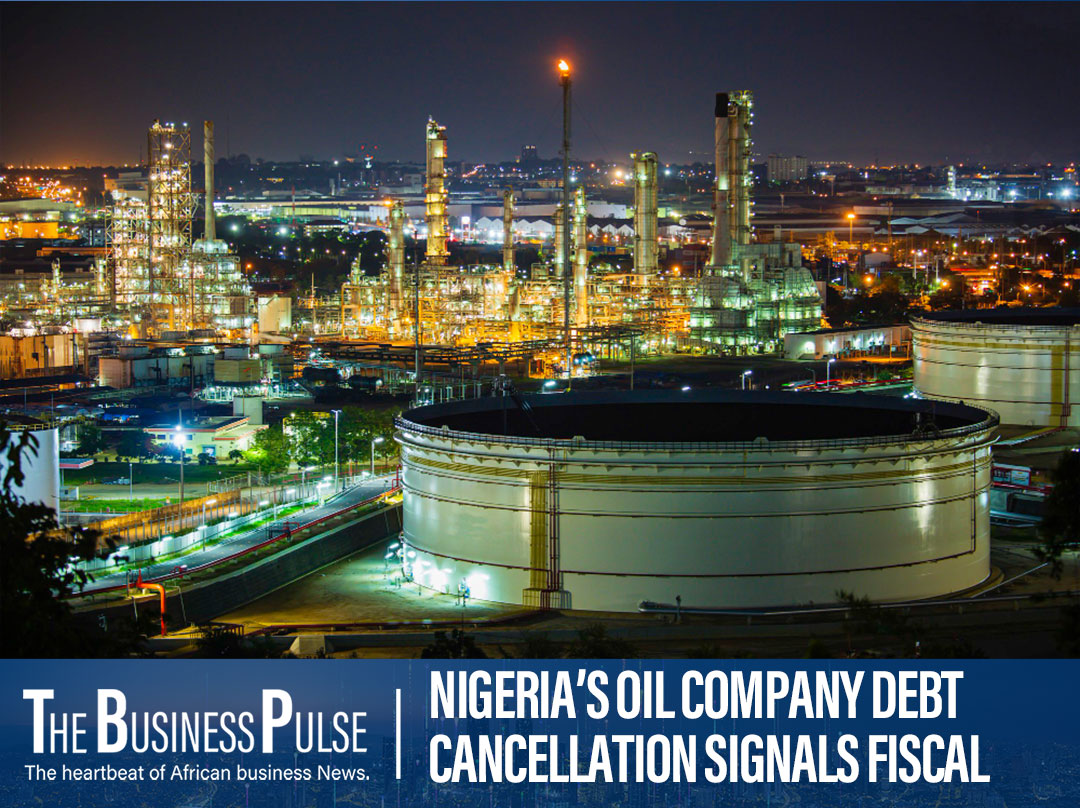
Nigeria Oil Revenue Crisis Exposes Deep Fiscal Fault Lines
The Nigeria oil revenue crisis has entered a critical phase following the federal government’s decision to cancel about $1.42 billion in historical debts owed by NNPC Ltd to the Federation Account. While officials describe the move as a clean-up of legacy balances after a reconciliation exercise, the decision has wider economic, political, and credibility implications. For readers outside Nigeria, this development offers an important case study on how resource wealth can fail to translate into reliable public income.
At its core, the Nigeria oil revenue crisis is about money that should have flowed into government coffers but did not. Nigeria is Africa’s largest oil producer and one of the continent’s biggest economies. Oil has been the backbone of government revenue and foreign exchange earnings for decades. Yet the country continues to struggle with fiscal shortfalls, rising debt, and pressure on public services. The cancellation of historical oil-related debts highlights how deep these challenges run.
Join our WhatsApp Group
To understand why this matters, it is important to explain what NNPC Ltd is and how it operates. NNPC, the Nigerian National Petroleum Company Limited, is the state-owned oil company. It manages government interests in oil production, crude exports, fuel imports, and joint ventures with international oil companies. Revenues generated through these activities are meant to be transferred to the Federation Account, which is then shared among the federal government, 36 states, and local governments.
The Federation Account is central to Nigeria’s fiscal system. Monthly allocations from this account fund salaries, infrastructure projects, healthcare, education, and security across the country. When oil revenues fall short, the impact is felt immediately at every level of government. This is why the Nigeria oil revenue crisis is not an abstract issue. It directly affects livelihoods, service delivery, and political stability.
The $1.42 billion debt that has now been cancelled represents legacy obligations that accumulated over several years. These include unpaid revenues linked to crude oil sales, fuel subsidy-related deductions, and accounting differences between what was expected and what was actually remitted. The reconciliation exercise concluded that most of these amounts were no longer recoverable. Rather than pursue repayment, the government chose to wipe the slate clean.
Also Read: Funding Alternatives Are Redefining African SME Growth
Supporters of the decision argue that keeping uncollectable debts on the books distorted Nigeria’s fiscal picture. They say clearing these balances allows policymakers to focus on current performance rather than historical disputes. From a narrow accounting perspective, this argument has merit. However, in the context of the Nigeria oil revenue crisis, the move raises uncomfortable questions about accountability.
One key concern is precedent. Writing off large debts owed by a state-owned company to the public purse risks normalising revenue leakages. It sends a signal that failure to remit funds may eventually be forgiven. In countries with weak institutions, such signals can weaken discipline across public agencies. For Nigeria, where oil revenue disputes have lasted decades, this is a serious risk.
The timing of the debt cancellation also matters. Nigeria is facing persistent revenue shortfalls. Oil production has struggled due to theft, pipeline vandalism, technical failures, and underinvestment. Royalty and tax collections in the upstream sector have consistently missed targets. As a result, the government relies heavily on borrowing to fund its budget. In this environment, cancelling oil-related debts appears counterintuitive to fiscal consolidation.
Another dimension of the Nigeria oil revenue crisis is transparency. Audits and reports over the years have repeatedly highlighted gaps between oil produced, oil sold, and oil revenues remitted. Disagreements between NNPC, regulators, and the finance ministry have been common. The reconciliation exercise that led to the debt cancellation may have resolved accounting disputes, but it does not automatically improve transparency going forward.
For state governments, the implications are significant. States depend on monthly transfers from the Federation Account to function. When oil revenues are weak, states delay salaries, reduce capital spending, and accumulate arrears. Many states already carry heavy debt burdens. From their perspective, cancelling historical debts owed to the shared account feels like absorbing losses caused by federal-level mismanagement.
The Nigeria oil revenue crisis also affects investor confidence. Nigeria relies on foreign investment to support growth, especially in energy, manufacturing, and infrastructure. Investors look for predictable revenue systems and credible institutions. When oil revenues, the country’s main income source, are uncertain or poorly accounted for, investors demand higher risk premiums or stay away altogether.
Also Read: How to make your business fundable in 2026: a practical guide for African founders
International partners and credit rating agencies are also watching closely. Nigeria’s debt servicing costs have risen sharply in recent years. Oil revenues are expected to provide foreign exchange and budget support. When they fall short, fiscal stress increases. The debt cancellation highlights that some expected revenues never existed in practical terms. This weakens confidence in official projections.
The broader Nigeria oil revenue crisis cannot be separated from structural problems in the oil sector. Nigeria’s production costs are high compared to peers. Oil theft has reached industrial scale in some regions. Regulatory uncertainty has delayed investment. Although reforms under the Petroleum Industry Act aimed to address these issues, implementation has been slow and uneven.
NNPC Ltd was restructured to operate as a commercial entity rather than a government department. In theory, this should improve efficiency and accountability. A commercially run NNPC should pay taxes, royalties, and dividends like any other company. In practice, political influence and legacy obligations still shape its operations. The cancellation of historical debts suggests that the transition is far from complete.
There are also long-term risks if the Nigeria oil revenue crisis remains unresolved. Reduced public revenue limits investment in infrastructure, education, and health. This constrains productivity and growth. Increased borrowing raises debt servicing costs, crowding out development spending. Currency pressures intensify when oil-related dollar inflows weaken. These dynamics reinforce each other, creating a cycle that is difficult to break.
For non-Nigerian readers, Nigeria’s experience reflects a broader challenge faced by resource-rich economies. Natural wealth does not guarantee fiscal stability. Strong institutions, transparent revenue systems, and clear accountability matter more than resource endowment. The Nigeria oil revenue crisis shows how weak governance can turn oil into a source of vulnerability rather than strength.
Also Read: AI era challenges deepen inequality, jobs, & governance risk
Looking ahead, the key question is whether this episode leads to reform or complacency. Cancelling historical debts should not be the end of the story. Clear rules on revenue remittances, real-time public reporting of oil sales, and enforcement mechanisms for non-compliance are essential. Without these, new debts will accumulate, and future cancellations will follow.
There is also a need for broader revenue diversification. Nigeria’s dependence on oil makes fiscal planning volatile. Expanding the tax base, improving non-oil revenue collection, and supporting productive sectors would reduce exposure to oil shocks. The Nigeria oil revenue crisis highlights why diversification is not just a policy slogan but an economic necessity.
In conclusion, the decision to cancel $1.42 billion in historical oil-related debts is a revealing moment. It exposes the depth of Nigeria’s oil revenue challenges and the limits of past reforms. While it may bring short-term clarity to government accounts, it does not solve the underlying Nigeria oil revenue crisis. Without stronger transparency, enforcement, and institutional discipline, Nigeria risks repeating the same cycle. For businesses, investors, and citizens, the stakes are high. Oil revenue management remains central to Nigeria’s economic future, and how this crisis is handled will shape confidence for years to come.

Head of Business Development, Alula Animation. With 10 years in advertising and sustained involvement in startups and entrepreneurship since graduating from business school and the School of Diplomacy and International Relations, Beloved researches and writes practical business analysis and verified job-market insights for The Business Pulse Africa.
Leave a Reply