
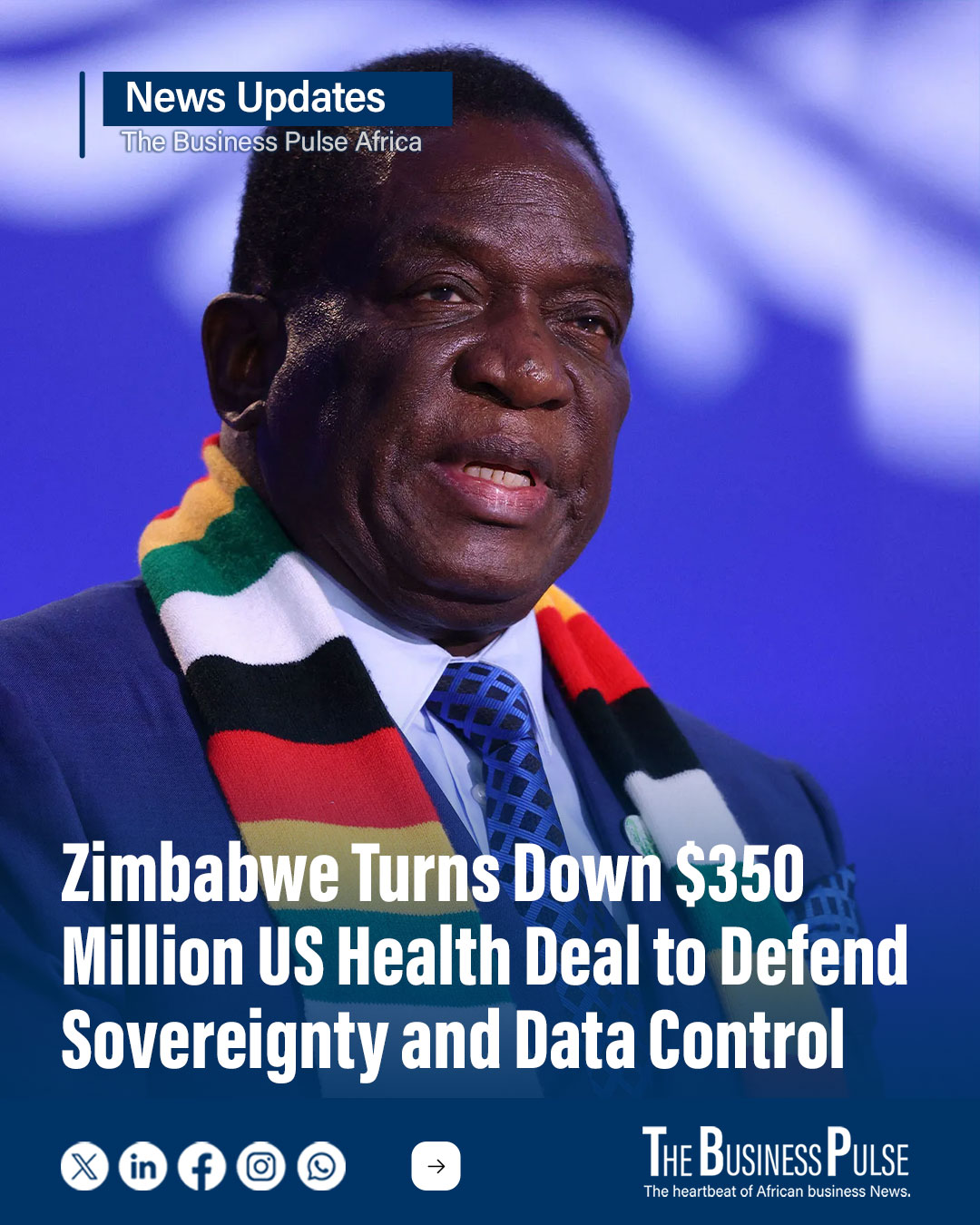
Zimbabwe Rejects $350m US Health Deal Over Sovereignty Concerns
Zimbabwe has officially withdrawn from negotiations over a proposed health funding agreement with the United States after concluding that the terms threatened national sovereignty. The decision to rejected $350m US health deal has stirred debate over how far the country should go in accepting foreign assistance when conditions are attached to funding.
The proposed arrangement was expected to provide up to $350 million for Zimbabwe’s health sector under a broader US global health programme. However, the government chose to rejected $350m US health deal after President Emmerson Mnangagwa ordered senior officials to stop negotiations, citing concerns that the agreement would weaken national control over key systems.
Authorities stated that Zimbabwe remains open to international cooperation, but only under terms that respect domestic authority. The move to rejected $350m US health deal was therefore presented as a political and policy decision rather than a rejection of health cooperation itself.
Join our WhatsApp Group
Why the Deal Was Turned Down
According to government officials, the structure of the agreement raised serious concerns. One of the main issues was a clause that would have given foreign partners extensive access to Zimbabwe’s public health data. Authorities argued that this posed risks to national security and data privacy.
Another disputed provision related to oversight and decision-making powers. Officials said the proposed arrangement would have placed too much operational control in foreign hands, reducing Zimbabwe’s ability to independently manage its health policies. For this reason, the country chose to rejected $350m US health deal rather than accept terms it viewed as unequal.
There were also concerns that the deal could create long-term dependence on external funding tied to political conditions. Zimbabwe’s leadership argued that health cooperation should not be linked to broader strategic or economic influence. This formed a key reason why the government chose to rejected $350m US health deal.
Health Funding in a Difficult Global Environment
The decision to rejected $350m US health deal comes at a time when global health funding is becoming less predictable. Many donor countries are cutting or restructuring foreign aid budgets, placing pressure on African health systems that rely on international support.
Zimbabwe has historically depended on donor funding to support programmes related to HIV treatment, tuberculosis control and maternal health. However, officials now argue that relying too heavily on foreign assistance leaves the country exposed to sudden policy changes by donor governments.
By choosing to rejected $350m US health deal, Zimbabwe is pushing for greater domestic responsibility in health financing. Authorities have said this will require stronger budget discipline, better revenue collection and more efficient use of existing resources.
Political and Public Reaction
The move to rejected $350m US health deal has divided opinion. Supporters say the government acted correctly by protecting national independence. They argue that accepting funding tied to restrictive conditions could undermine long-term development goals.
Critics, however, warn that rejecting such a large amount of money could worsen existing problems in hospitals and clinics. Zimbabwe’s health system continues to face shortages of staff, medicine and equipment. Some fear that the decision to rejected $350m US health deal could increase pressure on already strained services.
Civil society groups have called for transparency in explaining exactly what conditions were included in the rejected agreement. They argue that citizens deserve to understand both the risks and the benefits of such large funding proposals.
What It Means for the Health Sector
In practical terms, the choice to rejected $350m US health deal means Zimbabwe must find other ways to fund key programmes. These include vaccination campaigns, disease prevention efforts and rural health outreach.
The Ministry of Health has indicated that it will focus on strengthening domestic funding mechanisms. These may include higher budget allocations, public private partnerships and targeted health levies. Officials say this approach allows Zimbabwe to maintain control over its systems while still working with international partners under acceptable terms.
However, health experts caution that replacing $350 million will not be easy. Without careful planning, service gaps could appear, particularly in low income communities. The impact of the decision to rejected $350m US health deal will depend on how effectively alternative funding is secured.
Diplomatic and Strategic Consequences
Beyond healthcare, the choice to rejected $350m US health deal carries diplomatic consequences. It highlights growing tension between African governments and donor countries over how aid is structured.
Many African states are questioning whether external assistance always serves local priorities or whether it sometimes advances foreign interests. Zimbabwe’s stance places it among countries seeking more balanced and respectful partnerships.
Officials have said future agreements will undergo stricter review to ensure national institutions retain authority. Any new deals must align with domestic development plans rather than external agendas. The decision to rejected $350m US health deal is therefore part of a broader policy direction.
What Happens Next
Zimbabwe’s government has stated that rejecting the deal does not mean rejecting cooperation. Instead, it wants health partnerships that operate through multilateral frameworks or under clearly defined national control.
The coming months will show whether the country can secure alternative support or expand internal funding fast enough to cover the gap left by the rejected $350m US health deal. International partners will also need to reconsider how they design agreements with African states that are becoming more assertive about sovereignty.
For ordinary citizens, the main concern is whether healthcare services will remain stable. The long-term outcome of the decision to rejected $350m US health deal will be measured by its effect on hospitals, clinics and disease control programmes.
ALSO READ: Managing Risks and Costs: How Small Businesses Stay Profitable and Survive
Conclusion
The decision to rejected $350m US health deal marks a critical moment in Zimbabwe’s relationship with foreign donors. It raises questions about how aid should be structured and who should control national health systems.
Supporters see the move as a defence of independence. Critics fear it could strain an already fragile health sector. What is clear is that Zimbabwe has chosen a path that prioritises sovereignty over immediate financial gain.
Whether this approach strengthens or weakens public healthcare will depend on how successfully the country mobilises domestic resources and builds partnerships that respect its authority. The debate over the rejected $350m US health deal is therefore not only about money, but about power, policy and the future direction of national development.

Head of Business Development, Alula Animation. With 10 years in advertising and sustained involvement in startups and entrepreneurship since graduating from business school and the School of Diplomacy and International Relations, Beloved researches and writes practical business analysis and verified job-market insights for The Business Pulse Africa.
Leave a Reply