
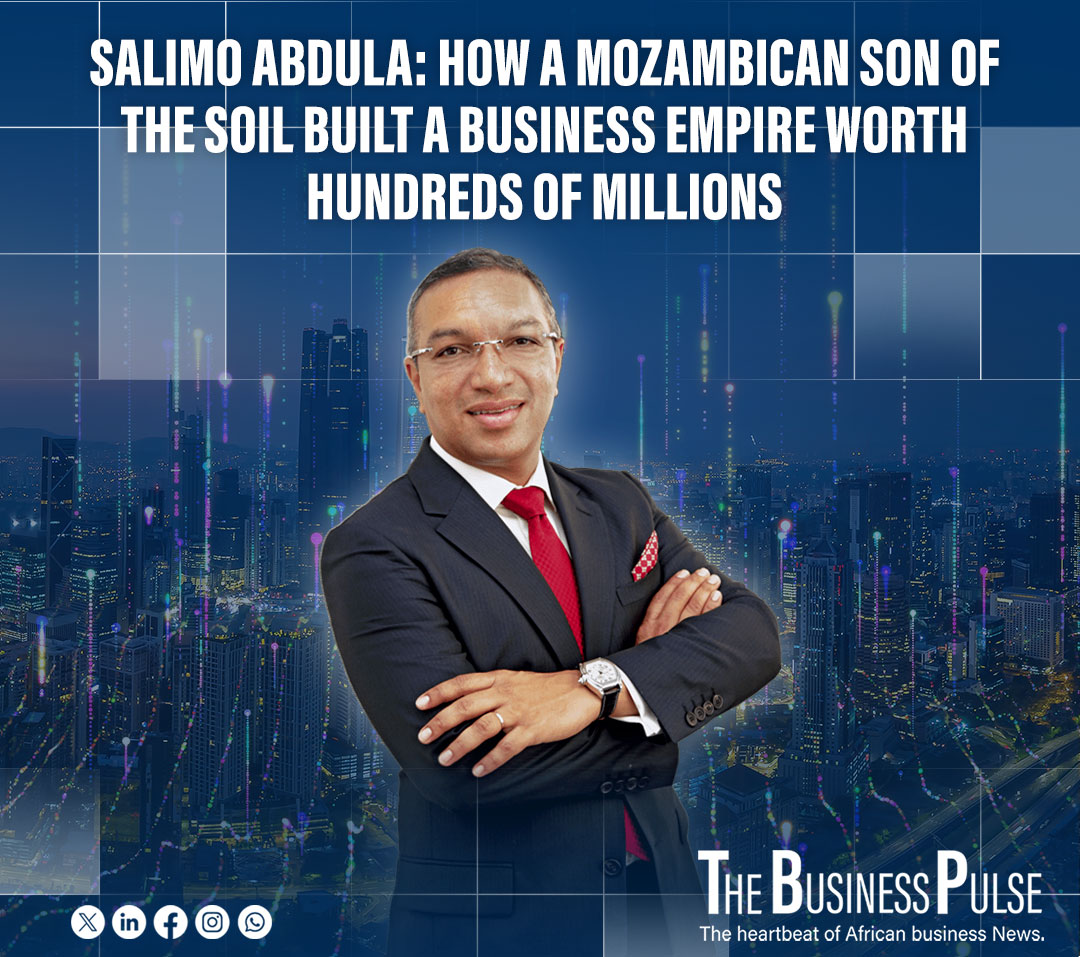
Salimo Abdula The Mozambique Titan
Salimo Abdula rose from a difficult childhood in Quelimane to become one of Mozambique’s most influential business leaders. His story is simple to tell and hard to match. He took risks when others walked away. He chose to buy the problem and to fix it. That choice turned a failing electrical shop into a national company and then into a group that now shapes industry in Mozambique.
Early years and the first gamble
Salimo Abdula was born in Quelimane, Zambézia. He grew up in a large household where work had to start early. Sport was a guide. By age 17 he led the Zambézia Basketball Association. He worked shifts at a cinema bar and later at an electrical supply shop named A Illuminante. He moved to Maputo to study IT at a time when the country was dangerous. He boarded a military transport plane to get there.
Join our WhatsApp Group
At 20 years old he faced a test that would decide his life. A Illuminante was abandoned. Debt piled up. The owners were gone. The government readied the company for auction. Jobs would vanish. Salimo Abdula did not run. He wrote to the government and offered to assume the debt and keep the 77 workers on the payroll. Friends called him reckless. He had only an old Peugeot that had to be push-started. He made payments, rebuilt the business, and in two years saved the company.
That move defined him. It showed that business can be an answer to social problems and that private initiative can solve public pain.
Building Intelec Holdings
After saving A Illuminante, Salimo Abdula founded Intelec Holdings in 1997. He did not follow the usual path of resource extraction. He bet on local production. He wanted Mozambican products to gain value inside Mozambique instead of being shipped out as raw materials.
Under his leadership, Intelec expanded into energy, telecommunications, finance, and agriculture. He focused on services and industries that create jobs and build capacity. He pushed for local procurement and skills training. The group now employs thousands directly and creates many more jobs indirectly. He often says that job creation is his proudest achievement.
Salimo Abdula also moved into telecommunications. He served as Chairman of Vodacom Mozambique and later became Chairman at Vodafone M-Pesa. In those roles he worked to expand mobile finance services to people without bank accounts. His aim was simple. Give millions access to basic financial services and let them build small businesses.
ALSO READ: How Khaby Lame Sold a Major Stake in His Business for $900 Million: An Honest Look at the Deal and Its Structure
Leadership that stayed local
The phrase son of the soil fits Salimo Abdula. He could have moved his capital or chased safer returns elsewhere. Instead he stayed. He invested in local industries and in local talent. He argued that Mozambique needed domestic firms that could run major projects and that local ownership mattered.
He also served in business associations. As President of the Confederation of Economic Associations, he pressed for fewer administrative hurdles and clearer rules for Mozambican entrepreneurs. He asked the state to open procurement to local firms and to simplify licensing. He used his platform to make it easier for new firms to start.
His public work matched his private action. He launched a foundation that targets skills training. The Salimo Abdula Foundation now seeks to train and mentor 15,000 young Mozambicans. The focus is practical skills linked to jobs that exist today in the market.
Why his model matters for Africa
The rise of Salimo Abdula matters beyond Mozambique. Many African countries carry the same economic questions. How do we turn natural resources into jobs? How do we build firms that keep value inside the country? How do we move away from dependency on imports?
Salimo Abdula offers a clear answer. Begin with local capacity. Build firms that hire locally and buy locally. Teach the workforce. Tie investment to job creation. This path increases resilience. It also grows the tax base and supports public services.
His emphasis on mobile finance is also instructive. Mobile wallets and payment systems lower transaction costs and include people outside the formal banking system. By backing mobile finance projects, Salimo Abdula helped unleash commerce where banks did not serve.
Practical lessons for entrepreneurs
There are direct lessons in the story of Salimo Abdula that every founder can use.
First, look for neglected assets. A failing company can hide value. Buying problems can be cheaper than starting from zero.
Second, keep people at the center. Salimo Abdula saved jobs before profits. People repay that loyalty with productivity and commitment.
Third, diversify carefully. Intelec moved into sectors that supported each other. Energy, telecoms, and finance interlink. A cash flow in one area can help another grow.
Fourth, invest in skills. Training is not charity. It is an investment that reduces hiring costs and improves quality.
Fifth, protect control while partnering. When outside partners help scale a business, keep governance clear and plan for long term value capture.
ALSO READ: The Billionaire Blueprint: How Aliko Dangote and Abdulsamad Rabiu Are Redefining African Wealth
Policy lessons for governments
Salimo Abdula’s life shows what government can do to help local entrepreneurs.
Reduce red tape. Simple registration rules and clear taxes lower the cost of starting firms.
Open public procurement to qualified local businesses. When local firms win contracts, capacity grows and jobs follow.
Support vocational training. Universities are vital, but technical colleges that teach trade skills produce immediate employability.
Enable digital finance. Mobile money systems are powerful growth enablers, especially where banks are weak.
All these changes make it more likely that other sons and daughters of the soil will choose to stay and build.
Challenges and trade offs
No story of growth is without risk. Building local firms often requires patient capital. Profit margins can be thin early on. Infrastructure remains a constraint. Power interruptions, weak roads, and logistical gaps increase costs.
Corruption and poor governance can also block progress. Entrepreneurs may face unfair competition from better connected rivals. That is why the advocacy work Salimo Abdula did matters. Pressure for transparency and fair rules is as important as investment.
Finally, scaling from a single local market to regional competition requires different capabilities. Firms must build export skills, comply with wider standards, and manage currency risk.
The wider legacy
Salimo Abdula’s legacy will be measured in more than income statements. It will be in the small firms that grew because a supplier was local. It will be in the technicians trained by his foundation. It will be in the families kept afloat when jobs were saved in a single act of will.
He reframed success as more than personal wealth. He framed it as a responsibility to the community. That message is potent across Africa. Many young business people are driven by profit. Few build companies with social purpose as a core.
ALSO READ: James Ndambo: A Trailblazer of African Success: Inspiring a New Generation of African Entrepreneurs
A call to action for young Africans
If you are an entrepreneur in Africa, consider these steps inspired by Salimo Abdula.
Start with a need in your community. Build a small solution that solves that need.
Hire and train local workers. Create on the ground a place where skills are learned.
Protect your firm’s governance early. Good structures make long term growth possible.
Work with peers and associations to improve rules. Collective voice changes policy faster than lone complaints.
Finally, think long term. Building local capacity is slow. But the firms you build will outlast short term gains and will power jobs and development for decades.
Closing reflection
Salimo Abdula is often called a son of the soil. He earned that title through action. He risked personal comfort, he built local capacity, and he pushed for systems that help others start. His life shows that business can be a public good when leaders choose to keep value inside their country and to back people who need a chance.
Across the continent his example can inspire policymakers, business founders, and young people to ask a different question. Instead of fleeing problems, what if we bought them and fixed them? Salimo Abdula’s life argues that the answer is worth the risk. It can build firms, create jobs, and change a nation.

Head of Business Development, Alula Animation. With 10 years in advertising and sustained involvement in startups and entrepreneurship since graduating from business school and the School of Diplomacy and International Relations, Beloved researches and writes practical business analysis and verified job-market insights for The Business Pulse Africa.
Leave a Reply