
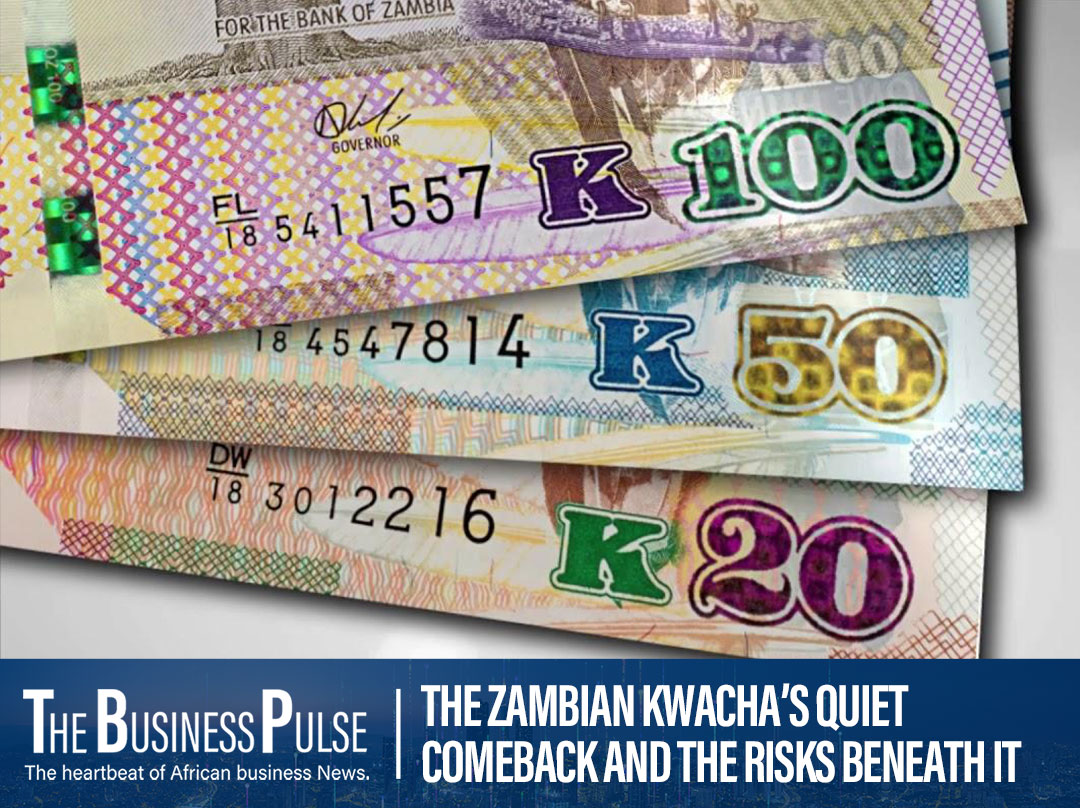
Zambian kwacha recovery
In 2026, the Zambian kwacha recovery has become one of the most closely watched currency stories on the African continent. After years of weakness, inflation pressure, and public debt distress, Zambia’s currency is trading at its strongest level in more than two years. For many observers, this turnaround feels sudden. In reality, it is the result of a long and often painful economic reset involving debt restructuring, policy enforcement, and external market forces.
This article examines what really happened, why the Zambian kwacha recovery has gained traction, and whether the current stability represents a lasting shift or a temporary high point.
Join our WhatsApp Group
How Zambia Lost Control of Its Currency
To understand the current position, it is necessary to revisit how Zambia arrived at currency fragility in the first place. For more than a decade, the economy drifted toward heavy dollar use. Large transactions, property sales, vehicle imports, and even service contracts were priced and settled in US dollars. This reduced confidence in the local currency and weakened the influence of the central bank.
At the same time, Zambia borrowed heavily to fund infrastructure and public spending. When copper prices fell and external shocks followed, debt repayments became unsustainable. By the time Zambia defaulted during the pandemic, the kwacha was already under strain from rising inflation and capital outflows.
By 2023, the currency was reflecting deeper structural issues rather than short term market swings. The Zambian kwacha recovery would therefore require more than interest rate adjustments or short lived confidence measures.
The Turning Point: Enforced Use of the Kwacha
One of the most decisive steps in the Zambian kwacha recovery came with the 2025 currency directives issued by the Bank of Zambia. These measures required the kwacha to be used for domestic settlements across the economy. While prices could still be quoted in foreign currency in limited cases, actual payments had to be made in local money.
This move changed behavior almost immediately. Companies that previously held large dollar balances for local operations had to convert foreign currency into kwacha. Demand for the local unit increased sharply, tightening supply in the foreign exchange market.
Critics viewed this as a blunt policy instrument. Supporters argued that without firm enforcement, dollarization would continue unchecked. In practice, the directive forced market participants to treat the kwacha as a true medium of exchange again.
The result was a visible strengthening of the currency and a renewed role for monetary policy. This policy decision became a cornerstone of the Zambian kwacha recovery.
Also Read: Botswana Golden Passport Programme Sparks Bold Economic Debate
Copper’s Role in Supporting the Currency
While policy played a key role, Zambia’s natural resource base amplified the recovery. Copper prices remained elevated due to global demand linked to electric vehicles, renewable energy infrastructure, and power transmission projects.
Zambia also benefited from rising output. Investment in mine expansions and upgrades increased production volumes, allowing export revenues to grow even without price spikes. The effect on the currency was reinforced by tighter controls on export proceeds.
Mining firms were required to bring foreign earnings into the local banking system, converting a portion into kwacha for taxes, wages, and domestic expenses. This created a steady inflow of foreign exchange rather than sporadic conversions.
In previous commodity cycles, much of the revenue stayed offshore. In 2026, better oversight ensured that copper earnings directly supported the Zambian kwacha recovery.
Debt Restructuring and Confidence Reset
A stable currency cannot exist alongside unresolved sovereign debt. Zambia’s progress under the international debt restructuring framework was therefore critical. By late 2025, most outstanding obligations had been reworked, easing pressure on public finances.
This process was slow and politically difficult. Negotiations with bondholders and bilateral lenders required concessions and fiscal discipline. However, completion sent a powerful signal to markets.
Investors began to treat Zambia as a recovering economy rather than a default risk. Capital flight slowed, and speculative pressure on the currency eased. Credit ratings improved modestly, reducing the risk premium demanded by foreign investors.
Without this progress, currency controls alone would likely have failed. The Zambian kwacha recovery rests as much on restored credibility as on domestic enforcement.
Also Read: Zimbabwe Monetary Policy Shift Signals Hope for Stability
The Real Economy Impact
For households and businesses, currency strength brings mixed effects. On the positive side, import costs have eased. Fuel, medicine, and industrial inputs are less volatile. Inflation has slowed from crisis levels, allowing some relief for consumers.
However, tight monetary conditions remain in place. Interest rates are still high as authorities guard against renewed inflation. This has created liquidity stress for small firms and informal traders who rely on credit.
The Zambian kwacha recovery has therefore improved price stability without yet translating into easy financing. Policymakers face pressure to lower rates without reigniting currency weakness.
Is the Currency Becoming Overvalued?
One concern is whether the kwacha’s strength reflects underlying productivity or enforced demand. If domestic output does not expand beyond mining, the currency risks becoming misaligned with the broader economy.
A strong currency can hurt non mineral exports by making them less competitive. It can also encourage imports, widening trade gaps outside the copper sector.
The government has signaled plans to support agriculture, energy, and manufacturing, but these sectors take time to mature. The success of the Zambian kwacha recovery will depend on whether economic diversification keeps pace with financial stabilization.
Political Risk and Fiscal Discipline
Another risk factor is the political cycle. Election periods historically test fiscal restraint. Increased public spending, subsidies, or wage adjustments could reintroduce inflationary pressure.
If spending rises faster than revenue, the central bank may face pressure to loosen controls. That would weaken confidence and potentially reverse currency gains.
The current stability assumes continued coordination between fiscal authorities and the central bank. Any sign of policy conflict would quickly affect the Zambian kwacha recovery.
External Dependence Remains
Zambia’s economic fortunes remain tied to global conditions. A downturn in global manufacturing or energy investment would reduce copper demand. That would affect export earnings and foreign exchange inflows.
While diversification efforts are underway, they cannot replace mining revenues in the short term. The currency remains sensitive to external shocks, even with stronger internal policy alignment.
What the Likely Outcomes Look Like
Looking ahead, the most likely outcome is a period of relative stability rather than continuous appreciation. The Zambian kwacha recovery appears real, but not immune to setbacks.
If authorities maintain discipline, the kwacha could settle into a stable trading range that supports planning and investment. Inflation may continue easing, allowing gradual rate cuts that support business activity.
If discipline weakens, especially during election driven spending, the gains could unwind. Currency controls without fiscal restraint rarely hold over time.
Final Assessment
The Zambian kwacha recovery is not an accident, nor is it guaranteed. It is result of tough policy choices, improved oversight of export revenues, and hard won progress on debt restructuring. These steps restored confidence and re anchored the currency in daily economic life.
The challenge now is to convert currency stability into broader growth. That requires expanding production beyond copper, supporting private sector credit, and resisting political pressure for short term spending.
If Zambia succeeds, the kwacha’s strength in 2026 will be remembered as the foundation of a more resilient economy. If not, it risks becoming another brief chapter in a long history of volatility.
For now, the Zambian kwacha recovery stands as one of Africa’s most instructive economic case studies.

Head of Business Development, Alula Animation. With 10 years in advertising and sustained involvement in startups and entrepreneurship since graduating from business school and the School of Diplomacy and International Relations, Beloved researches and writes practical business analysis and verified job-market insights for The Business Pulse Africa.
Leave a Reply