
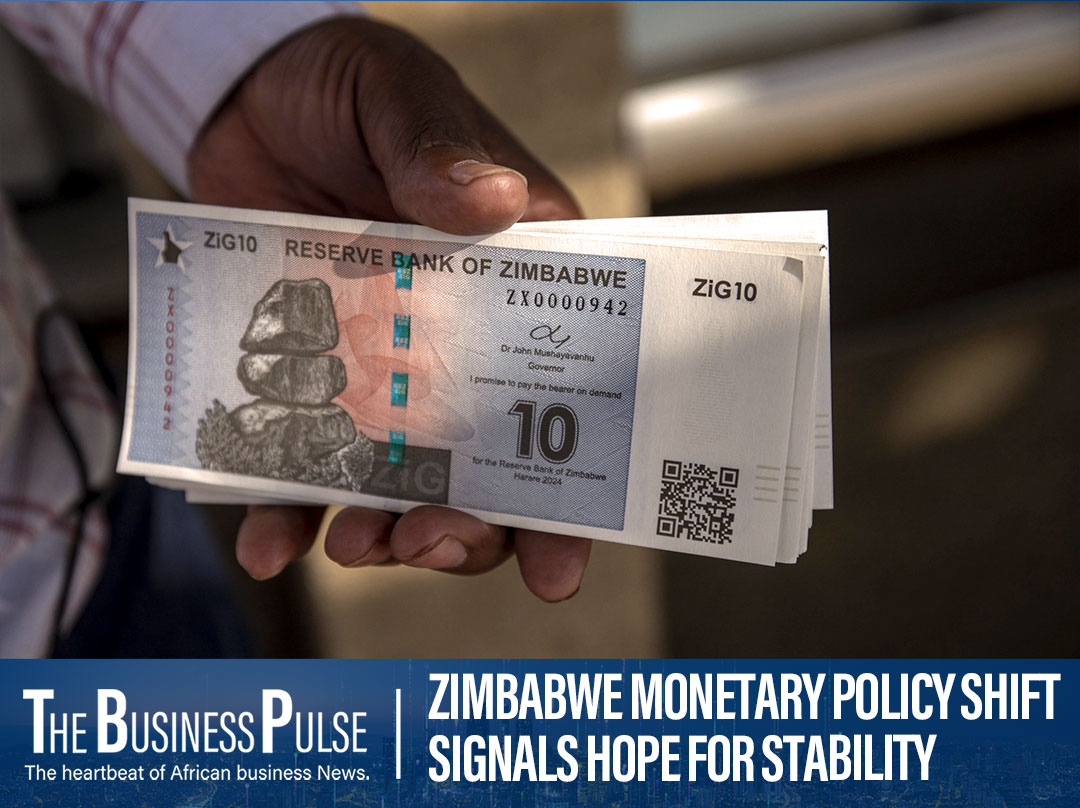
Zimbabwe Monetary Policy Shift
Zimbabwe has announced a significant change in how it plans to manage its economy. The Reserve Bank of Zimbabwe has stated that it will now place greater focus on controlling money supply as the core of its monetary policy approach. This development, widely described as a Zimbabwe Monetary Policy Shift, marks a notable change in tone and method after years of reactive and crisis driven interventions.
For readers outside Zimbabwe, it is important to first explain the context. Zimbabwe’s economy has long struggled with high inflation, currency instability, weak confidence in local money, and deep reliance on foreign currencies such as the US dollar. Monetary policy has often been blamed for these challenges, particularly the unchecked growth of money supply during past periods of fiscal pressure.
The Zimbabwe Monetary Policy Shift suggests that authorities now want to directly address one of the root causes of instability: excess liquidity in the system.
Join our WhatsApp Group
What the policy shift actually means
At its core, this Zimbabwe Monetary Policy Shift means the central bank will pay closer attention to how much money is created and circulated in the economy. Instead of reacting after inflation spikes, the bank aims to guide money growth in a way that aligns with economic output and price stability.
In simple terms, when too much money chases too few goods, prices rise. Zimbabwe has experienced this repeatedly over the past two decades. By tightening control over money supply, policymakers hope to avoid a repeat of hyperinflationary cycles that destroyed savings and wages in the past.
This approach is not new globally. Many central banks use money supply management as a key anchor. What makes this Zimbabwe Monetary Policy Shift notable is that it comes after years of policy experimentation, including currency changes, exchange controls, and emergency measures.
Why this matters now
Timing is critical. Zimbabwe has recently recorded lower inflation figures compared to previous years. Authorities view this as evidence that tighter policy coordination is working. The Zimbabwe Monetary Policy Shift appears designed to lock in these gains and prevent backsliding.
However, history has made businesses and households cautious. Many Zimbabweans have seen policy promises fail before. Confidence will depend not on statements, but on consistency.
If money supply discipline is maintained even during politically or fiscally difficult periods, the shift could mark a turning point. If discipline weakens, the policy risks becoming another short lived adjustment.
Also Read: Econet InfraCo Industrial Park: A Bold Bet on Zimbabwe’s Future
The link between money supply and inflation
Inflation remains the most sensitive issue in Zimbabwe. High inflation erodes wages, raises operating costs, and makes long term planning almost impossible. The Zimbabwe Monetary Policy Shift directly targets this problem.
When money supply grows faster than economic production, prices rise. When money creation is restrained, inflation pressures ease. The challenge is balance. Too tight a policy can starve businesses of credit and slow growth. Too loose a policy fuels inflation and currency weakness.
The success of the Zimbabwe Monetary Policy Shift will depend on whether authorities can maintain this balance without political interference.
Impact on businesses and credit
For businesses, this policy shift cuts both ways. On one hand, stable prices and a predictable monetary environment make planning easier. On the other, tighter control of money supply can limit access to loans, especially for small and medium enterprises.
Banks in Zimbabwe already lend cautiously due to economic uncertainty. If liquidity becomes more restricted, borrowing costs could rise further. This means productive sectors such as manufacturing, agriculture, and construction may struggle unless policy is carefully calibrated.
The Zimbabwe Monetary Policy Shift must therefore be paired with targeted credit support for productive industries. Without this, stability may come at the cost of growth.
Currency confidence and public trust
Another major goal of the Zimbabwe Monetary Policy Shift is restoring trust in local currency. Zimbabwe remains heavily dollarised, with many prices and contracts still denominated in foreign currency.
People adopt foreign money when they do not trust local money to hold value. Controlling money supply is a necessary step toward rebuilding confidence, but it is not sufficient on its own. Trust is earned through consistency over time.
If citizens see that money supply growth remains controlled even during elections, droughts, or fiscal stress, confidence may slowly return. If not, the policy will struggle to gain traction.
Fiscal discipline remains critical
One risk facing the Zimbabwe Monetary Policy Shift is government spending pressure. Central banks can promise restraint, but if fiscal authorities run large deficits, pressure mounts to finance them through money creation.
Zimbabwe has experienced this cycle before. Fiscal overspending leads to monetary expansion, which fuels inflation and currency decline. Breaking this cycle requires strong coordination between treasury and the central bank.
Without fiscal discipline, the Zimbabwe Monetary Policy Shift may be undermined before it delivers results.
Regional and investor perceptions
From a regional and international perspective, this policy shift sends a signal. Investors look for predictability, not perfection. A clear framework focused on money supply control suggests a desire for stability.
If consistently applied, the Zimbabwe Monetary Policy Shift could improve investor confidence, particularly among regional firms that understand the country’s risks but are willing to engage if rules remain stable.
However, investors will also watch policy reversals closely. Sudden changes erode trust faster than gradual reform builds it.
Risks and limitations
While the Zimbabwe Monetary Policy Shift has potential benefits, it also carries risks. Over tightening can suppress economic activity and worsen unemployment. Zimbabwe already faces high joblessness and a large informal sector.
Another risk is uneven enforcement. If some sectors receive preferential liquidity access while others are constrained, distortions will persist. Fairness and transparency matter as much as technical policy design.
There is also the risk of communication failure. Monetary policy works best when the public understands it. Mixed signals or unclear messaging can trigger speculation and parallel market activity.
What success would look like
If the Zimbabwe Monetary Policy Shift succeeds, inflation should remain low and predictable. Exchange rate volatility should reduce. Businesses should be able to plan beyond short cycles. Savings should slowly return to local currency.
Success will not be dramatic or instant. In fact, the absence of crisis may be the clearest sign that policy is working.
Also Read: How to make your business fundable in 2026: a practical guide for African founders
What failure would look like
Failure would follow a familiar pattern. Money supply would quietly expand during periods of fiscal stress. Inflation would return. Confidence would fall. Dollarisation would deepen. The policy shift would be remembered as another missed opportunity.
Zimbabwe’s economic history makes this risk real, not theoretical.
Final thoughts
The Zimbabwe Monetary Policy Shift represents a serious attempt to address long standing structural weaknesses in the economy. By placing money supply control at the center of policy, authorities are acknowledging past mistakes and pointing toward a more disciplined approach.
Whether this shift delivers results depends less on technical design and more on political and institutional resolve. Discipline must hold when it is hardest, not only when conditions are calm.
For businesses, households, and investors, cautious optimism is reasonable. But trust will only grow through consistent action over time. The Zimbabwe Monetary Policy Shift is not the end of the reform journey. It is another test of whether lessons from the past have truly been learned.
Leave a Reply