
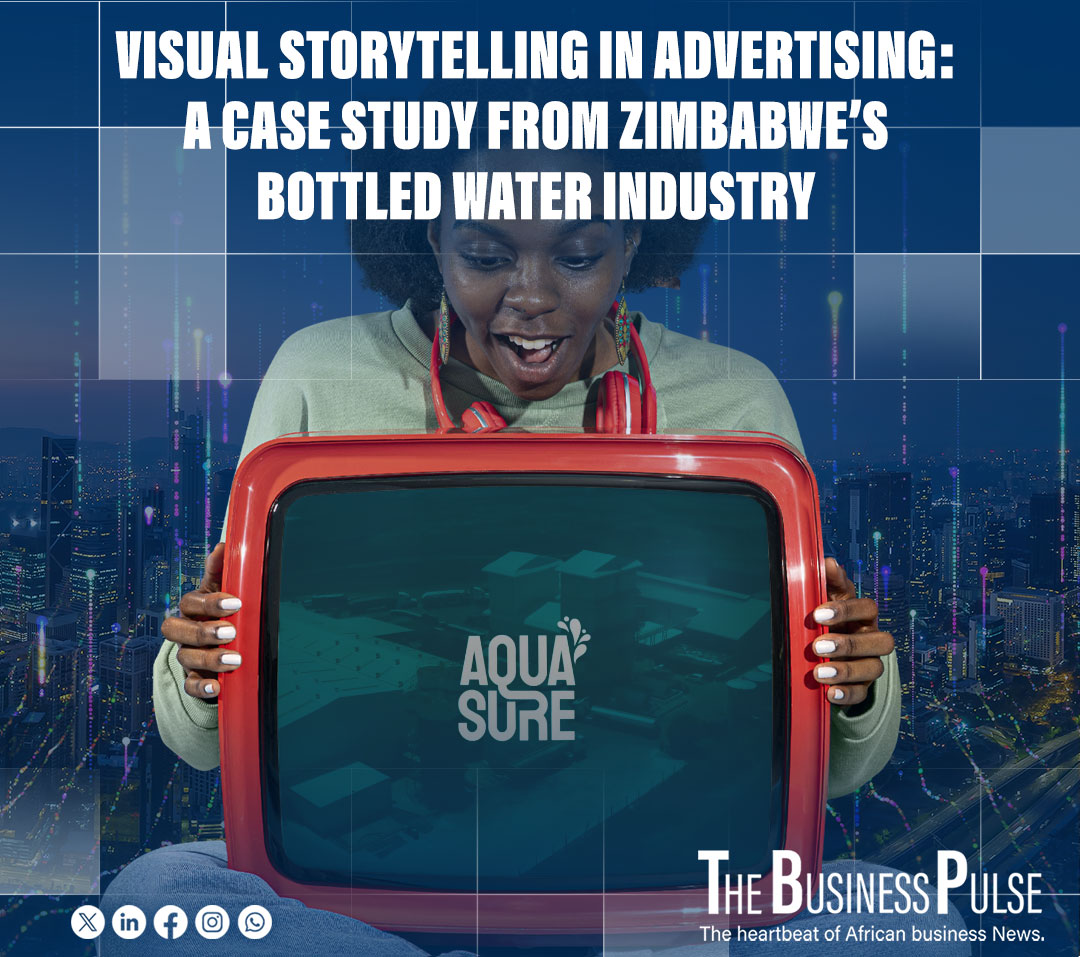
Visual Storytelling in Advertising: A Case Study from Zimbabwe’s Bottled Water Industry
Visual storytelling in advertising has become one of the most important tools for brands trying to communicate in today’s crowded media space. Audiences scroll quickly, skip long messages, and ignore technical explanations. Brands now need to explain value through images, motion, and narrative rather than through long product descriptions. This shift is especially important for products that rely on trust, such as bottled water, health goods, and food products.
This article examines visual storytelling in advertising using a case study from Zimbabwe’s bottled water industry. The example is an animated video produced by Alula Animation for Aqua Sure, Zimbabwe’s premium bottled water brand. The video combines live-action footage with realistic animation to show how Aqua Sure water passes through an advanced eight-step purification process. It demonstrates how animated storytelling in advertising can turn a scientific production method into a clear and engaging story that builds consumer confidence.
Join our WhatsApp Group
The Role of Story in Modern Advertising
Traditional advertising focused on slogans and claims. Modern advertising focuses on explanation and experience. Consumers no longer trust statements such as “best quality” without seeing how that quality is achieved. This is where storytelling in digital advertising becomes essential. A good visual story shows effort, care, and control rather than simply declaring them.
Visual storytelling in advertising works because it allows people to understand complex information quickly. Instead of reading about filtration systems and chemical processes, viewers can watch them happen. This shortens learning time and increases message retention. It also allows brands to communicate with audiences that may not respond well to long written explanations.
The Aqua Sure Campaign Context
Aqua Sure is positioned as a premium bottled water brand. The main challenge was how to show that the water is not just clean but scientifically treated and safe for consumption. Water purification is not visible to the naked eye. Microorganisms, fine particles, and chemical treatments cannot be filmed directly. This makes water quality difficult to communicate using standard video footage alone.
To solve this problem, Alula Animation produced a video that blends real factory footage with animation that explains what happens inside the machines. This combination allows the audience to see both the physical environment and the invisible processes. This approach reflects modern visual storytelling in advertising, where animation supports reality instead of replacing it.
ALSO READ: AI-Driven Sales Strategy: How Businesses Are Using Artificial Intelligence to Transform Sales Performance
Narrative Structure of the Video
The video follows the journey of water from its raw state to the finished bottled product. The story is linear and logical. It begins with the source and then moves step by step through the purification system. Each stage of treatment is explained visually and verbally. The viewer is guided through the process without being overwhelmed by technical language.
The story covers sand filtration, fine particle removal, chlorination to eliminate microorganisms, carbon filtration to improve taste and remove odors, and additional purification steps that prepare the water for mineral balancing. These stages are shown through animation layered over live footage of the factory equipment.
This approach shows how animated storytelling in advertising can be used to explain technical processes in a simple way. Instead of listing features, the video presents a journey. This keeps attention and creates understanding.
Why Animation Was Necessary
Many of the purification steps occur inside closed systems. Cameras cannot see inside pipes, filters, and tanks. Animation makes it possible to show what is happening inside these systems. Microorganisms can be illustrated, particles can be visualized, and chemical reactions can be represented in a controlled way.
This is a core strength of visual storytelling in advertising. Animation reveals what cannot be filmed. It also simplifies science without distorting it. Viewers do not need scientific training to understand what they are seeing. The animation turns technical detail into visual knowledge.
Blending Realism with Illustration
The video does not rely only on animation. It includes real footage of factory operations, machinery, and production lines. This grounds the story in reality. When animation is added on top of this footage, it becomes a tool for explanation rather than decoration.
This blend increases credibility. Viewers can see that the factory exists and that real processes are taking place. The animation then shows what happens inside those processes. This method strengthens trust and aligns with the goals of storytelling in digital advertising, which must balance clarity with authenticity.
ALSO READ: The Business Beneath the Business: Why Most Profitable Businesses Do Not Make Their Money Where Customers Think They Do
Voice and Emotional Tone
The narration uses a calm feminine voice. It does not rush the message or use aggressive sales language. This tone matches the product category. Water is associated with health, cleanliness, and safety. The voice reinforces these ideas without forcing them.
Sound design supports the visuals rather than competing with them. Music and effects are subtle. This allows the audience to focus on the explanation. In visual storytelling in advertising, sound must guide attention without distracting from the message.
Turning Process into Brand Identity
The most important achievement of this campaign is how it transforms a technical process into part of the brand identity. The purification system is no longer just a factory operation. It becomes the story of the product. The brand is defined by its process, not just by its packaging.
Instead of saying the water is pure, the video shows how purity is achieved. This is the foundation of animated storytelling in advertising. It allows brands to replace claims with demonstrations. Consumers are more likely to trust what they see than what they are told.
Trust and Consumer Perception
Water quality is not visible once it is inside a bottle. Consumers must trust the brand. Visual explanation builds that trust. By showing filtration stages, microorganism removal, and mineral balancing, the video creates a sense of transparency.
This transparency is a key function of visual storytelling in advertising. It allows brands to communicate responsibility and care. It also reduces uncertainty. When people understand the process, they feel safer consuming the product.
ALSO READ: AI in African E-commerce: Building Digital Trade in Unequal Conditions
Digital Distribution and Platform Fit
The video format suits multiple platforms. It can be used on television, on social media, on websites, and in retail spaces. Short visual stories perform better than long text-based explanations online. People are more likely to watch than to read.
In storytelling in digital advertising, video is now the main medium for product education. The Aqua Sure campaign fits this environment. It can be cut into short clips or used as a full narrative piece depending on platform needs.
Relevance to African Markets
In many African contexts, visual communication is more effective than written communication. Language diversity, varying literacy levels, and mobile-first consumption patterns all favor visual formats. Animation allows messages to cross language barriers and reach broader audiences.
This makes visual storytelling in advertising especially useful for African brands that want to communicate complex processes simply. The Aqua Sure case shows how local brands can use modern techniques to explain quality and build trust without relying on long written content.
Key Lessons from the Case Study
This case study highlights several practical lessons for advertisers and creatives:
- Complex processes should be shown, not just described.
- Animation should explain reality, not replace it.
- Real footage increases credibility.
- Clear structure improves understanding.
- Calm narration supports trust.
These principles are not limited to bottled water. They apply to food, health products, energy, and manufacturing. This is why animated storytelling in advertising continues to grow across sectors.
Visual Storytelling as a Competitive Advantage
Many brands still depend on slogans and surface-level claims. Few invest in explaining how their products are made. This creates an opportunity. Brands that use visual storytelling in advertising to show their processes can stand out.
Process visibility becomes part of brand value. Transparency becomes a marketing tool. This shifts competition away from price alone and toward trust and knowledge.
Conclusion
The Aqua Sure animated video by Alula Animation shows how visual storytelling in advertising can turn a technical water purification process into a clear and engaging brand story. By blending live footage with realistic animation, the video explains science in a way that is easy to understand and visually convincing.
It demonstrates how animated storytelling in advertising can educate, build trust, and strengthen brand identity at the same time. In a digital environment where attention is limited and skepticism is high, showing how something works is more powerful than saying that it works.
As storytelling in digital advertising continues to evolve, brands that invest in clear visual narratives will be better positioned to earn consumer confidence. The Aqua Sure campaign illustrates how science, story, and design can work together to create meaningful communication in a market where attention is hard to capture and trust is hard to win.
Leave a Reply