
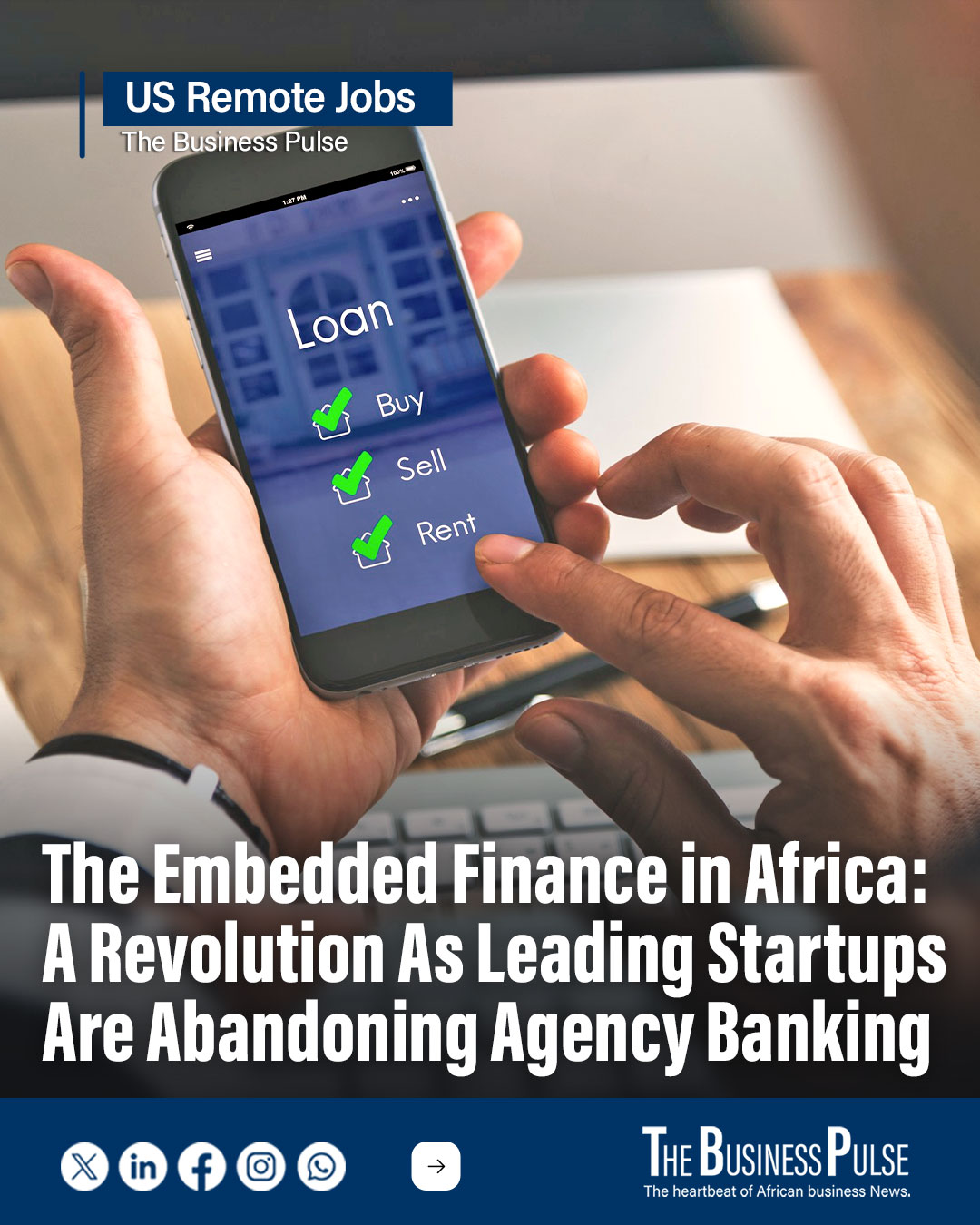
The African financial landscape is undergoing a fundamental transformation. For the past decade, agency banking served as the primary tool for driving financial inclusion across the continent. This model relied on a network of human agents to provide basic cash-in and cash-out services. However, as the digital economy matures, startups are moving toward a more scalable and efficient model. This article explores why companies are choosing embedded finance in Africa over traditional agency models.
Defining the Strategic Shift
Agency banking depends on physical presence and human capital. While it successfully bridged the gap for the unbanked, it remains a high-cost model due to agent commissions and the logistics of cash management. In contrast, embedded finance in Africa allows non-financial companies to integrate banking, payments, and credit directly into their existing platforms. By removing the middleman, startups can offer financial services at the exact moment a customer needs them. This shift is driven by the need for better unit economics and deeper customer data.
Join our WhatsApp Group
1. Nigeria: The Moniepoint Evolution
Nigeria has long been a hub for agency banking. Companies like Moniepoint built massive networks to serve the millions of people who could not access a physical bank branch. However, Moniepoint recognized that providing cash was only the first step. To build a sustainable business, they had to move into the space of embedded finance in Africa.
Moniepoint transitioned from being just an agent network to a full-service business platform. They integrated business banking, inventory management, and working capital loans into their point of sale terminals. Instead of a merchant simply helping customers withdraw cash, the merchant now manages their entire business finance on a single device. This integration ensures that the merchant stays within the ecosystem. By embedding credit into the transaction flow, Moniepoint can use real-time sales data to assess creditworthiness. This is more efficient than traditional banking methods and reduces the risk of default.
2. Kenya: The M-KOPA Credit Model
In East Africa, Kenya has moved beyond simple mobile money transfers to sophisticated credit integration. M-KOPA is a primary example of how embedded finance in Africa is being used to provide essential services. Originally, M-KOPA focused on providing solar energy systems to off-grid households. To make these systems affordable, they had to solve the problem of financing.
M-KOPA did not send customers to a bank for a loan. Instead, they embedded the finance into the product itself. Customers pay a small deposit and then make daily payments via mobile money. The technology to disable the device if payment is not made serves as the collateral. This model of embedded finance in Africa has expanded from solar kits to smartphones and electric motorcycles. By embedding the financing into the purchase process, M-KOPA eliminates the friction of traditional lending. They have successfully financed millions of devices by treating the hardware as a gateway to financial services. This demonstrates that for many African consumers, the product and the finance are inseparable.
3. Egypt: MNT-Halan and the Super App Approach
Egypt is currently seeing one of the fastest growth rates for embedded finance in Africa through the rise of super apps. MNT-Halan started as a ride-hailing and delivery platform but quickly realized that their drivers and customers needed more than just transportation. They needed liquidity to buy vehicles and grow their small businesses.
MNT-Halan integrated a digital wallet and microfinance services directly into their app. When a driver needs a new motorcycle or a customer wants to buy furniture on credit, the financing is processed within the MNT-Halan interface. This use of embedded finance in Africa allows the company to leverage the massive amount of data they collect from ride-hailing and delivery transactions. They know the income levels and spending habits of their users, which allows them to offer instant credit approvals. This approach is much more effective than the agency banking model because it captures the user at the point of sale. The convenience of having a loan approved within the same app used for daily logistics creates high customer loyalty and recurring revenue.
The Limitations of Agency Banking
The pivot to embedded finance in Africa is largely a response to the inherent limitations of agency banking. Agency networks are difficult to manage at scale. They suffer from liquidity issues where agents frequently run out of cash. There is also the constant challenge of training and retaining reliable agents. Furthermore, the margins in agency banking are thin because the revenue must be shared between the platform and the agent.
By adopting embedded finance in Africa, startups can retain 100 percent of the transaction value. They can also automate the entire process, reducing the need for human intervention. This automation is critical in a high-inflation environment where operational efficiency is the only way to remain profitable. Digital integration also allows for a better user experience as customers no longer need to find a physical agent to perform a transaction.
Enhancing Data and Risk Management
One of the most significant advantages of embedded finance in Africa is the access to high-quality data. In the agency banking model, the platform often only sees the final transaction. In an embedded model, the platform sees the entire customer journey. For example, a B2B e-commerce startup that embeds credit for its retailers knows exactly what products the retailer is buying and how fast they are selling.
This level of insight allows for more accurate credit scoring. Traditional banks in Africa often struggle to lend to SMEs because of a lack of formal records. Embedded finance in Africa solves this by creating a digital paper trail of business activity. Startups can then offer “Buy Now, Pay Later” options or invoice discounting based on actual performance rather than collateral. This increases the total addressable market by making credit available to those who were previously considered too risky.
ALSO READ: Senior UX Digital Strategist (Remote, Full-Time) | $200,000 USD per Year to Lead Global UX Strategy and Digital Innovation
Future Outlook for the Sector
The move toward embedded finance in Africa will likely accelerate as smartphone penetration increases. As more business activity moves online, the opportunity to embed financial services into non-financial workflows will grow. We can expect to see more companies in the logistics, agriculture, and healthcare sectors launching their own financial products.
This shift does not mean that agency banking will disappear entirely. There will still be a need for cash-heavy transactions in rural areas. However, the dominant growth engine for African fintech will be the seamless integration of finance into everyday digital platforms. For startups, the goal is to become an invisible part of the consumer’s life. By providing embedded finance in Africa, they can achieve a level of scale and profitability that the agency banking model could never provide.
The transition to embedded finance in Africa represents a more mature phase of the digital economy. It is a shift from providing basic access to providing sophisticated, data-driven utility. For investors and entrepreneurs, this is where the most significant value will be created over the next several years.
Leave a Reply