
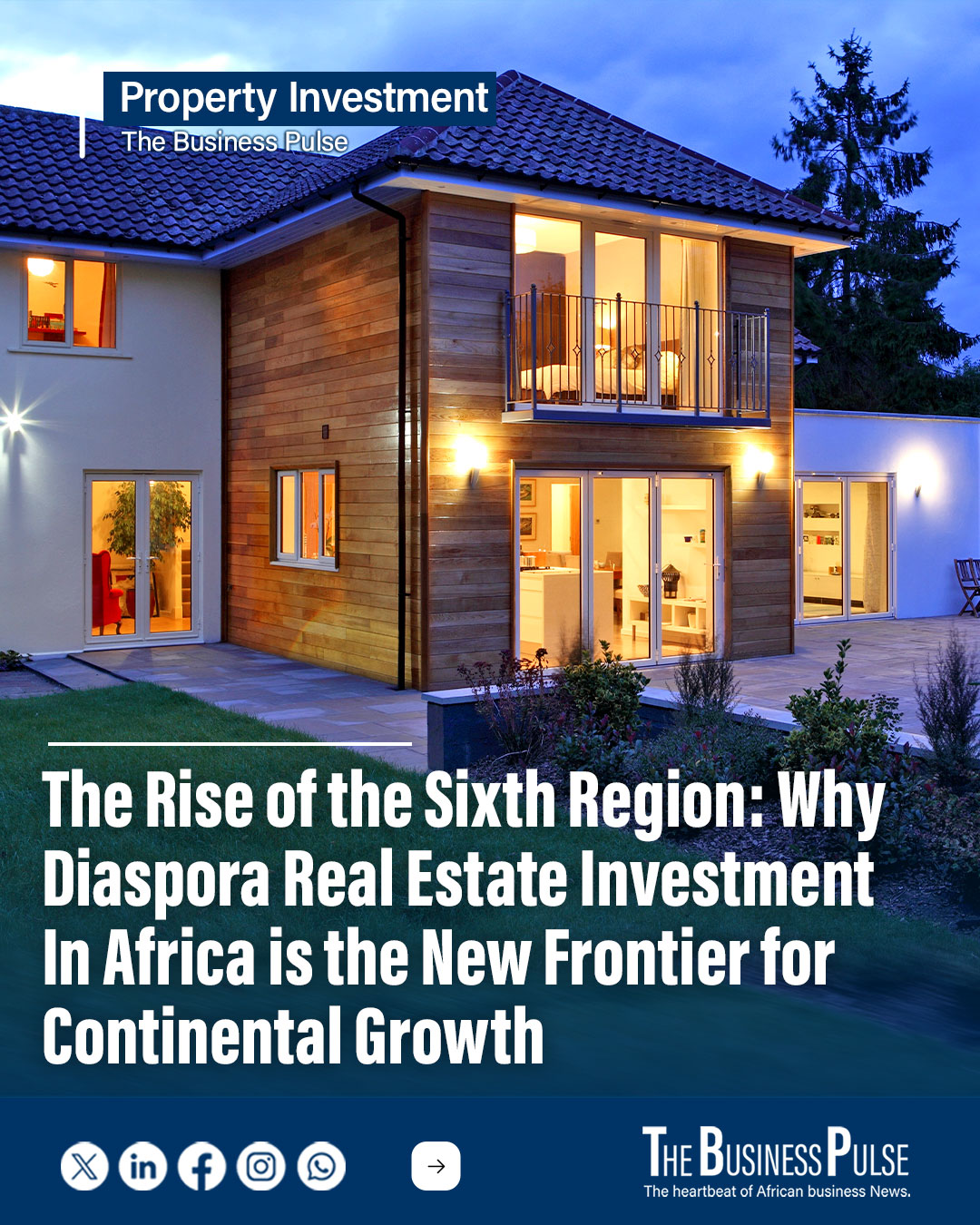
Heading
Capitalizing on the Sixth Region: A Strategic Guide to Diaspora Real Estate Investment Africa in 2026
Explore the strategic impact of diaspora real estate investment Africa. Learn how to safely buy or build property in urban and rural markets while avoiding scams.
The African diaspora is often referred to as the sixth region of the continent. For millions of Africans living in the UK, the EU, Asia, and North America, the connection to home remains a primary driver for financial planning. In 2026, the shift from purely consumption-based remittances to wealth-generating assets is more visible than ever. Central to this shift is diaspora real estate investment Africa, a sector that now rivals traditional foreign direct investment in terms of total capital inflow. While remittances have long sustained households, the current trend involves using these funds to secure high-value land and residential assets that offer long-term security.
Join our WhatsApp Group
The Economic Impact of Diaspora Capital
The sheer volume of capital flowing from the diaspora has a profound effect on local economies. When individuals commit to diaspora real estate investment Africa, they are doing more than just buying bricks and mortar. They are injecting hard currency into local markets, which helps stabilize exchange rates and funds large-scale construction projects. This capital creates immediate employment for local artisans, engineers, and suppliers. In many countries, the construction sector is the largest employer of semi-skilled labor, and it is largely fueled by the desire of those abroad to own property in their home countries.
Furthermore, diaspora real estate investment Africa helps drive urban planning and the development of modern infrastructure. As more people from the UK or USA invest in specific neighborhoods, local governments are often pressured to improve roads, water systems, and electrical grids to match the standards expected by international investors. This creates a cycle of improvement that benefits both the diaspora and the local population.
Strategic Investment Options: Buy or Build?
Investors typically face a choice between purchasing existing structures or building from the ground up. Each path has distinct advantages depending on the risk appetite and time horizon of the investor.
1. Buying Existing Property in Metropolitan Areas
The safest and most immediate way to see a return on diaspora real estate investment Africa is by purchasing finished units in metropolitan hubs like Lagos, Nairobi, or Harare. These areas offer high rental demand from the growing urban middle class and expatriates. Purchasing a completed apartment allows for immediate rental income, which can be used to service an international mortgage or reinvested into other assets. The primary benefit here is the elimination of construction risk and the ability to verify the quality of the build before the final payment.
2. Building in Developing Suburbs
Building from scratch offers the highest potential for value appreciation but requires significant oversight. Many in the diaspora prefer this route because it allows for customization. By purchasing land in the path of urban sprawl, an investor can see the land value triple before the house is even completed. This form of diaspora real estate investment Africa is common in the “New Cities” emerging on the outskirts of major capitals.
3. Rural and Agricultural Investment
While urban centers dominate the conversation, there is a growing interest in rural property investment. This is often driven by a desire for a retirement home or “Kumusha” / “Ekhaya.” However, in 2026, savvy investors are transforming these rural holdings into commercial ventures. By building eco-lodges or modern farmhouse estates, the diaspora can turn an emotional investment into a productive asset that generates seasonal income through domestic tourism and agribusiness.
Safety Protocols: Avoiding the Scam Trap
The biggest hurdle for diaspora real estate investment Africa is the risk of fraud or mismanagement by relatives. To secure an investment, the diaspora must move away from informal “family-managed” projects toward professionalized services.
- Verified Legal Representation: Always hire an independent lawyer who is not affiliated with the seller or the family. They must conduct a title deed search at the local deeds office to ensure the property is free of encumbrances.
- Escrow and Milestone Payments: Do not send the full purchase price or construction budget at once. Use escrow services or bank-guaranteed payment plans where funds are only released when specific construction milestones are met and verified by an independent quantity surveyor.
- Professional Project Management: Instead of relying on a cousin to oversee a build, hire a registered project management firm. The fees for professional oversight are a fraction of what is lost when materials “disappear” from a construction site.
- REITs and Property Funds: For those who want exposure to the market without the headache of physical management, Real Estate Investment Trusts (REITs) are an excellent entry point. These allow for diaspora real estate investment Africa with the liquidity of a stock market asset.
Also Read How to Achieve More Earnings: Proven Strategies for Growing Income in Jobs, Business, and Investments
The Market Outlook for 2026
The property market in relation to the diaspora is currently characterized by a move toward “Smart Cities” and “Green Building.” Governments are increasingly offering tax incentives for diaspora members who invest in sustainable housing projects. In 2026, we are also seeing more banks offering diaspora-specific mortgage products, allowing individuals to use their foreign income to secure local property loans.
The demand for high-quality housing is not slowing down. As the African middle class continues to expand, the need for gated communities and modern apartments will keep property values on an upward trajectory. For the diaspora, the opportunity is twofold: they can secure a home for their future while participating in the rapid growth of their home nation’s economy.
Ultimately, diaspora real estate investment Africa is a bridge between a successful life abroad and a secure future at home. By utilizing professional channels, focusing on high-growth urban corridors, and treating the investment with the same rigor as a Western business deal, the diaspora can ensure that their hard-earned foreign currency builds a lasting legacy on the continent.
Leave a Reply