
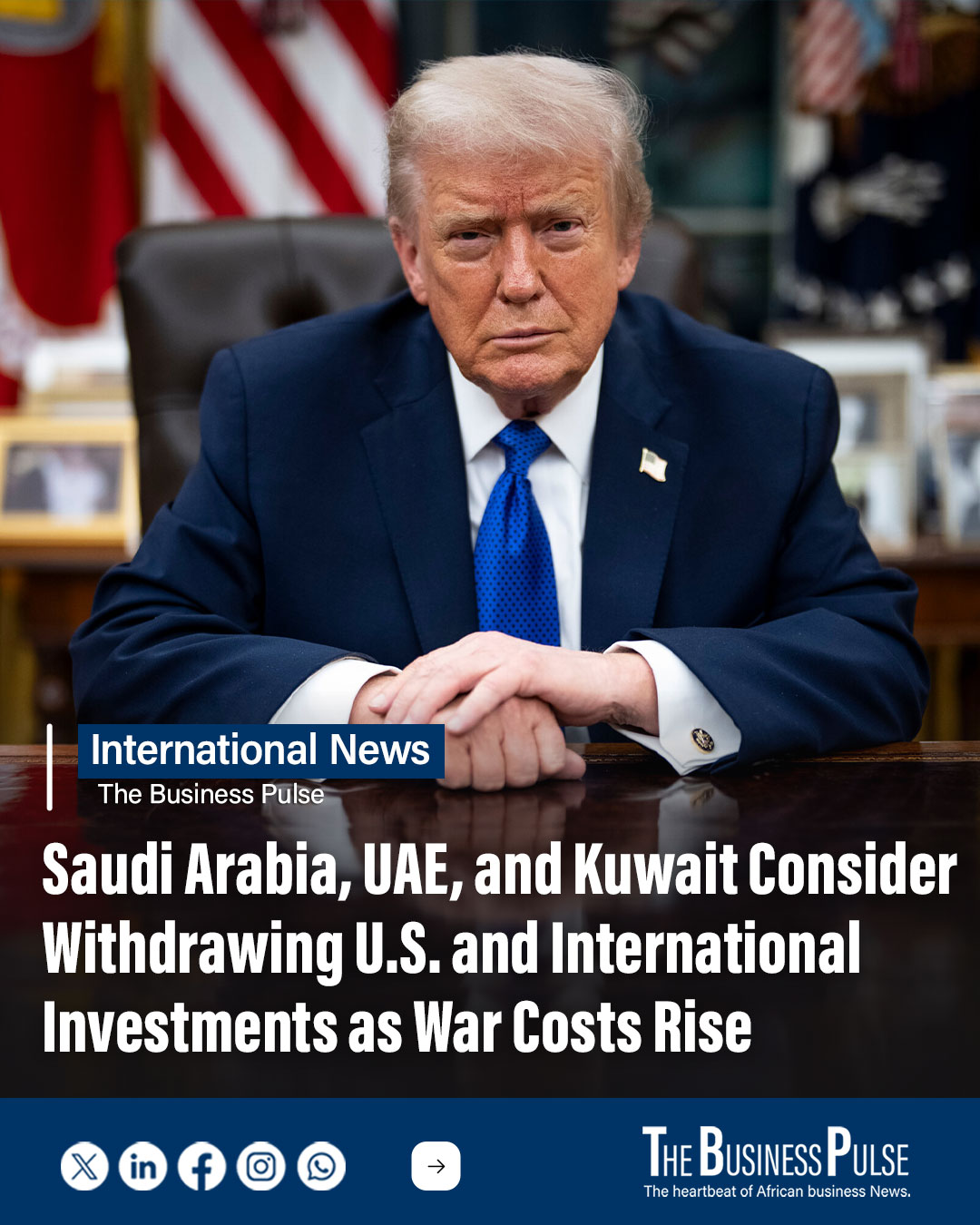
The $2 Trillion Ultimatum: How a Potential Gulf Investment Withdrawal Could Redefine Global Markets
In a development that has sent tremors through international financial hubs, three of the most powerful economies in the Middle East are reportedly reconsidering their financial footprint in the West. Saudi Arabia, the United Arab Emirates, and Kuwait have begun high-level discussions regarding a significant Gulf investment withdrawal from U.S. and other international assets. This potential shift, first reported by the Financial Times, comes as the escalating regional conflict with Iran begins to exact a heavy toll on the domestic stability of these oil-rich nations.
The motivations behind this possible Gulf investment withdrawal are rooted in immediate fiscal survival. As the war with Iran intensifies, the regional economic landscape is being reshaped by declining energy revenues and massive disruptions to critical sectors like shipping and tourism. For governments that have long relied on high oil prices to fund their ambitious domestic projects, the current budget strains have forced a rethink of how their capital is deployed globally.
Join our WhatsApp Group
The Fiscal Pressure of a Regional War
Officials in Riyadh, Abu Dhabi, and Kuwait City have categorized the talks of a Gulf investment withdrawal as a precautionary measure. However, the underlying numbers suggest a more urgent situation. Shipping lanes in the Gulf, which are vital for the movement of global energy supplies, have become increasingly volatile, leading to skyrocketing insurance costs and reduced throughput. At the same time, the once-booming tourism sectors in the UAE and Saudi Arabia are facing a sharp decline as international travelers avoid the region due to safety concerns.
If these nations proceed with a Gulf investment withdrawal, the primary target will likely be their massive holdings in the United States. Collectively, the sovereign wealth funds of these three nations hold more than $2 trillion in U.S. investments, ranging from Treasury bonds to significant stakes in Silicon Valley tech giants and major real estate holdings. A sudden or even phased Gulf investment withdrawal of this magnitude would likely trigger extreme volatility in U.S. equity markets and place upward pressure on interest rates.
Geopolitical Leverage and the Trump Administration
The timing of this rumored Gulf investment withdrawal is also being viewed through a geopolitical lens. By hinting at a potential retreat from U.S. markets, the Gulf states may be attempting to exert economic pressure on the administration of Donald Trump. As the conflict with Iran continues to spiral, these nations are seeking more decisive diplomatic or military intervention to protect their economic interests. The threat of a Gulf investment withdrawal demonstrates that the economic consequences of the war are spreading far beyond the battlefield.
Furthermore, a Gulf investment withdrawal would represent a historic pivot in the decades-long alliance between the U.S. financial system and Arab capital. For half a century, the petrodollar recycling system has seen Gulf oil wealth flow back into U.S. banks and government debt. A large-scale Gulf investment withdrawal would effectively mark the end of this era, forcing the United States to find new buyers for its debt at a time of already high fiscal deficits.
Market Implications and Future Stability
Financial analysts are already warning that the mere discussion of a Gulf investment withdrawal is enough to spook institutional investors. The interconnected nature of modern finance means that a sell-off by a major sovereign wealth fund can trigger automated trading algorithms, leading to a cascade of selling. If the Gulf investment withdrawal moves from discussion to execution, the impact on global liquidity could be severe, affecting everything from mortgage rates to the valuation of major multinational corporations.
Despite the precautionary labeling, the reality of budget strains cannot be ignored. The cost of regional defense and the loss of revenue from energy disruptions are real-time crises. A Gulf investment withdrawal may soon become a mathematical necessity rather than just a strategic threat. If the economic toll of the war continues to mount, the world may witness the largest redistribution of capital in modern history.
ALSO READ: Total Energy Autonomy: Why Commercial Solar and Energy Storage are Now A Must Have for Mining Firms
Conclusion
The prospect of a Gulf investment withdrawal highlights the fragile relationship between geopolitical peace and global financial health. As Saudi Arabia, the UAE, and Kuwait weigh their options, the message to the international community is clear: regional conflicts have global price tags. Whether this Gulf investment withdrawal happens in stages or all at once, the global economy is now on notice that the $2 trillion anchor provided by the Gulf states is no longer a certainty.
Leave a Reply