
Driving Change: William T. Grant Foundation Funding 2026
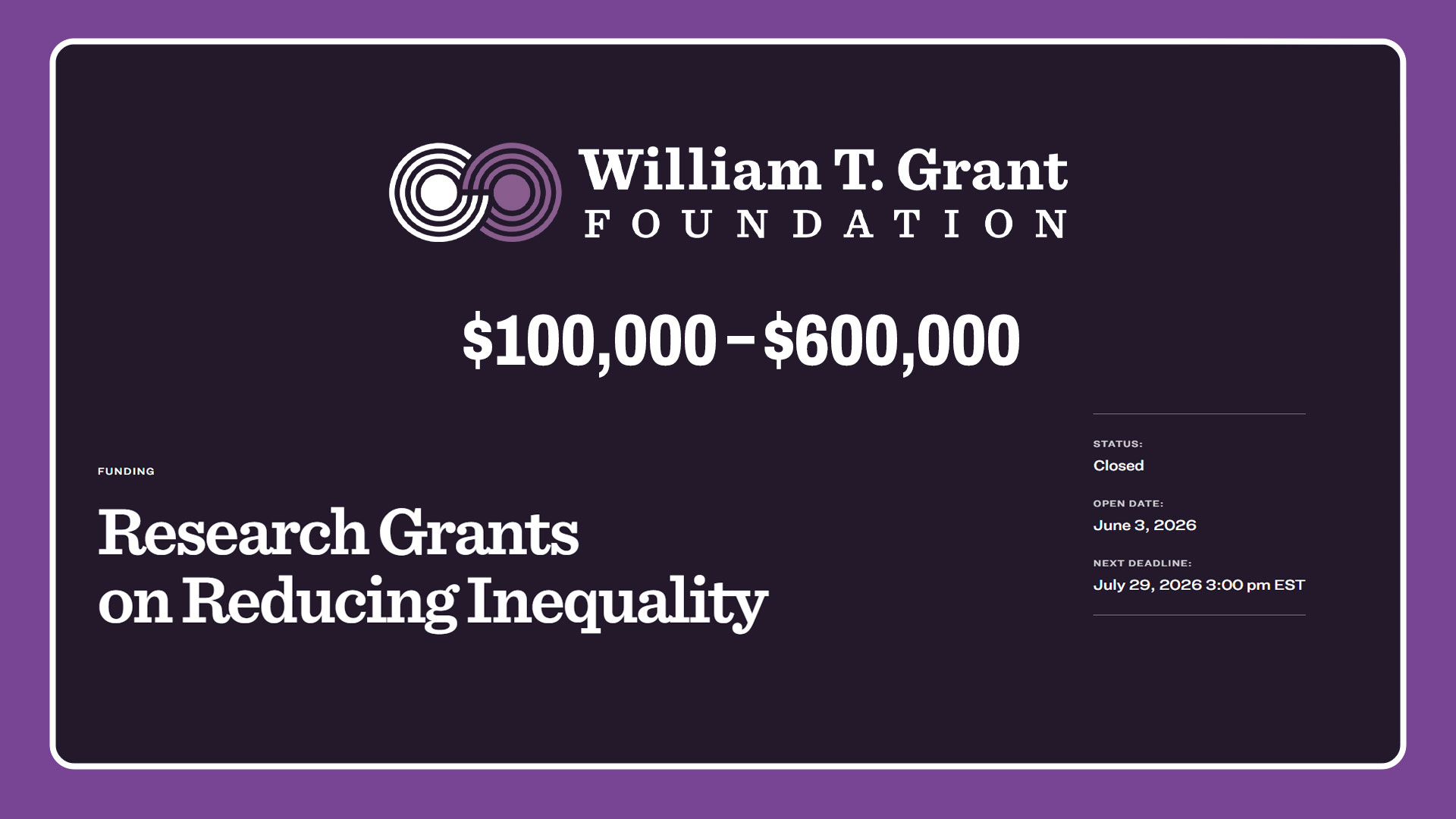
The William T. Grant Foundation has officially opened its 2026 call for research grants focused on reducing inequality in youth outcomes. This William T. Grant Foundation Funding opportunity is designed to support high-quality research that moves beyond simply documenting the scope of inequality to identifying actionable solutions. By funding studies that examine programs, policies, and practices, the Foundation aims to build a robust body of evidence that can be used to improve the lives of young people across the United States.
Join our WhatsApp Group
For the 2026 cycle, the Foundation is particularly interested in research that addresses systemic racism and the structural foundations of inequality. The William T. Grant Foundation Funding is specifically targeted toward outcomes for young people aged 5 to 25. Research must focus on reducing inequality along dimensions such as race, ethnicity, economic standing, language minority status, immigrant origin, or sexual and gender minority status.
Funding Tiers and Award Structures
The William T. Grant Foundation Funding is distributed through two primary grant categories, allowing for both large-scale investigations and smaller, targeted studies.
| Grant Type | Award Amount | Duration |
| Major Research Grants | $100,000 – $600,000 | 2 – 3 Years |
| Officers’ Research Grants | $25,000 – $50,000 | 1 – 2 Years |
Note: All award amounts include up to 15% in indirect costs. Officers’ Research Grants may be stand-alone projects or build upon larger existing studies.
Core Research Interests and Focus Areas
The William T. Grant Foundation Funding supports two main types of studies: descriptive and intervention-based. Descriptive studies should clarify the mechanisms for reducing inequality or explain why a specific policy or practice operates effectively. Intervention studies, on the other hand, must provide causal evidence on the effectiveness of specific programs or policies for reducing inequality.
The Foundation prioritizes research within youth-serving systems, including:
- Education: Addressing disparities in academic achievement and school environments.
- Justice Systems: Examining practices that reduce unequal treatment in juvenile and criminal justice.
- Child Welfare: Improving outcomes for youth in foster care or at-risk environments.
- Mental Health and Housing: Analyzing policies that ensure equitable access to support and stability.
Eligibility and Institutional Support
Eligibility for William T. Grant Foundation Funding is broad, yet competitive. The Foundation encourages applications from a diverse range of disciplines and fields. To promote equity in the research community, they specifically encourage proposals from organizations that are under-represented among grantee institutions. This includes Historically Black Colleges and Universities (HBCUs), Hispanic-Serving Institutions (HSIs), Tribal Colleges and Universities (TCUs), and other minority-serving institutions.
A significant update for the 2026 cycle is the “One Application Per Cycle” rule. A Principal Investigator (PI) may only submit one application per cycle, whether for a Major Research Grant or an Officers’ Research Award. This ensures a focused review process and encourages PIs to submit their strongest possible proposal.
ALSO READ: Apply for the Researcher Technology Policy role in Washington, DC. Focus on AI, semiconductors, and US-India tech relations
Key Deadlines and Application Process
The application process for William T. Grant Foundation Funding begins with a Letter of Inquiry (LOI). This document serves as a mini-proposal and is evaluated based on its fit with research interests, conceptual strength, methodology, and feasibility.
- Application Open Date: June 3, 2026
- Letter of Inquiry Deadline: July 29, 2026, at 3:00 pm EST
Successful applicants at the LOI stage will be invited to submit a full proposal. The Foundation emphasizes that it does not fund studies primarily focused on physical health outcomes or clinical trials. Proposals must explicitly identify a specific inequality in youth outcomes and provide a clear theory of change explaining how the proposed study will lead to its reduction.
Disclaimer: The Business Pulse shares verified opportunities from trusted sources. We are not a recruiting agency and do not request any payment for applications.
Leave a Reply